Belgium’s aluminium cans import to extend downfall by 6.35% on year in 2019
Proficient in preserving the quality and flavour of the contents, aluminium cans have an unparalleled safety record and currently represent one of the most widely used containers for packaging purposes. These cans are non-toxic in nature, can be reprocessed and require less care during handling and distribution. According to IMARC Group, the global aluminium cans market has grown at a CAGR of around 2.6 per cent during 2011-2018, reaching a production volume of 300 billion cans in 2018.In the European Union, in particular, the beverage can market is expected to grow at a CAGR of over 4 per cent between 2017 and 2025, according to Grand View Research, Inc.
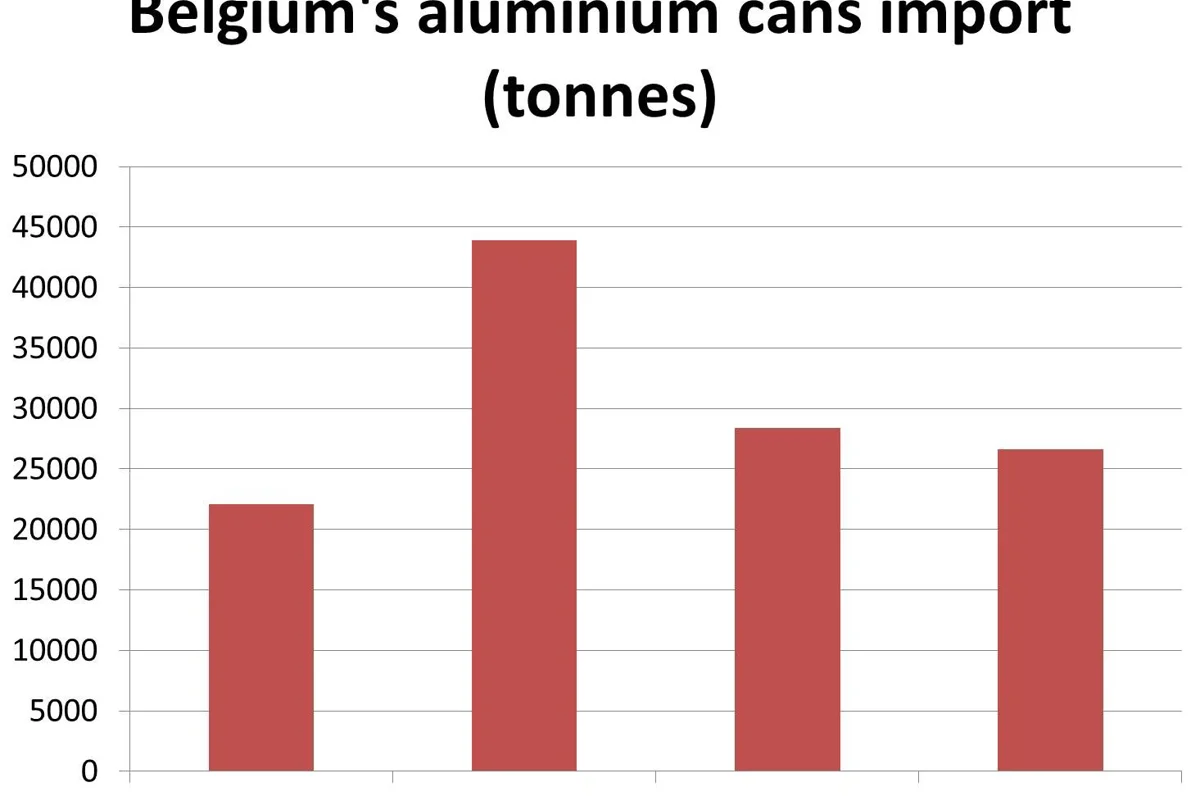
However, the aluminium cans import by Belgium has been found declining over the past two years. After a sweeping growth in Belgium’s aluminium cans import in 2017 from 22,056 tonnes in 2016 to 43,875 tonnes, the country’s import in 2018 came down to 28,396 tonnes. This means that followed by a growth of 99 per cent in 2017, Belgium’s aluminium cans import inched down 35 per cent in 2018. In 2019, the country’s import is likely to drop further to 26,591 tonnes, down 6.35 per cent year on year, according to the global export-import data.
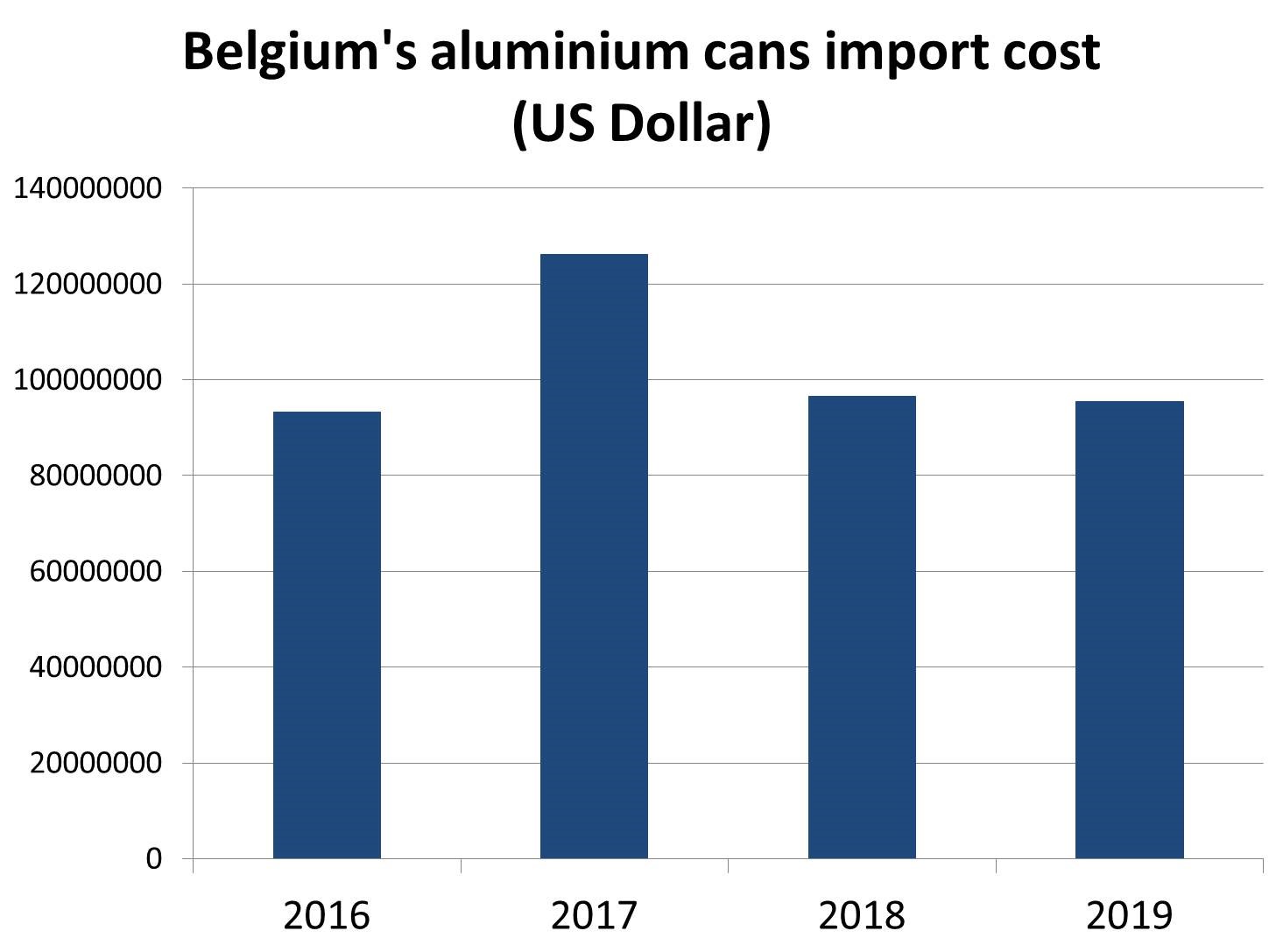
As far as the import cost is concerned, 2017 saw a sweeping growth in Belgium’s aluminium cans import cost, in tandem with the increasing volume of import. From US$93 million, the country’s import cost in 2017 rose to US$126 million, up 35.48 per cent. But in 2018, the import value decreased to US$96 million, 24 per cent lower on the year. In 2019, the value is estimated to inch further down to US$95 million, according to the available data.
The Netherlands is estimated to be the leading source of Belgium’s aluminium cans import in 2019, providing 14,031 tonnes at US$41 million, followed by Germany to supply 6,795 tonnes at US$22 million.
India’s passenger vehicle sales register the sharpest drop of 20.5% in May
Next articlePartnership with a trade supplier of aluminium doors and windows brings success in Morgan’s business
Grow with
AL Circle