Beijing keeps rare earths tight despite Trump deal, reviving US supply concerns
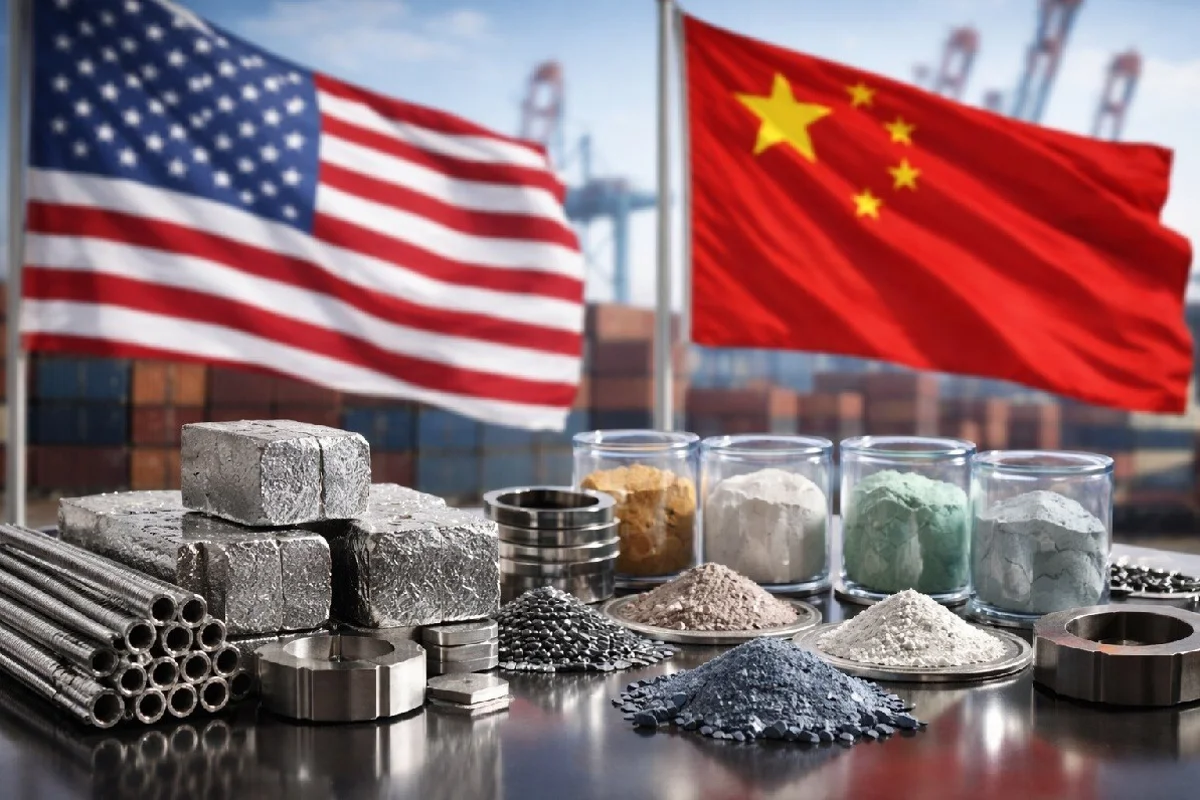
Even after President Donald Trump announced a rare earth “truce” with Chinese President Xi Jinping in late October, US companies say the promised relief has yet to materialise on the ground. Market participants report that China is still limiting access to key rare earth inputs needed to build permanent magnets and other strategic products in the United States.
More than a dozen consumers, producers, government officials and trade experts said China has increased shipments of finished magnets, but American manufacturers still cannot secure the raw materials required to make them domestically - a central goal of the administration. The people requested anonymity because the discussions aren’t public.
The situation underscores lingering tensions in US - China trade relations since the Oct 30 meeting in South Korea, where Trump announced tariff reductions and said the agreement amounted to the “de facto removal” of multiple restrictions. China pledged to restore rare earth supplies, but companies say conditions have not returned to normal.
Also read: India turns to self-reliance as China curbs rare earth exports - can expansion plans bridge the gap?
Controls tighten around strategic inputs
By restricting raw material deliveries, Beijing is slowing efforts by the US to build its own processing and magnet manufacturing base - capacity that Washington has repeatedly identified as a strategic priority after China cemented dominance over the sector.
The White House did not respond to a request for comment. Officials have recently said China is complying with the agreement. China’s Commerce Ministry also did not respond, though Beijing has said some export applications have already been approved - while continuing to limit shipments that could reach military contractors.
Official Chinese data released Dec 20 showed magnet supplies to the US fell 11 per cent in November from the previous month, although still above April lows. Overall, China’s rare earth exports - including magnets - rose 13 per cent month-on-month, according to Bloomberg calculations.
US industry voices say the problem is not the magnets themselves - but the feedstock.
“People aren’t getting materials out of China, you’re not getting dysprosium metal or oxide if you’re a US entity,” said Scott Dunn, chief executive of Noveon Magnetics Inc. The company does not buy inputs from China, but Dunn said customers who do are facing trouble.
“Outside of China, the world can produce 50,000 tonnes of magnets, but there isn’t even close to the equivalent in rare earth minerals to support those tonnes outside of China,” he added. “China restricts materials far beyond what it restricts in magnets to keep that dynamic in place.”
For now, some pressure has eased. According to Gracelin Baskaran of the Center for Strategic and International Studies, China’s move to loosen restrictions on finished magnets has helped prevent broader shutdowns in industries such as autos and technology.
Uncertainty clouds the truce
US government data show that while China’s overall rare earth exports have increased compared with last year, American buyers are not seeing the same improvement. European Union officials, meanwhile, said Dec 15 that Beijing has begun issuing longer-term export licenses for European firms.
Negotiations over how China will free up broader rare earth flows remain unresolved. Bloomberg previously reported that teams from both countries were working toward “general licenses,” with deadlines slipping beyond November.
“We reached various temporary agreements in London, in Geneva, in South Korea and they were reneged,” Baskaran said. “So no agreement so far has proved to be final, and that gives industry a level of skittishness that’s justified.”
Adding to the uncertainty, a wave of six-month temporary export licenses granted in early summer is set to expire, meaning US firms will soon have to apply for renewals at once. Buyers fear approvals could again slow, a tactic viewed in the industry as a form of de-facto export control.
Explore our B2B market place: AL Biz

Brazil’s renewable hub expands: CPFL brings $144.8M solar investment to Rio Grande do Norte
Next articleFrom the skies above, NASA is uncovering the minerals behind next-gen technologies
Grow with
AL Circle