Bauxite drives on the capesize demand, keeps the export ship afloat
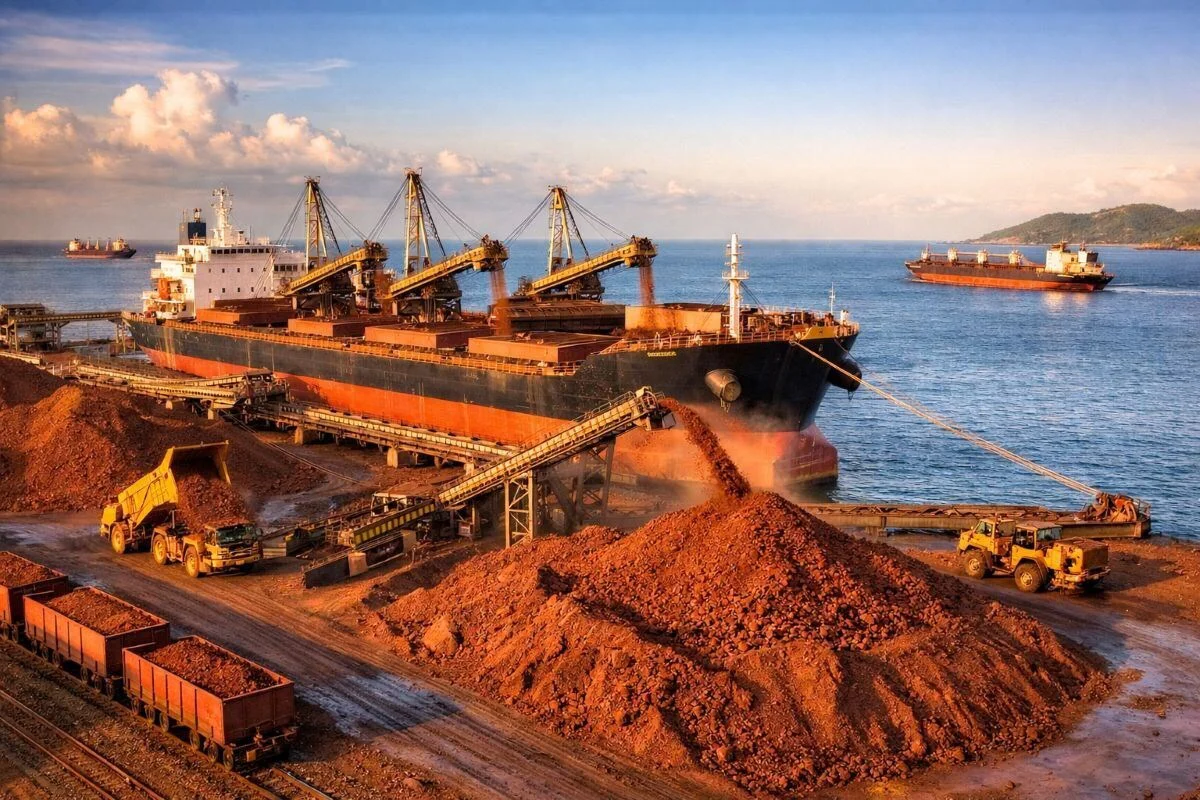
Bauxite exports from Guinea have maintained a strong drive for the capesize market. Guinea is the largest exporter of bauxite, securing 69 per cent of global bauxite export, as of 2025. China, being its primary customer, dominates the market. Projections show a firm foothold of bauxite in the capesize market, moving well into the second quarter of 2026.
Explore- Most accurate data to drive business decisions with 50+ reports across the value chain
In 2024, Guinea’s bauxite exports reached 145 million tonnes. The 2025 record shows a year-on-year growth with total shipments reaching 139.21 million tonnes by the end of September. That included 99.8 million tonnes in the first half and 39.41 million tonnes in the third quarter — about a 23 per cent increase Y-o-Y. On the other hand, according to AL Circle research, Guinea could export as much as 199 million tonnes of bauxite in 2025, far surpassing the 2024 record.
China imports Guinea-shipped bauxite
China has applied 86 per cent of all the imported bauxite to its own aluminium industry in 2025, continuing to be the dominant buyer of Guinea-shipped bauxite. In order to keep emissions and oversupply in check, it maintains a cap of 45 MTPA, as introduced in 2017.
China’s National Bureau of Statistics reported aluminium production of 41.4 million tonnes till November, 2025. This implies that to remain within the stipulated cap, the production in December cannot exceed 3.6mt, an amount much lower than the actual monthly production average of 3.8mt.
The steep rise in copper prices has solidified aluminium demand, as it is increasingly used as a substitute. While copper prices may ease to some extent in 2026 from existing levels, they might still remain high. This scenario will support aluminium consumption, linking it further to bauxite demand. China may increase its imports of bauxite, refine it into alumina, and export that to markets such as Indonesia, where aluminium smelting capacity is still expanding.
The 2030 outlook
By 2030, the bauxite export outlook will become more complex. Guinea aims to produce around 7 MTPA of alumina by that time, requiring approximately 14 million tonnes of bauxite. Based on export volumes of 2025, this could cut global bauxite export by about 5 per cent. Although this reduction would initially be limited, further alumina capacity could be commissioned online if higher-value alumina exports deliver the expected boost to government revenues. Over the longer term, this could lead to a gradual but sustained decline in Guinea’s bauxite export volumes.
While Australia, exporting only 18 per cent of bauxite in the world, has the capacity to process bauxite into alumina domestically, Guinea is unable to avail itself of that and therefore keeps the export corner fully covered. Bauxite supply from Guinea, the world’s largest producer, is expected to remain steady in the near term, but the long-term risk of an increase in domestic processing remains a point of concern.
Nonetheless, China’s aluminium production will remain a key source of bauxite demand, with the domestic production cap setting a flexible limit.
Overall, bauxite is expected to remain a major contributor to capesize vessel demand. Although bauxite exports are typically softer in the first quarter, current trends suggest that volumes in Q1, 2026, will exceed those of the same period in 2025, before strengthening further in Q2, which is usually the strongest period.
铝土矿支撑好望角型船货盘需求,出口海运行情保持景气
几内亚的铝土矿出口为好望角型干散货船市场提供了强劲动力。截至2025年,几内亚是全球最大的铝土矿出口国,占全球出口量的69%。其主要客户中国主导着这一市场。预测显示,铝土矿在好望角型船市场中的稳固地位将延续至2026年第二季度。
2024年几内亚铝土矿出口总量1.45亿吨;2025年出口同比实现增长,截至9月末出货量达1.3921亿吨,其中上半年出货9980万吨、三季度3941万吨,三季度同比增幅约23%。据AL Circle调研数据,2025年几内亚全年铝土矿出口或将高达1.99亿吨,大幅刷新2024年历史纪录。
中国成为几内亚铝土矿头号进口大国
2025年,中国自几内亚进口的铝土矿中,86%用于国内铝产业链生产,持续稳居几内亚铝土矿最大采购国。为管控碳排放、遏制产能过剩,中国自2017年起执行原铝年产4500万吨产能红线管控政策。
国家统计局数据显示,2025年前11个月国内原铝产量4140万吨。按照4500万吨产能上限测算,12月原铝投产上限仅360万吨,低于国内月均380万吨的常规产出水平。
铜价大幅上涨带动铝作为替代原料的消费增量;即便2026年铜价从当前高位小幅回落,整体价格仍处在高位区间,持续利好铝消费,进而传导提振上游铝土矿采购需求。中国或将加大几内亚铝土矿进口,加工成氧化铝后外销印尼等冶炼产能持续扩容的国家。
2030年行业前景展望
2030年前后全球铝土矿出口格局将迎来变化:几内亚规划届时建成年产700万吨氧化铝产能,年需消耗铝土矿约1400万吨,参照2025年出口体量测算,将直接造成全球铝土矿贸易量缩减约5%。初期减量影响有限,但若高附加值氧化铝出口能够有效提振该国财政收入,几内亚后续或将持续新增氧化铝项目投产,长期逐步压低本国铝土矿直接出口规模。
澳大利亚铝土矿出口占全球18%,本土具备完善的铝土矿加工炼氧化铝产能;而几内亚欠缺深加工配套,现阶段只能以原矿外销为主,支撑全球铝土矿现货贸易。短期来看,全球最大铝土矿出产国几内亚的原矿供应保持稳定,但本土深加工产能落地是长期压制原矿出口的潜在风险。
中长期维度,中国原铝生产仍是全球铝土矿需求核心支柱,国内原铝产能上限为需求带来弹性约束。
整体来看,铝土矿依旧是好望角散货船需求的关键支撑品类。传统一季度为铝土矿出口淡季,但当前市场走势预示:2026年一季度铝土矿出货量将优于2025年同期,后续进入传统旺季二季度后,出口行情进一步走强。
Must read: Key industry individuals share their thoughts on the trending topics

Bauxite-rich Guinea: national ambition under local strain
Next articleChhattisgarh High Court dismisses private firm’s appeal over bauxite mining lease
Grow with
AL Circle





















