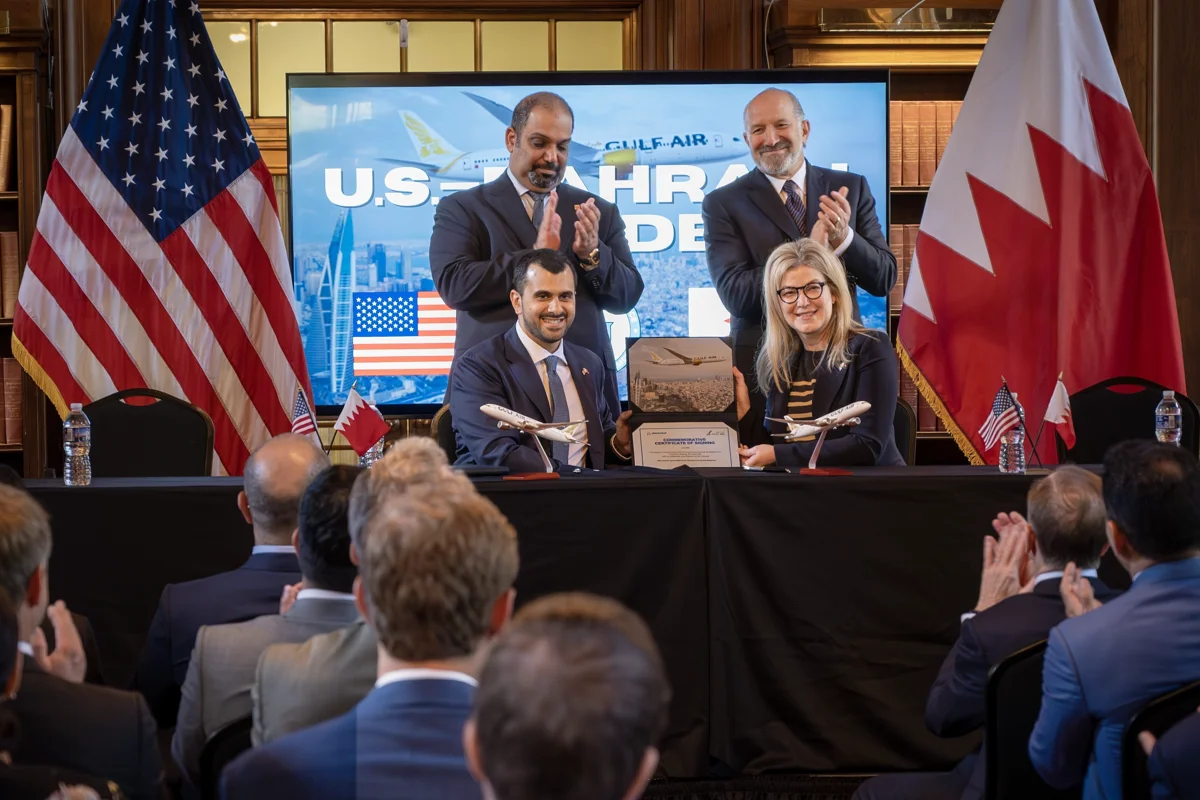
The US Department of Commerce signed a landmark commercial agreement between Boeing and Bahrain’s Gulf Air for the purchase of up to eighteen 787 Dreamliner aircraft, valued at USD 7 billion. The deal is expected to support more than 400,000 US jobs during production and delivery, reinforcing Gulf Air’s commitment to operating an all-Boeing widebody fleet.
Image Source: International Trade Administration
Secretary of Commerce Howard Lutnick said, “Today’s deal between Boeing and Gulf Air is yet another example of how companies are working with this administration to invest in America at historic levels. American workers, industry, and technology are the best in the world, and this deal demonstrates that.”
The agreement adds to a record-breaking year for US commercial deals, with 87 contracts signed globally in FY25 worth USD 113 billion. Of this, USD 97.9 billion comes from US exports, helping support over 401,000 American jobs.
This strategic deal also aligns with the Trump administration’s America First Trade Policy, which emphasises the revitalisation of US manufacturing through aggressive global export initiatives and partnerships with reliable allies.
Gulf Air to boost global reach with new Dreamliners
Gulf Air is scheduled to begin taking delivery of the new Dreamliners in 2026, with two Boeing 787-9 aircraft already slated for handover early that year. The move supports Gulf Air’s long-term Vision 2030 strategy, which includes modernising its fleet and expanding its long-haul network.
In line with this, Gulf Air will launch a three-times-weekly service to New York JFK in October 2025, marking its return to the US market after nearly three decades. The fleet upgrade comes at a time when the airline is retiring older aircraft and focusing on efficiency, sustainability, and passenger comfort.
The enhanced 787 fleet, powered by reliable GE engines is expected to improve operational performance while supporting Bahrain’s goal of becoming a regional aviation hub. The move also aligns with broader ambitions for tourism and economic diversification under the country’s long-term national strategy.
Ryanair’s warning highlights importance of trusted allies
The urgency behind such global deals became clearer earlier this year when Ryanair CEO Michael O’Leary threatened to pull back on his company’s massive USD 30 billion 737 MAX order if new tariffs proposed by President Trump were implemented. In a letter to a senior US lawmaker, O’Leary made it clear that Boeing could lose the European airline’s business if protectionist measures were enforced.
This high-profile warning underscored Boeing’s vulnerability in key Western markets and accelerated the push to secure contracts with reliable trade partners, like Bahrain.
Unlike some European counterparts, Bahrain has remained committed to expanding its aviation collaboration with the US, reinforcing Boeing’s global footprint amid growing geopolitical uncertainty.
Aluminium’s role in aerospace and US–Bahrain trade
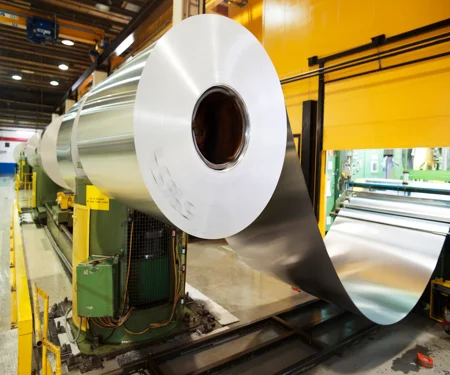
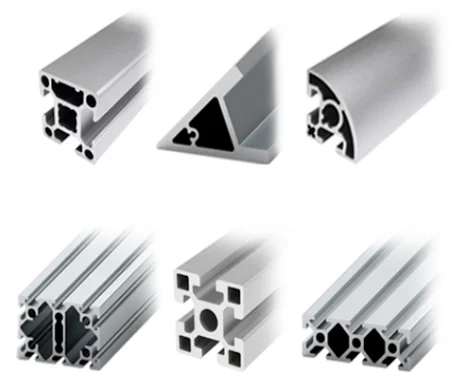
Aluminium remains critical to aerospace manufacturing due to its high strength-to-weight ratio, corrosion resistance, and durability. Aircraft structures from fuselages to wings rely on high-performance aluminium alloys like 2024 and 7075, with global aerospace consumption estimated at 1.7 to 2.2 million tonnes annually.
Bahrain plays a strategic role in this ecosystem, exporting 47,100 tonnes of aluminium plates, sheets, and bars to the US in 2024, valued at around USD 726 million.
Bilateral trade between the US and Bahrain reached USD 2.9 billion in 2024, with the US posting a trade surplus of USD 442 million. US exports included aircraft, machinery, electronics, arms, and pharmaceuticals, while Bahrain’s exports focused on aluminium, petroleum products, copper, and textiles.
However, in April 2025, the US imposed a 10 per cent reciprocal tariff on imports from Gulf nations, including Bahrain, affecting non-oil goods like aluminium and steel. Although crude oil remained exempt, the tariffs rolled back some benefits of the longstanding US–Bahrain Free Trade Agreement established in 2006.
Despite this, economic ties remain strong. In July 2025, Bahraini and US firms announced USD 17 billion in joint investments during a high-level visit to Washington. These investments spanned aviation, aluminium, LNG, technology, and infrastructure projects such as multi-fiber submarine cables.
The Boeing–Gulf Air Dreamliner deal is more than a business transaction, it is a strategic affirmation of the US Bahrain partnership in a shifting global trade environment. From widebody aircraft to aluminium supply chains, the agreement highlights how trusted allies are critical to preserving US industrial strength and global aerospace leadership.
Note: To feature your brand and share insights, contribute an article or interview in our forthcoming e-magazine "American ALuminium Industry: The Path Forward."












_md.webp)