Australian Vanadium, Alcoa to study long-duration battery system for Western Australia alumina refineries
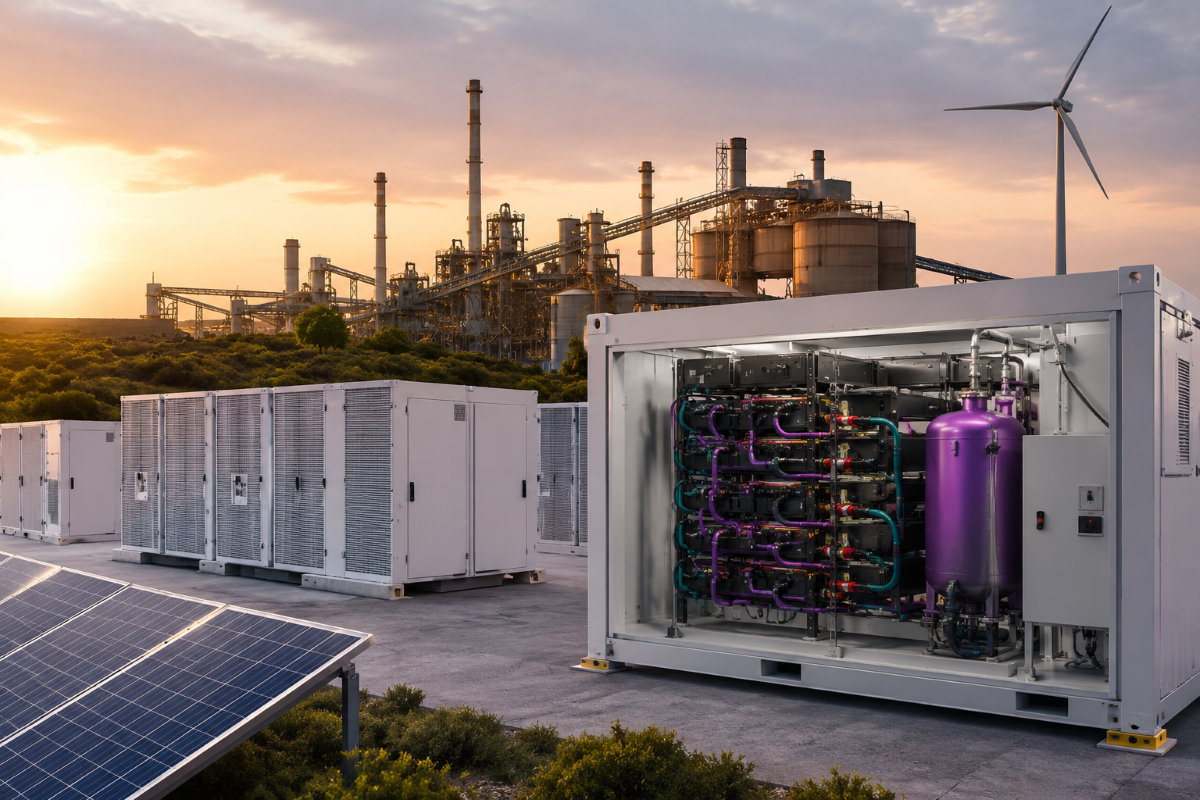
The image used in this article is generated with an AI tool and does not depict any real-time moment
Australian Vanadium Ltd has entered into a non-binding Memorandum of Understanding (MoU) with Alcoa to explore the use of long-duration vanadium flow battery (VFB) technology at the company's alumina refinery operations in Western Australia.
The agreement also includes Australian Vanadium's wholly owned subsidiary, VSUN Energy, which will jointly lead the assessment.
The partnership will begin with a scoping study to determine whether a VFB system rated at 50-80 megawatts, capable of storing energy for six to eight hours and potentially longer than eight hours, can be integrated into Alcoa's refining operations. The assessment will focus on how such a system could enhance operational reliability, reduce energy use during peak demand and enable greater use of renewable electricity across the refineries.
Beyond the technical evaluation, the companies will also examine how long-duration energy storage could contribute to industrial electrification while supporting the integration of renewable power into energy-intensive manufacturing.
The MoU will remain valid for 18 months. Although it establishes the framework for the study, it does not commit either party to undertake additional feasibility work or enter into a commercial agreement once the initial assessment is completed.
Study to assess design, costs and commercial viability
Australian Vanadium and VSUN Energy will be responsible for delivering the technical assessment, including the battery system design, engineering specifications, project cost estimates and electrolyte supply requirements for a potential large-scale installation. The companies will also investigate financing structures and available government funding opportunities, with Alcoa supporting the study throughout the process.
To know the futuristic market and value proposition of red mud, explore the report "A Comprehensive Analysis of Bauxite Residue (Red Mud): Sustainability, Resource Recovery and Strategic Recommendations"
Existing Alcoa refinery sites and adjoining landholdings in Western Australia have been identified as potential locations for deployment, allowing the assessment to consider site-specific operational and infrastructure requirements.
The study is intended to determine whether long-duration energy storage can provide sufficient technical and economic benefits by improving operational flexibility, lowering energy costs and increasing renewable energy utilisation during periods of high electricity demand. If the findings are favourable, the partners may proceed with more detailed feasibility work and begin discussions on commercial arrangements, including possible energy offtake agreements.
Partnership aligns with Australian Vanadium's integrated battery strategy
The project is expected to utilise Australian Vanadium's V-NOMAD electrolyte technology together with VSUN Energy's Lumina platform for utility-scale vanadium flow battery developments.
The initiative also supports Australian Vanadium's broader strategy of building an integrated presence across the vanadium value chain, spanning vanadium production, electrolyte manufacturing and VFB deployment through VSUN Energy.
"Long-duration energy storage will play a critical role in enabling industrial electrification and increasing the utilisation of renewable energy, and VFB technology is particularly well suited to these applications," Chief Executive Officer Graham Arvidson said.
According to Australian Vanadium, vanadium flow batteries are well suited to utility-scale industrial applications because they combine multi-hour energy storage with the flexibility to extend storage duration beyond eight hours.
Explore buying & selling leads of alumina and trade opportunities on AL Biz
AL Circle Analysis: H1’26 bauxite export, softer alumina, new aluminium supply risks
Next articleBALCO adds second alumina railway rake to support 1 MTPA aluminium expansion
Grow with
AL Circle