Aluminium price forecast: $3,000 ascent in January demands a global price recalculation
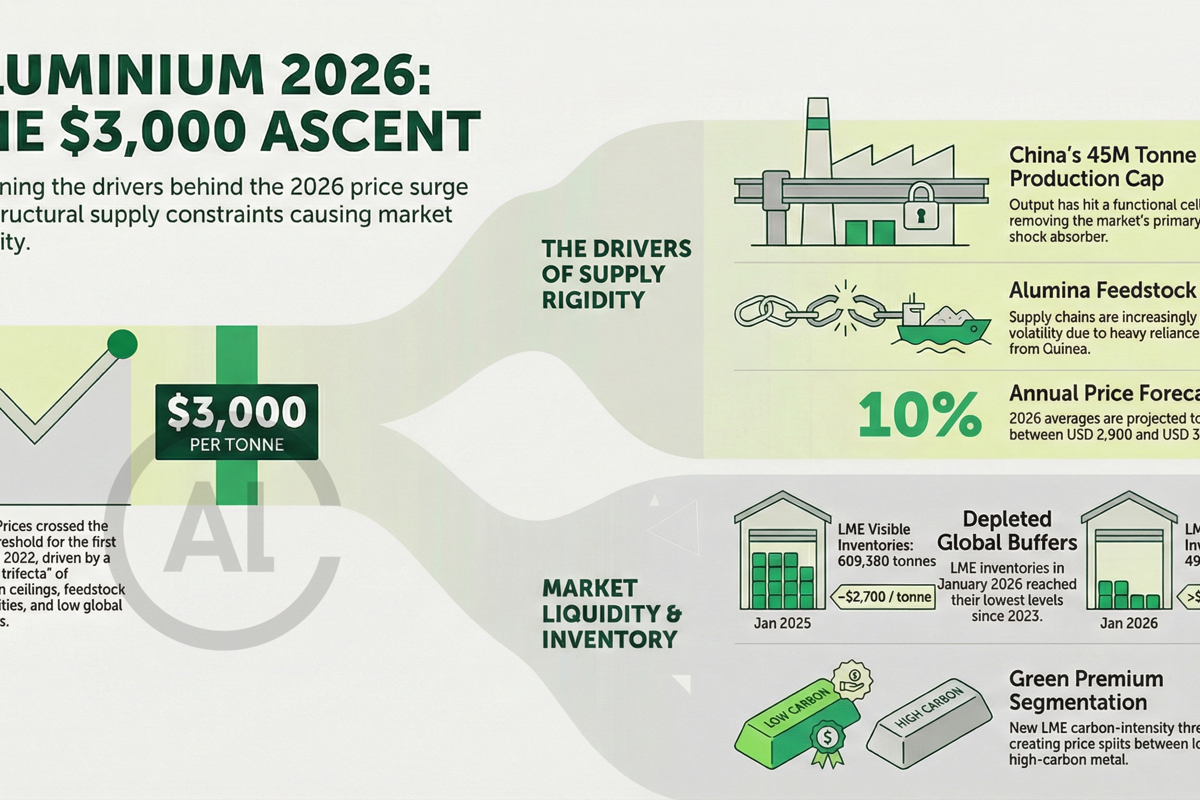
The London Metal Exchange (LME) aluminium contract entered 2026 with a bang of a hike, as in early January, the three-month contract crossed USD 3,000 per tonne for the first time since 2022, trading at USD 3,015.50 before extending gains later in the month. The move was not the product of speculative momentum alone. Back in 2022 production and energy costs, China’s production cap and Russia-Ukraine’s war imparted their fair share of spices into the price hike scenario. But this time, it reflected a convergence of constrained supply, tightening physical availability and US and EU’s policy-driven rigidity, consequently leading to altered price expectations for the rest of 2026.
For the global aluminium value-chain 2026 outlook, get our exclusive report “Global ALuminium Industry Outlook 2026"
Is the previous forecast annulled?
Unlock full access – sign up for FREE.
Key benefits
US aluminium midwest premium in Jan’26 exceeds the $2k mark, hitting an all-time high
Next articleLME cash offer price slips further down to $3,042/t while opening stocks record a modest increase of 0.29%
Grow with
AL Circle