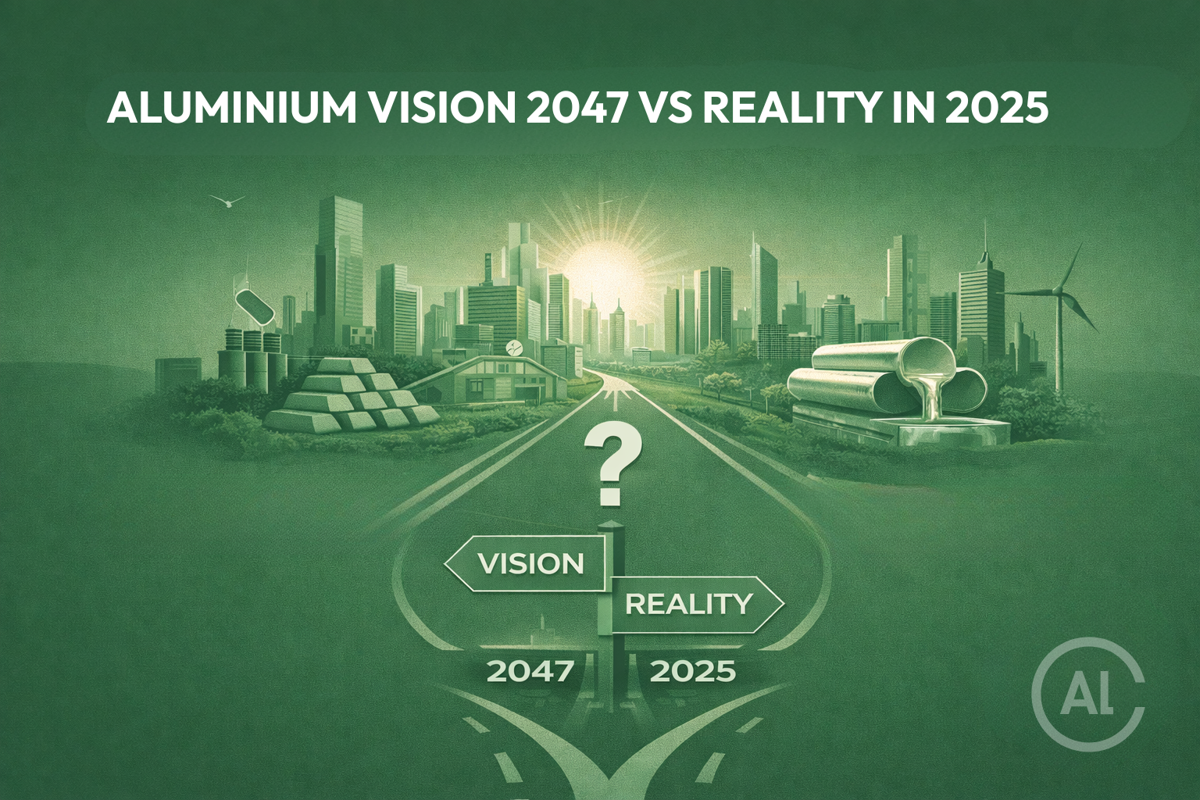
Aluminium Vision 2047 vs Reality in 2025: Ambition, progress, and the gaps in between
To set the context of this piece, it is necessary to understand that India’s Aluminium Vision 2047 and Viksit Bharat are intrinsically aligned and they complement each other’s ambition. Truth be told, achieving the milestones outlined in the Aluminium Vision 2047 can place India on course to realise the broader objectives of Viksit Bharat. Ultimately, both the frameworks envision India as a self-reliant country in terms of robust manufacturing ecosystem, lower import dependence, high per capita consumption & Gross Domestic Product (GDP), and resource efficiency with a circular economy. The deadline for both Aluminium Vision and Viksit Bharat is also the same – 2047, the year India marks centenary of its independence.
While there are over 2 decades to achieve the vision but early signs of transformation must be visible when the goals are as ambitious as building a USD 30-40 trillion economy and raising a per capita aluminium consumption to 25-30 kg, levels comparable to developed nations.
Where does India stand by the end of 2025 with its economy and production?
Unlock full access – sign up for FREE.
Key benefits
LME aluminium offer price slips to $3,174/t, but aluminium rally continues week-on-week due to supply-side constraints
Next articleMacro factors are mixed, with bullish sentiment slightly cooling in the latter part of the week. Aluminium prices are expected to fluctuate at highs in the short term
Grow with
AL Circle