您想继续阅读英文文章还
是切换到中文?
是切换到中文?

THINK ALUMINIUM THINK AL CIRCLE

In Eurozone, the Netherlands stands as the sixth-largest economy and the fifth-largest exporter of goods. The country is renowned for its open trade policies and consequently to the global economic conjuncture. In the last few years, the recovery in Europe has allowed the Dutch economy to grow at a dynamic pace, while trade uncertainty at the global level, the Brexit process and most vital of all is the spread of the COVID-19 pandemic caused the Dutch economy to contract heavily in 2020.
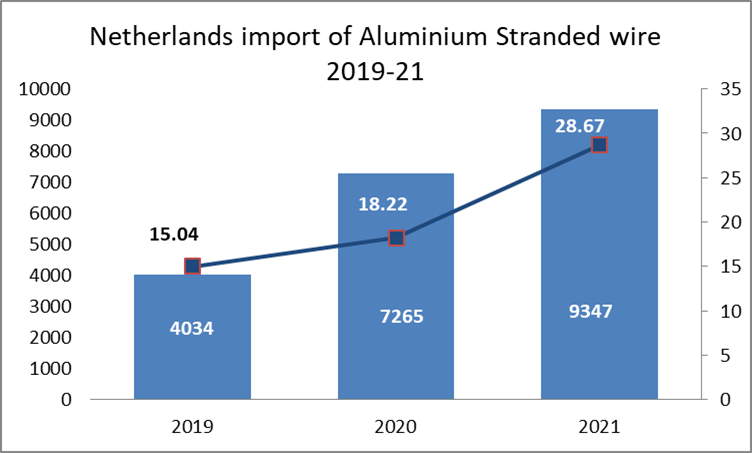
The north-western European nation’s import of aluminium stranded wires during 2019-20 recorded at 11,299 tonnes and the revenue expended for the import stood at $33.26 million. The import for 2021 has been estimated to remain at 9347 tonnes and the expenditure to stand at $28.67 million.
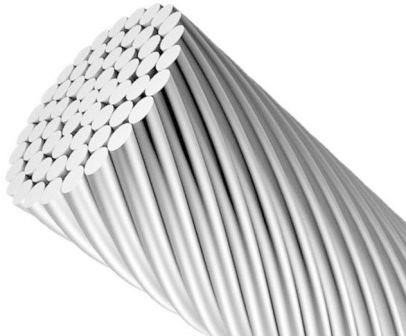
Netherlands import of aluminium stranded wires in 2019 stood at 4034 tonnes and the expenditure accounted for the import stood at $15.04 million, whereas, in 2019, the import saw up-ward movement by 80.09%, as the import volume rose to 7265 tonnes and the expenditure also grew to $18.22 million.
The import for 2021 has been predicted with an upswing of 28.65%, as the import volume is expected to climb at 9347 tonnes and the expenditure to stand at $28.67 million.

The major trading destinations of Netherlands importation of aluminium stranded wires are Austria, Bahrain, Belgium, China, France, Germany, India, Norway, Turkey, etc.
Responses


A proud
ASI member
AL Circle Private Limited | CIN: U72200WB2017PTC221175
Registered Office: Ecospace Business Park, Block 3A, Unit 401A, New Town, Rajarhat, Kolkata, WB 700160
Corporate Office: Ecospace Business Park, Block 3A, Unit 401A, New Town, Rajarhat, Kolkata, WB 700160
© 2026 AL Circle. All rights reserved. AL Circle is not responsible for content from external sources.