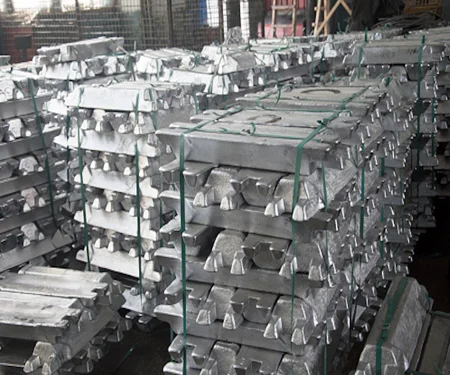
Aluminium prices show signs of recovery over improvement in macro sentiment: ICRA

ICRA announced that the signs of recovery for aluminium prices are been seen in the last three months, as trade tensions in international markets have softened to an area leading to an improvement in sentiment. Accordingly, aluminium prices at the spot market have inclined by 4% in the last three months.
Jayanta Roy, Senior Vice-President and Group Head, Corporate Sector Ratings, ICRA said “The prevailing global supply-demand scenario in both aluminium and copper has been conducive to a price recovery, given the deficits of these metals in the physical market. But weak macroeconomic sentiments arising out of the trade tensions weighed on prices thus far.”
The unpredictable nature of macro-economy, as well as feeble sentiments due to the trade war, have driven to a sharp slowdown in global consumption growth rates of aluminium to around 0.1%, during 9m CY2019 from approximately 4.0 % growth rates registered in CY2018. As per ICRA, despite dull consumption levels, the market of the aluminium metals continued to remain in deficit during this period, with shortages expanding on an on a YoY basis as production growth rates were even lower than the growth rates in demand. The slowdown in production growth of aluminium was, in turn, a result of capacity limitation, which is questionable to enhance significantly in the near term as utilisation rates of operating capacities is already high.

The global aluminium market has endured in deficits, varying from 0.07 to 1.05 million metric tonnes (MMT) for the last ten quarters, because of volume cutbacks in China. While aluminium production in the country started increasing in the second half of 2019, a further shut down of some loss-making capacities resulted in a production de-growth from March to September 2019. No meaningful improvement in the supply scenario is envisaged in the near term as the idled capacities are unlikely to resume production unless aluminium price strengthens further. Moreover, the total capacity of fresh aluminium smelters to be commissioned globally in the near term is also limited.
Hindalco hiked aluminium ingots price by more than 2% with effect from January 7
Next articleChina’s primary aluminium production drops 1.84% YoY in 2019
Grow with
AL Circle