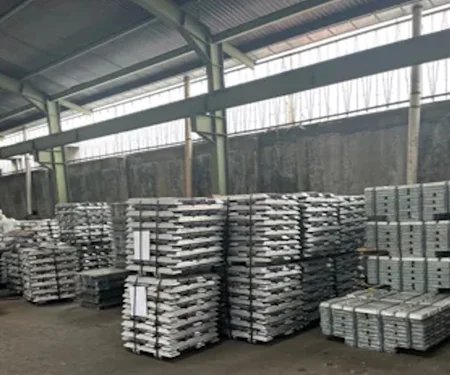
Aluminium export by India up 36% to 1.66 million tonnes in 2017-18; while imports dropped 15%

Figures of the Union commerce and industry ministry indicated that aluminium exports from the country increased by 36 per cent in 2017-18, aided by global demand, which outstripped supply.
The declaration of US tariffs on aluminium and steel imports from most of the countries, a 21 per cent growth in aluminium prices on the London Metal Exchange (LME) to an average of $2,045 per tonne and over-supply to the domestic market helped exports to rise in the last financial year. The trend is expected to continue in 2018-19, because of the US sanctions on UC Rusal, one of the largest producers in April, which drove panic buying among aluminium buyers and lifted LME price and premiums to a height. This will also be driven by the trade tensions between the US and China. Aluminium prices were also strengthened by a rise in input costs as prices of raw materials like alumina, caustic soda, petroleum coke and coal tar pitch shot up during the period.
According to the ministry figures in terms of volume, unwrought aluminium (alloyed and non-alloyed) exports rose from 1.22 million tonnes at the end of 2016-17 to 1.66 million tonnes in 2017-18, registering a rise of 36%. In terms of value the total export value stood at USD 3.54 billion compared to USD 2.1 million in 2016-2017. India exported about 1.37 million tonnes of non-alloyed aluminium and 293,000 tonnes of aluminium alloys .
In the same period, imports of unwrought aluminium (alloyed and non-alloyed) dropped by 14.7% to 360,000 tonnes from 422,000 tonnes in 2016-17. India imported about 276,711tonnes of aluminium alloys and 84,135 tonnes of non-alloyed aluminium. Aluminium Scrap import increased to 1.1 million tonnes in 2017-18 from 931,279 tonnes in 2016-17. India exported about 4,852 tonnes of scrap in 2017-18.

The value of total aluminium and aluminium products export stood at 4.7 billion compared to 3.2 billion in 2016-17.
The data shows that South Korea accounted for the largest export of Indian aluminium products (31%), followed by Malaysia (30 per cent) and the US (11 per cent).

India's production of primary aluminium grew 21 per cent year-on- in the last financial year to reach 3.3 million tonnes, the second largest producer of ex-China world after Russia. Domestic consumption stood at 2.08 million tonnes. Production is expected to be about 3.4 million tonnes in 2018-19.
The rise in aluminium production was driven by better operational efficiencies, capacity ramp up and optimum capacity utilisation.
LME aluminium wakened to a low of US$2,083/t, SHFE climbed on talk of aluminium production cuts
Next articleLME aluminium closed slightly higher; SHFE plummeted to a new low of RMB13,940/t
Grow with
AL Circle