200 companies join Johannesburg roadshow to bolster EU’s critical minerals and energy cooperation with South Africa
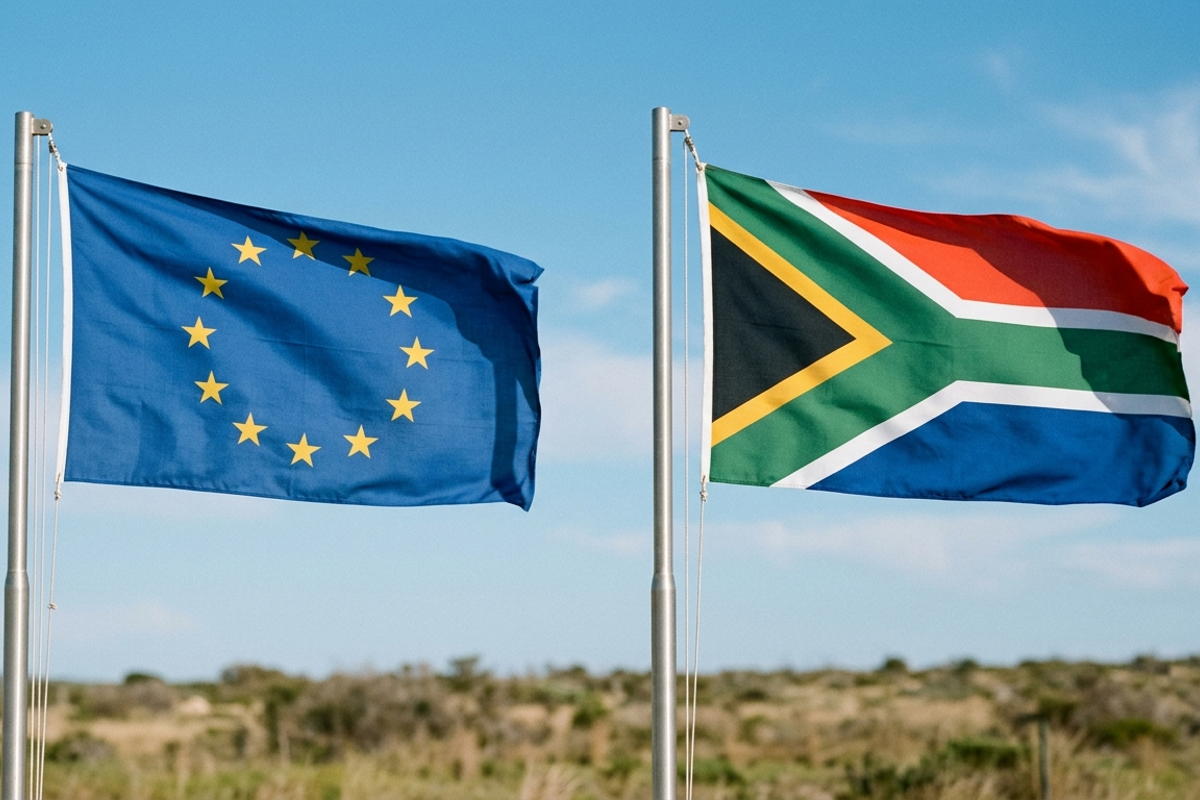
The image used in this article is generated with an AI tool and does not depict any real-time moment
Around 200 companies attended a European Union investment roadshow in Johannesburg on June 1 as the bloc moved forward with plans to invest EUR 12 billion (USD 13.98 billion) in South Africa’s critical mineral endeavours. The event was held as competition continues to grow globally for access to critical minerals used in clean energy, defence and artificial intelligence.
Hosted at the Johannesburg Stock Exchange, the roadshow was the first major effort to mobilise investment under the 2025 EU-South Africa Clean Trade and Investment Partnership.
South Africa used the meeting to reiterate its position that mineral-producing countries should gain more value through local processing and industrial development instead of only exporting raw materials. Trade Minister Parks Tau said, “Our objective is beneficiation, processing, industrial development.”
The EU has been increasing efforts to strengthen supply chains for critical minerals after the recent export restrictions from China on minerals with potential military and industrial use pushed Western countries to search for alternative suppliers, including across Africa.
David McAllister, Chairman of the European Parliament’s Foreign Affairs Committee, mentioned that the EU is trying to reduce dependence on single suppliers after its earlier experience with Russian energy. He said, “The best way to decrease dependencies is to diversify, and South Africa plays an important role.”
The EU and South Africa have already announced some noteworthy projects under the partnership. One includes a EUR 600 million (USD 698.6 million) framework loan to the Development Bank of Southern Africa. The funding is expected to support 1,200 megawatts of green energy capacity and reduce around 3.6 million tonnes of carbon emissions.
Another project includes a EUR 1.48 billion (USD 1.72 billion) financing package for Transnet to modernise South Africa’s ports and rail network. The package forms part of the EU and the European Investment Bank’s Just Energy Transition financing plans.
To know the long-term bauxite market forecast, book our report: “Global Bauxite & Alumina Market Forecast to 2036: Supply–Demand, Trade Flows & Price Outlook”
The EU remains South Africa’s largest trade and investment partner. Bilateral trade between both sides reached EUR 46 billion (USD 53.55 billion) in 2025. More than 1,700 European companies operate in South Africa and account for over 40 per cent of foreign direct investment in the country.
EU ambassador Sandra Kramer shared that the partnership reflects a broader shift from development-focused cooperation to investment-led partnerships between the EU and South Africa.

India and Myanmar expand cooperation on rare earths, trade and security
Next articleMONTHLY: China's thermal coal market rallies sharply in May on summer restocking, supply concerns
Grow with
AL Circle