您想继续阅读英文文章还
是切换到中文?
是切换到中文?

THINK ALUMINIUM THINK AL CIRCLE


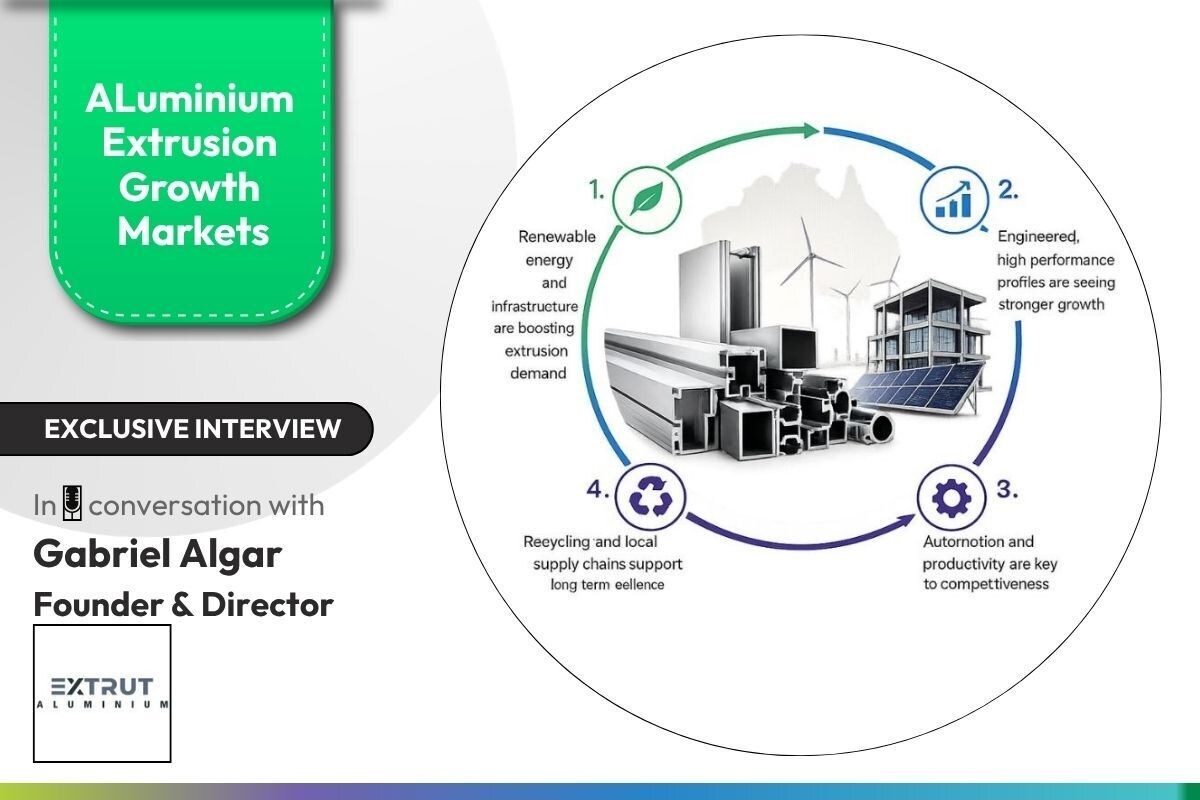
The image used in this article is generated with an AI tool and does not depict any real-time moment
In this exclusive interview, AL Circle speaks with Gabriel Algar, Founder and Director of Extrut Aluminium Pty Ltd, a Western Australia-based aluminium extrusion manufacturer. The discussion explores the demand drivers of extruded aluminium products in Australia and examines the country’s competitive strengths in manufacturing quality, infrastructure and production capabilities.
With a strong passion for manufacturing and innovation, Gabriel is committed to delivering high-quality aluminium extrusion solutions through advanced production technologies, sustainable practices and continuous improvement. His approach reflects the growing potential and resilience of Australia’s aluminium extrusion industry.
Conducted as part of AL Circle’s exclusive campaign, “Aluminium Extrusion Growth Markets,” the interview offers valuable insights into the current landscape, emerging opportunities and future direction of Australia’s aluminium extrusion market.
AL Circle: Australia is accelerating its green transition across renewable energy, electric mobility, defence and sustainable construction sectors where aluminium plays a crucial role due to its lightweight and durability advantages. How significantly are these developments influencing aluminium extrusion demand in Australia?
Gabriel Algar: Australia is entering one of the most significant periods of industrial transformation in decades. The transition towards renewable energy, electrification, defence capability and sustainable infrastructure is fundamentally reshaping demand for aluminium extrusions.
Aluminium is no longer simply an alternative material; it has become an enabling metal. Its lightweight properties, corrosion resistance, durability and infinite recyclability make it essential for the next generation of infrastructure and manufacturing.
At Extrut, we see this as a structural market shift rather than a short-term cycle. Demand is increasingly moving beyond traditional construction into sectors requiring engineered, high-performance extrusion solutions. Businesses that invest today in advanced manufacturing, automation and value-added products will be best positioned to capture this long-term growth.
AL Circle: Australia has developed a strong domestic aluminium extrusion manufacturing base. What policies, infrastructure advantages and industry capabilities are helping local extruders remain competitive in an increasingly globalised market?
Gabriel Algar: Australia's competitive advantage has never been low-cost manufacturing. Our strength lies in quality, engineering capability, compliance with some of the world's highest standards and the ability to work closely with customers throughout the entire project lifecycle.
Government infrastructure investment and growing support for Australian-made manufacturing are positive drivers, but long-term competitiveness will ultimately depend on productivity. Automation, digital manufacturing, skilled people and continuous process improvement will determine which manufacturers succeed.
I believe the future belongs to companies that combine world-class manufacturing with customer-focused engineering rather than simply supplying commodity products.
AL Circle: Among key end-use sectors such as building and construction, automotive, renewable energy and industrial applications, which segments are currently driving the strongest demand growth for aluminium extrusions in Australia? How do these trends compare with the demand patterns observed by Extrut Aluminium?
Gabriel Algar: Construction remains Australia's largest consumer of aluminium extrusions, but the strongest growth is increasingly coming from renewable energy, industrial automation, defence and specialised infrastructure.
At Extrut, we are seeing customers move away from standard catalogue products and towards engineered solutions that reduce installation time, improve performance and create long-term value. This evolution represents a significant opportunity for Australian manufacturers capable of delivering innovation rather than simply volume.
AL Circle: Which aluminium extrusion product categories are witnessing the strongest demand growth currently, and what application trends are driving this demand? Are these opportunities primarily concentrated in the Australian market or are export markets becoming increasingly important?
Gabriel Algar: High-value architectural systems, solar infrastructure, industrial framing systems and customised engineered profiles are currently driving the strongest growth.
Our strategy is centred on creating products that simplify fabrication, reduce labour costs and improve installation efficiency. While Australia remains our primary market, we also see significant export potential for specialised products where engineering expertise, flexibility and customer service outweigh pure manufacturing cost.
AL Circle: China, India, Japan, Germany and the United States are among the largest aluminium extrusion markets globally. How do these markets influence Australia’s extrusion industry, and what opportunities or challenges do Australian manufacturers face when competing internationally?
Gabriel Algar: These global markets influence aluminium pricing, technology and manufacturing trends across the entire industry.
Australian manufacturers cannot realistically compete on labour costs alone. Our opportunity lies in delivering superior quality, engineering expertise, responsiveness and long-term partnerships. Customers increasingly recognise the value of reliable local manufacturing, particularly when supply chain resilience has become a strategic priority.
AL Circle: As aluminium extrusion trade becomes increasingly influenced by energy costs, logistics challenges, tariffs and changing trade policies, what are the biggest challenges that Australian extrusion manufacturers face when accessing international markets?
Gabriel Algar: Australia's geographic location presents ongoing logistics challenges, while energy costs and global market volatility continue to pressure manufacturing margins.
Rather than viewing these challenges as limitations, we see them as a catalyst for innovation. Investing in automation, improving production efficiency, reducing waste and strengthening supplier partnerships are essential to building globally competitive Australian manufacturing.
AL Circle: Aluminium producers and extruders globally are navigating fluctuations in aluminium prices, billet availability and energy costs. How are these factors influencing extrusion production economics and customer demand in Australia?
Gabriel Algar: Volatility has become the new normal. Aluminium prices, billet availability, freight costs and energy prices all require manufacturers to become more agile than ever before.
At Extrut, we focus on controlling the factors we can influence: operational efficiency, process optimisation, die performance, quality consistency and customer service. The manufacturers that will lead the next decade are those that embrace technology, sustainability and continuous improvement.
Looking ahead, I believe Australia's greatest opportunity extends beyond extrusion itself. Developing a stronger domestic recycling and billet casting capability will strengthen supply chain resilience, reduce dependence on imports and support the country's transition towards a truly circular aluminium economy. This is an area where we believe Australia has enormous untapped potential.






.png/275/0)
.png/0/0)