





Introduction
While most people are aware that aluminium costs less than copper, they don’t realise exactly how much less or how prices have changed over time. Aluminium actually costs more than copper for most of its 200-year history!
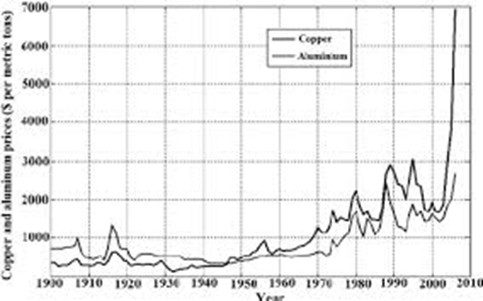
Image 1: Copper and Aluminium Prices in the United States Against Time
(Source: Research Gate)
In the mid-1800s, aluminium was more valuable than gold. Napoléon III’s most important guests were served with aluminium plates, while those less worthies dined on mere silver.

Image 2: Napoleon III of France’s aluminium dinner plate
(Source: Nova Aluminium Systems)
Why did copper cost so little and aluminium so much in the 1800s and the first half of the 1900s?
Metallic copper is found in nature. Nothing had to be done to make it available. Cavemen found it among rocks and stones. It has served mankind well for almost 10,000 years and was instrumental in transitioning from the Stone to the Bronze Age.
Aluminium, on the other hand, is never found in metallic form in nature. Bauxite, aluminium ore, must go through a reduction process to produce metallic aluminium. Aluminium in metallic form was only discovered 200 years ago by Hans Christian Ørsted in 1825 when he produced a few tiny droplets of aluminium.

Image 3: Hans Christian Ørstedin
(Source: Wikipedia)
Electricity enables aluminium production to grow
For aluminium production to achieve industrial scale, a new process was needed. Hall-Heroult electrolytic reduction was that process. However, aluminium production could not be scaled up until an electrical infrastructure capable of supplying large amounts of electricity was built.
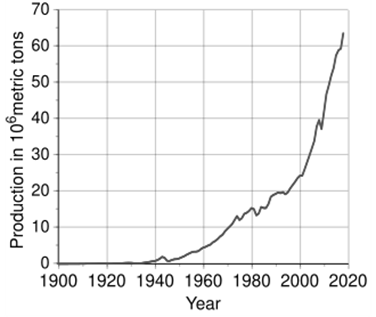
Image 4: Aluminium Production 1900-2020
(Source: Wikipedia)
Copper built the original electrical industry
Although not as good an electrical conductor as aluminium, having just 50% weight-conductivity, copper was plentiful in the 1880s and thus was used to build electrical infrastructure. In a sense, copper gave life to the electrical industry, which in turn gave life to today’s aluminium industry. Now, the grandparent, copper, is being eclipsed by its grandchild, aluminium.

Image 5: Copper as grandparent & Aluminium as grandchild
The fact that aluminium today costs a lot less than copper results from the aluminium industry’s growth and copper’s inability to keep up. Aluminium production surpassed that of copper in 1955 and now more than three times as much aluminium as copper is being produced. Greater scale leads to lower costs.
Copper-to-aluminium price ratio
Looking at just the price or the price changes of either metal can be confusing and misleading. A more useful economic indicator for these metals is the copper-to-aluminium price ratio.
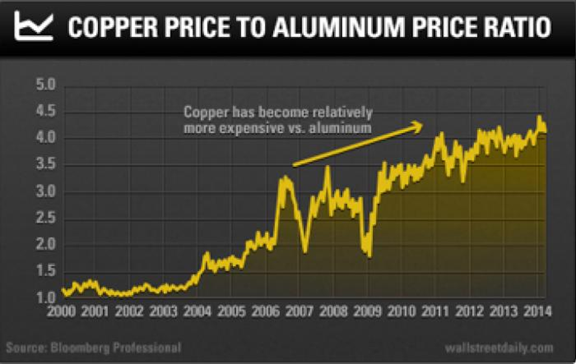
Image 6: Copper-to-Aluminium Price Ratio 2000-2014
(Source: Investing.com)
Economists suggest that when this ratio approaches 4, as it now does, aluminium substitution for copper takes place.
Conclusion
The 21st century electrification and growing use of air conditioning are creating supply challenges for copper, resulting in the electrical and heat exchanger industries switching from copper to aluminium.
“The future can no longer rely on just perpetuating the past.”
Record high copper prices are shining a spotlight on the fact that aluminium can do everything that copper can with added benefits: Reduced cost, less weight and better price stability. Contrary to predictions of copper shortages, migration to aluminium will meet growing needs.
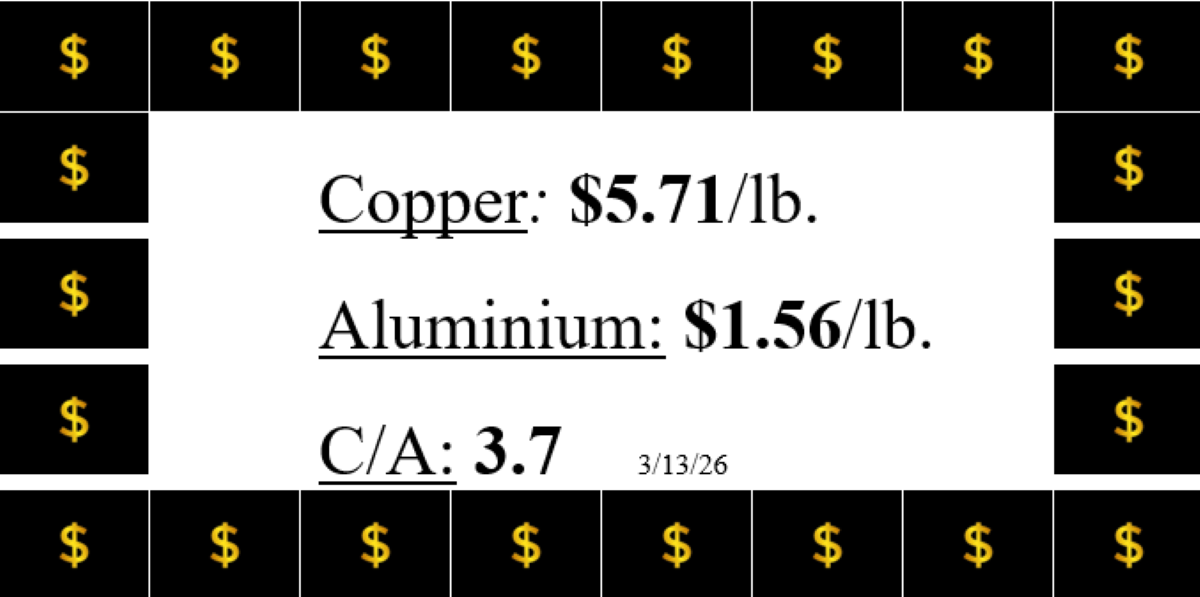
Yes, aluminium costs less than copper, but the magnitude is often not appreciated.
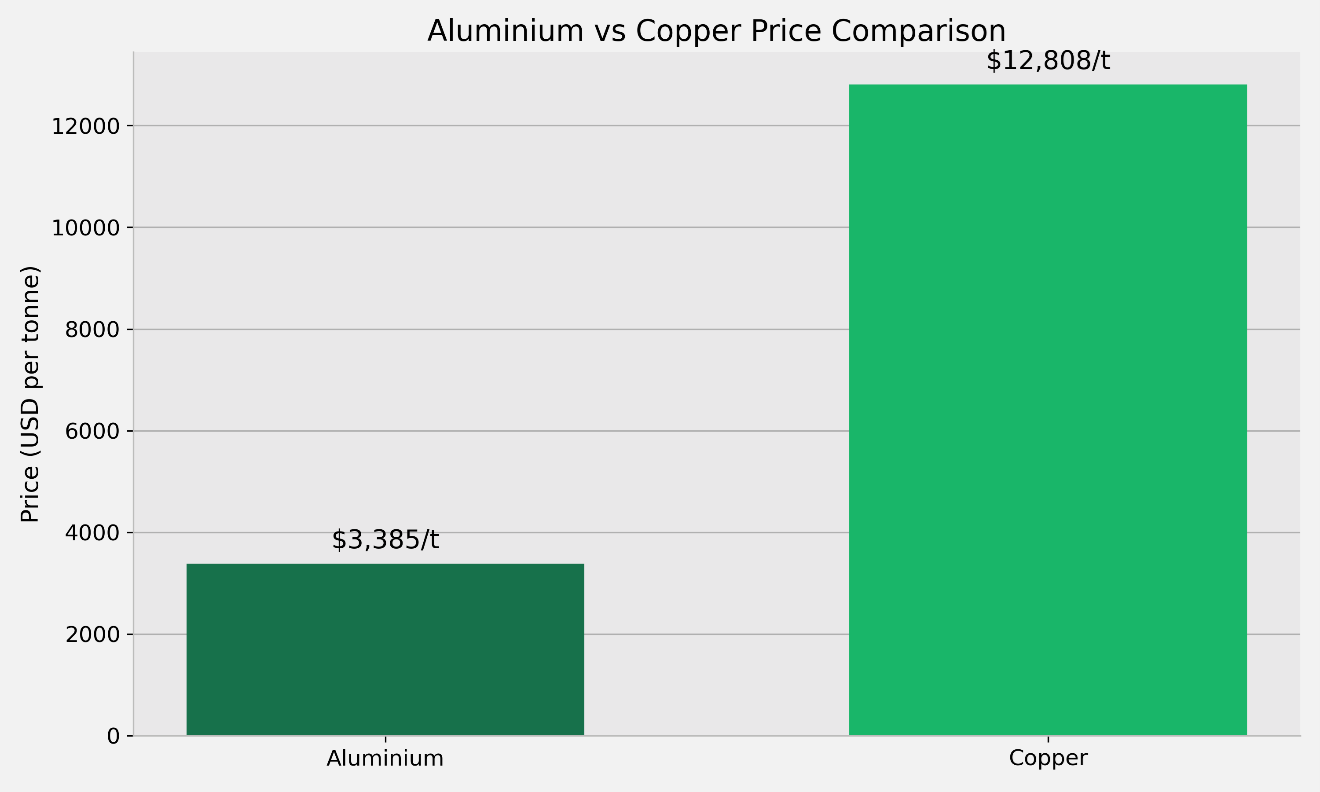
Image 8: Aluminium and Copper Prices
(Source: AL Circle)
Metal prices and ratios that change daily are not easy to follow. This information is important because it provides insight which may otherwise go unnoticed.
Henceforth, AL Circle will publish these numbers to help readers “follow the money”.
Appendix
The following Appendix summarises what one needs to know:
Material properties
- Aluminium has twice the weight conductivity of copper.
- Aluminium weighs just one-third as much as copper.
- One pound of aluminium provides the same current-carrying capacity as two pounds of copper.
Supply
- Aluminium production has increased tremendously since World War II. In just ten years, 1945-1955, aluminium production surpassed that of copper and continues to increase.
- Today, roughly three times more aluminium than copper is being produced.
- Aluminium is the third most abundant element in the Earth’s crust after oxygen and silicon.
- Copper prices are skyrocketing and are predicted to go higher because of constrained supply.
- The price ratio of copper to aluminium is now roughly four to one.
Bottom line
- Aluminium now has an eight-to-one cost advantage over copper: $1 worth of aluminium provides the same electrical function as $8 copper.
- Aluminium prices are more stable than copper prices.
- Aluminium is less prone to theft.


 Voyagerman Technology


