








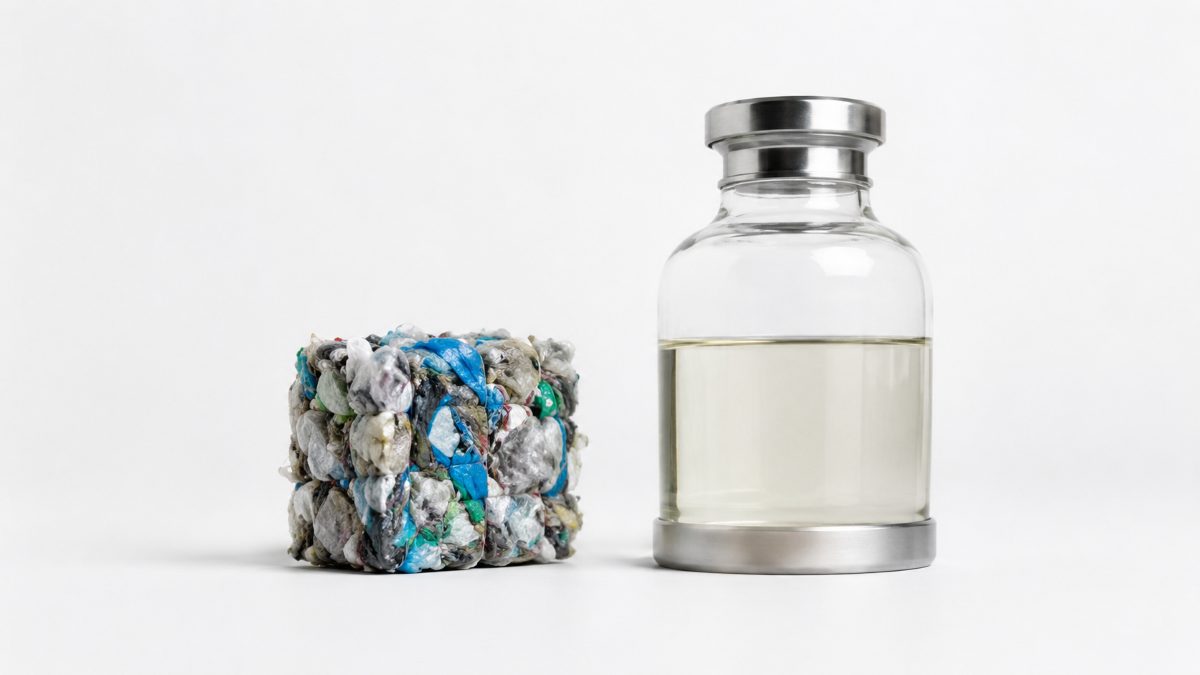
Plastic pollution is a mounting environmental challenge worldwide. Traditional recycling handles only a fraction of plastic waste, and much of it still ends up in landfills or incinerators. A recent breakthrough in chemical recycling offers a promising alternative, converting plastic waste directly into usable fuel via an aluminium‑based molten-salt process.
What the new method is
Researchers at the Oak Ridge National Laboratory have developed a technique that uses a molten salt solution containing aluminium chloride to break down polyethene, one of the most common plastics, into fuel‑range hydrocarbons.
Key aspects of this method include:
- The molten salt acts as both medium and active agent, eliminating the need for external catalysts, hydrogen, or organic solvents.
- The reaction operates at temperatures below 200°C, far lower than many conventional plastic‑to‑fuel approaches (typically 450–500°C), reducing energy demand.
- Approximately 60% of the output resembles gasoline and is suitable for transport and industrial use.
Why this advance matters
This aluminium‑salt conversion process offers several tangible advantages over legacy recycling and pyrolysis technologies:
Lower energy requirement
Beyond cutting fuel costs, lower temperatures make the process more scalable and less resource‑intensive.
No expensive or rare catalysts
Conventional chemical recycling often depends on precious metals to trigger reactions. The aluminium chloride molten salt sidesteps these needs entirely.
High gasoline yield
Unlike some emerging techniques that struggle with low liquid fuel output, this method delivers a majority liquid product in the gasoline range.
Image used for representational purpose
Technical insights and challenges
Researchers used neutron scattering and advanced spectroscopy to monitor how long polymer chains break apart during the reaction, helping them refine the process.
However, the system isn’t without hurdles:
- The molten salt is moisture‑sensitive. Exposure to water can alter reaction behaviour and lower efficiency, posing a challenge for consistent industrial application.
- Ongoing work is needed to improve system stability and durability before full‑scale commercialisation becomes viable.
A step toward a circular plastics economy
Instead of viewing plastic solely as waste, this aluminium‑salt conversion method positions it as a feedstock for fuel, potentially helping reduce environmental burden and recover value from materials that otherwise have limited reuse options. With further research and scaling, this could be a commercially attractive tool in the broader toolkit for managing plastic pollution and advancing circular economy solutions.
Source: Plastic to fuel conversion advances with new aluminium-based method


 Voyagerman Technology


