




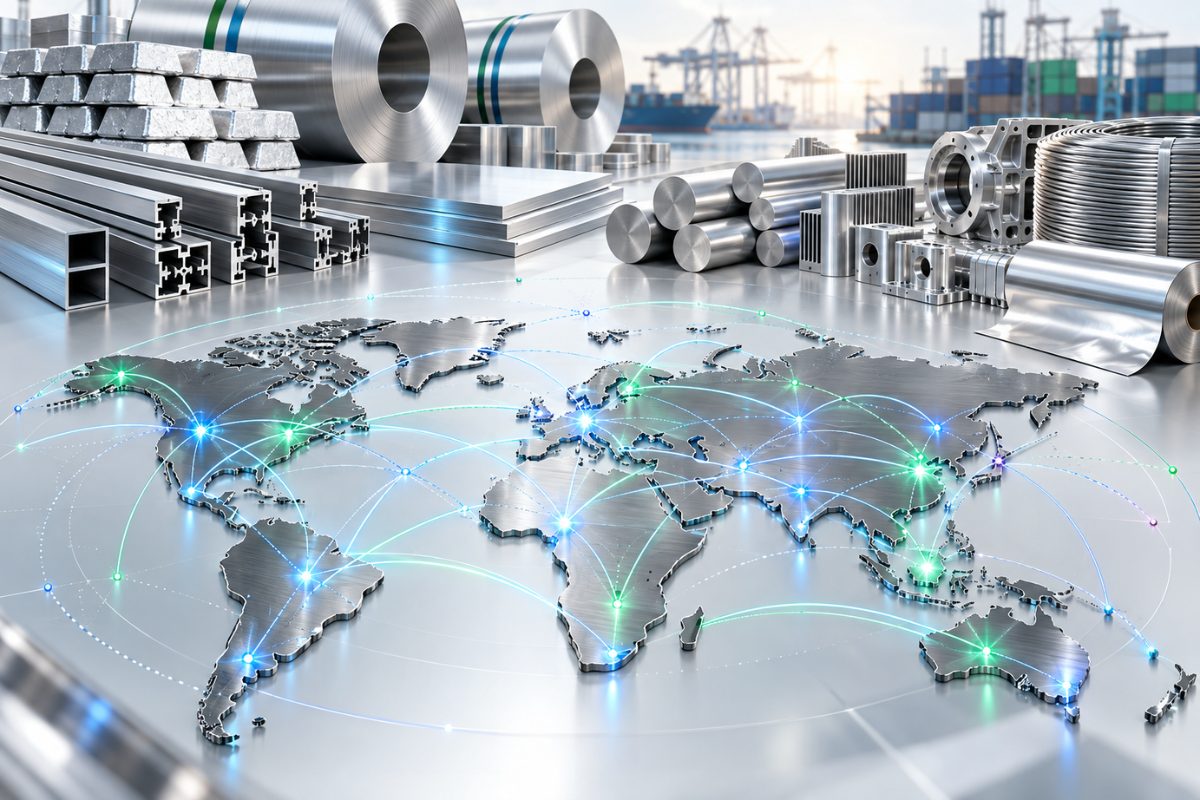
Aluminium reaches the end user through bauxite mining, alumina refining, smelting, casting, downstream processing and recycling. Each stage has its own inputs, equipment and technical risks, so buyers who treat all aluminium suppliers as interchangeable often source the wrong product or the wrong type of company.
This guide maps the value chain, sets out what to check before placing an order and lists 15 companies on our marketplace, AL Biz, grouped by business activity.
How the aluminium value chain works
The main route is: bauxite mining → alumina refining → primary smelting → casting → downstream processing → finished products → recycling and remelting.
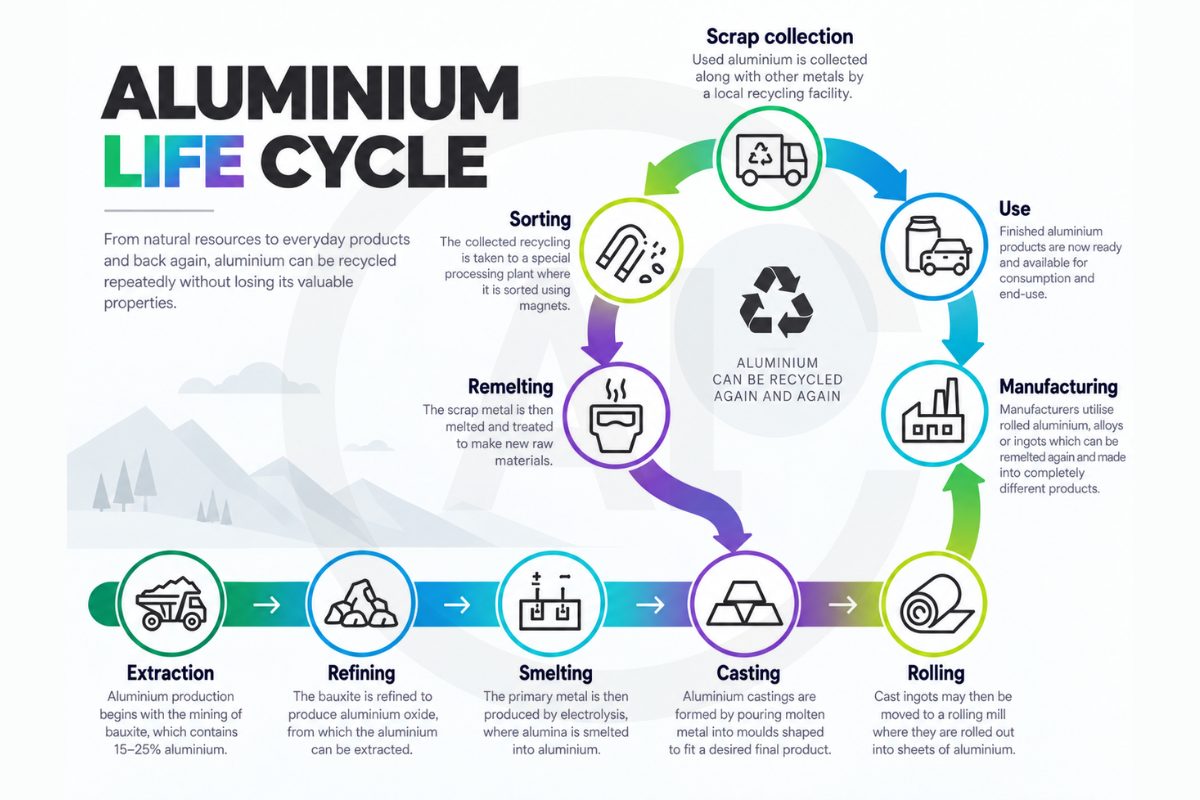
Not all metal follows this route.
Scrap can be remelted and cast without passing through mining, refining or smelting, which is why secondary producers and primary smelters often compete for the same casting and extrusion customers.
1. Bauxite mining and alumina refining
Bauxite is the main aluminium ore. Most refineries use the Bayer process to convert it into alumina.
- Inputs and equipment: bauxite, caustic soda and process chemicals; crushers, mills, filtration, separation and drying equipment; storage and transport systems.
- Buyer relevance: bauxite and alumina quality affects refining cost, energy use and downstream smelter performance.
2. Primary aluminium smelting
Smelters produce liquid aluminium from alumina by electrolysis, using the Hall-Héroult process. They need a stable power supply and tight control of temperature, bath chemistry and equipment performance.
- Inputs and equipment: smelter-grade alumina, carbon anodes and cathode materials, aluminium fluoride and other bath materials, pot tending and metal handling equipment, automation and process monitoring.
3. Casting and alloy production
Casting converts molten metal into forms that can be stored, sold or processed further.
| Form | Typical use |
| Ingots | Remelting, alloy production and manufacturing |
| Billets | Feedstock for extrusion |
| Slabs | Rolling into sheet, plate and coil |
| Foundry castings | Shaped industrial components |
Casthouses add alloying elements such as silicon, magnesium, manganese or copper to reach the required properties. Grain refiners, degassing systems, filters and fluxes control metal cleanliness. Furnace design, mould condition and process control directly affect defect rates and consistency.
4. Downstream processing
| Process | Common products | Major applications |
| Extrusion | Profiles, tubes and sections | Construction, solar, transport and machinery |
| Rolling | Sheet, coil, plate and foil | Packaging, automotive, HVAC and construction |
| Forging | High-strength shaped components | Automotive and industrial equipment |
| Die casting | Complex components | Automotive, electrical and machinery |
| Fabrication and finishing | Cut, machined, coated and assembled products | Buildings, consumer goods and industrial systems |
Each process has distinct inputs. An extruder needs billet, dies, presses and finishing lines. A rolling mill needs slabs, rolling systems and annealing furnaces.
5. Recycling and secondary production
Aluminium can be recycled repeatedly without losing its basic metal properties. Scrap is collected, sorted, cleaned and prepared before melting.
Common scrap streams include used beverage cans (UBCs), extrusion scrap, cast scrap, sheet offcuts, automotive scrap and mixed scrap. Secondary production generally uses considerably less energy than primary production. The actual saving and the resulting metal quality depend on scrap type, process route and electricity source.
Shredders, sorting systems, furnaces and metal treatment products determine how much usable metal a recycler recovers and how well contamination is controlled.
How to evaluate aluminium suppliers
A lower unit price can cost more overall if the material fails inspection, delivery slips or the supplier cannot hold specification across repeat orders. Assess the following before shortlisting.
- Specification and quality: Confirm the supplier can meet the alloy grade, chemical composition, dimensions, temper and applicable standards. For equipment, confirm rated capacity, process requirements, safety features and technical performance.
- Capacity and consistency: Check that volumes can be delivered to schedule. For repeat orders, batch-to-batch consistency matters as much as the first shipment.
- Technical support and customisation: Custom extrusion profiles, bespoke alloy compositions, specialised casting equipment and parts made to drawing all need engineering input, not just a quotation.
- Quality documentation: Request the documents relevant to the order before you commit, such as mill or material test certificates, chemical analysis reports and dimensional inspection reports.
- Delivery and commercial terms: Review lead time, delivery location, payment terms, packaging and Incoterms. For cross-border orders, check freight arrangements, import duties and customs requirements.
- After-sales service: For furnaces and casting machines, ask about installation, commissioning, spare parts availability, maintenance and technical support. Service quality affects operating life and total cost of ownership.
Directory: Premium companies listed on our marketplace
Alloy and metal product suppliers
1.Bagaria Aluminum Alloys Private Limited
Secondary aluminium manufacturer based in West Bengal. Products include alloy ingots (ADC12, LM6, LM25, AC2A, AC4B), circles, pressure cookers, notched bars, cubes and shots. Serves automotive, casting and metal processing buyers.
2.LODEC Group
International metal trading and sourcing company. Supplies aluminium sheets, coils, plates, foil, tubes, wire and extrusion profiles, plus other non-ferrous metals, in standard and customised forms for construction, packaging, transport, HVAC and engineering.
Extrusion, fabrication and forging
3.Alumex PLC
Part of the Hayleys Group. Manufactures extrusions for architectural and industrial use, with fabrication, anodising, powder coating and die design and development.
4.Bhoruka Extrusions Pvt Ltd.
Extruded profiles for building, construction and industrial applications, including door and window profiles, façade systems, solar panel profiles and electrical and electronic equipment profiles. In-house machining and surface finishing.
5.Pyrocast India Pvt. Ltd.
Aluminium and other non-ferrous forging. Produces closed-die forged components for automotive and general engineering, with design and machining support.
Casthouse equipment and technology
6.SECO/WARWICK
Heat treatment and thermal processing technology. Aluminium-related range covers melting and holding furnaces, coil annealing furnaces, ageing and annealing systems, solution heat treatment furnaces and controlled atmosphere brazing equipment.
7.Casthouse Engineering and Technology AG (CETAG)
Engineering services and equipment for casthouses, including consulting, melting and holding furnaces and rotary dross cooling equipment.
8.ALMEC TECH
Direct chill (DC) casting technology: billet and slab casting systems, casting moulds, complete DC casting machines and aluminium rod feeders.
9.GAP Engineering SA
Engineering and automation for casting operations. Listed products include GAP Level Sensors, Level Actuators and GLS 4.0 Reliability solutions for molten metal level measurement, casting control and process monitoring.
10.Rodabell, S.A.
Equipment, consumables and services for the aluminium industry, covering metal transfer, melting and billet casting services, with equipment supply and maintenance support through industry partners.
Recycling and processing equipment
11.SIMVIC GROUP
Metal recycling equipment and integrated plant systems, including shredders and double-shaft shredders for UBCs, cast aluminium and extrusion scrap, covering ferrous and non-ferrous recovery.
12.Guangzhou Onustec Group Ltd.
Machinery for aluminium profile machining and fabrication: CNC machining centres, cutting machines, end milling machines, hydraulic punching equipment, corner crimpers and window drilling machines for doors, windows and façade systems.
Raw materials, consumables and engineering solutions
13.Uniseven Engineering and Infrastructure Pvt Ltd
Raw materials, master alloys, fluxes, casthouse consumables, industrial machinery and plant equipment, plus engineering and turnkey solutions for production facilities.
14.Jagannath Company
Metallurgical additives and consumables for casting, extrusion and remelting: grain refiners, degassing tablets, cover fluxes, filter cloth and alloy ingots.
15.Urja Products Pvt. Ltd.
Technical textiles, including fibreglass and speciality coated fabrics. Aluminium products include launder insulating lids, launder socks, spout socks and combo or channel bags for molten metal handling, insulation and filtration.
For further listings, see the complete aluminium supplier directory on our marketplace.
How to shortlist suppliers using a B2B marketplace
Sourcing specialised machinery, custom products or international material usually means contacting several companies and comparing specifications one by one. A B2B marketplace consolidates that first step.
On AL Biz, buyers can search products, equipment and services, review company profiles and listings, send enquiries and post buying requirements.
Use it to shortlist aluminium suppliers, not to qualify them. Confirm specifications, quality documents, commercial terms and capacity directly with each company before placing an order.
If you are struggling with getting enquiries from buyers, start by creating a company profile for free and upgrade it when you want.