











For any base metal recycler, profitability is not determined only by how efficiently scrap is processed. When should material be bought? When should a price be fixed? What happens to margins if aluminium prices move before a sale is completed? These questions can become critical when market volatility affects procurement, inventories and commercial commitments.
This is where hedging for aluminium recyclers can move beyond being a financial concept and become a practical business capability.
Where does price risk enter the base metal recycling business?
A base metal recycler can be exposed to price movements at several points across the business cycle. Scrap may be purchased at one price while the final aluminium product is sold later at another. Between these transactions, market prices can move significantly, creating uncertainty around expected margins.
Currency movements, inventory exposure and the timing of price fixation can add another layer of risk. The challenge is therefore not simply predicting whether aluminium prices will rise or fall. It is understanding where the business is exposed, how much risk it carries and what mechanisms can be used to manage that exposure.
Can hedging help recyclers make better commercial decisions?
Hedging is designed to reduce uncertainty rather than turn recyclers into market speculators. For businesses dealing with aluminium and other base metals, understanding futures and options can help teams assess price exposure and build more structured approaches to procurement, inventory and sales decisions.
However, effective aluminium price risk management requires more than knowing how a futures contract works. Base metal recyclers also need to understand how commodity prices are formed, when exposure emerges, how price fixation affects the business and how hedging positions should fit within internal commercial controls.
That is where practical industry-focused training can make a difference.
From market volatility to a structured risk framework
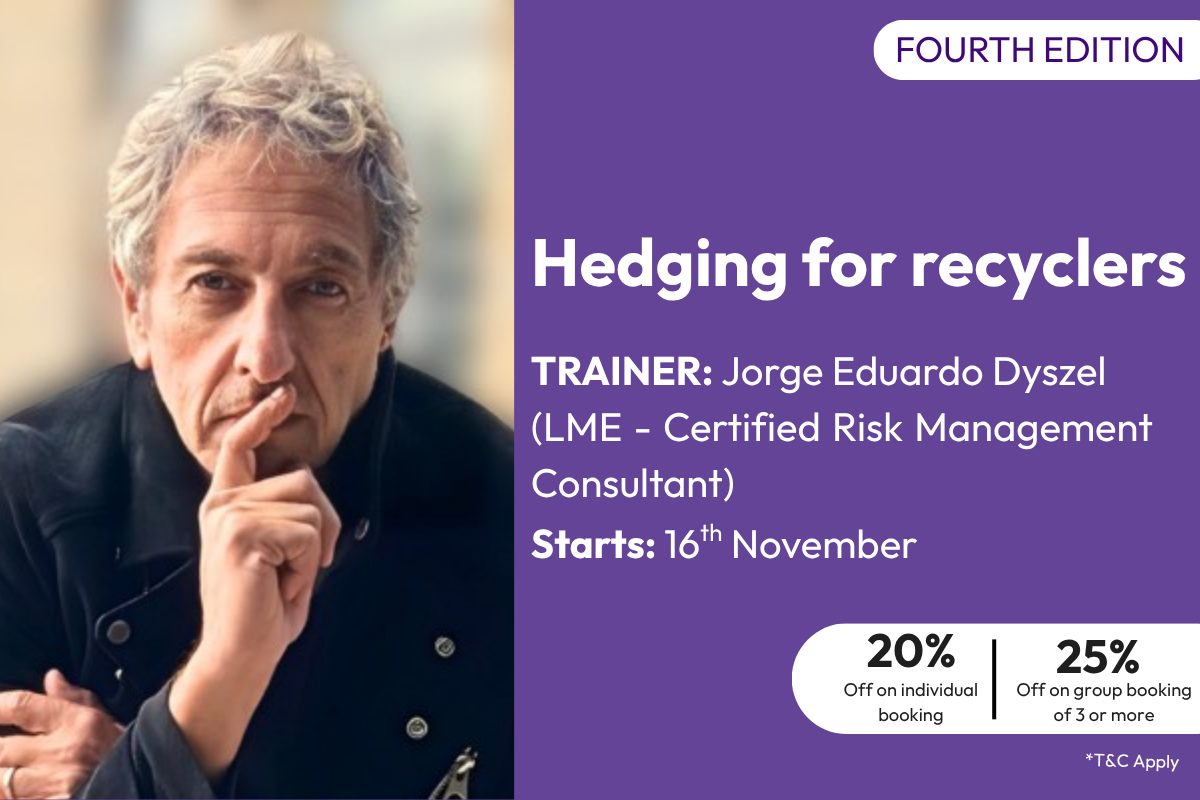
The fourth edition of “Hedging for Recyclers: Become an Expert in 6 Hours”, led by LME-certified Risk Management Consultant Jorge Eduardo Dyszel, focuses specifically on the challenges faced by recyclers, scrap traders, procurement teams, commercial managers and finance professionals.
Across six online sessions, participants will explore:
- How commodity price volatility affects recycler margins and inventories
- Critical exposure points and price fixation risks
- Practical futures hedging strategies
- Real-world aluminium, copper and lead hedging scenarios
- How options can protect margins while retaining upside opportunities
- Building an internal risk-management policy for recycling businesses
Importantly, no prior hedging experience is required, making the programme relevant to both professionals beginning their risk-management journey and experienced market participants looking to strengthen their approach.
Is hedging becoming a competitive capability for recyclers?
As recycling businesses operate across increasingly complex commodity markets, managing price risk can become just as important as managing operational efficiency. The objective is not to predict every market movement. It is to build the knowledge and processes required to make better decisions when prices move.
For aluminium recyclers looking to strengthen commodity price risk management, improve commercial decision-making and develop a more structured approach to market exposure, practical hedging knowledge could be a valuable business capability.
Want to understand how hedging can fit into your recycling business?
Join the fourth edition of “Hedging for Recyclers: Become an Expert in 6 Hours” with Jorge Eduardo Dyszel and learn how futures, options and risk-management frameworks can be applied to real recycling business scenarios.
Almunium Recyclers directory