




An aluminium extrusion RFQ should do more than ask for a price. It should give suppliers enough technical and commercial information to determine whether they can manufacture the profile, which production route is required, how much the order will cost and when it can be delivered.
A vague request such as “Need 10 tonnes of aluminium profiles” may attract responses, but it will rarely produce quotations that can be compared reliably. One supplier may quote an unfinished standard profile, another may include anodising and machining, while a third may assume different tolerances or packing requirements. The prices will not represent the same product.
A well-written aluminium extrusion RFQ removes these assumptions. It reduces clarification rounds, exposes manufacturing constraints early and gives buyers a more accurate basis for evaluating suppliers.
Why accurate extrusion quotations depend on complete specifications
Extrusion pricing is shaped by more than alloy and weight. Die complexity, profile geometry, dimensional tolerances, surface finish, fabrication, order volume, inspection, packaging and delivery terms can all affect the final cost.
Missing information forces a supplier either to delay the quotation and ask questions or to price against assumptions. Both outcomes weaken the procurement process. If those assumptions change after tooling or production has started, the buyer may face revised prices, longer lead times or rejected material.
The goal of an aluminium profile RFQ is therefore not to produce the longest possible document. It is to communicate every detail that affects manufacturability, quality, cost or delivery.
1. Identify the profile clearly
Begin by stating whether the requirement is for a standard profile or a custom extrusion.
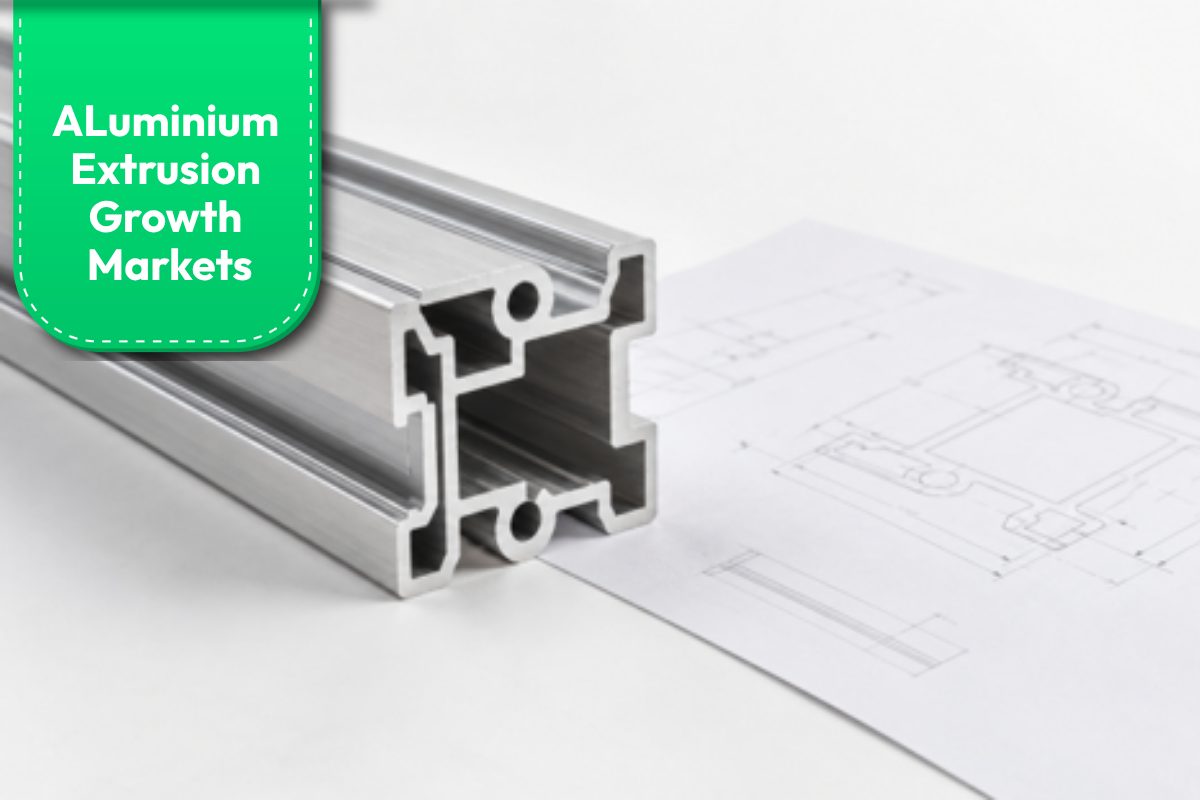
For a standard product, mention the recognised profile type, catalogue reference or applicable standard. For a custom profile, attach a fully dimensioned drawing. A photograph or rough sketch may help explain the application, but it is not a substitute for an engineering drawing.
The drawing should ideally include:
- Overall dimensions and cross-sectional geometry
- Wall thicknesses
- Hollow sections, channels, screw ports and internal features
- Critical dimensions and datum points
- Linear, angular, flatness, straightness and twist tolerances where relevant
- Cut length and cut-length tolerance
- Drawing number, revision number and units of measurement
Send the drawing in PDF for straightforward review and, where possible, include a CAD file such as DWG, DXF or STEP. Clearly identify the controlling document if both are supplied.
Do not apply unnecessarily tight tolerances to every dimension. Tight tolerances can restrict the available production routes, increase inspection requirements and raise scrap and processing costs. Mark only the dimensions that are genuinely critical to assembly or performance, and allow the supplier to propose achievable tolerances for non-critical features.
2. State the alloy and temper
An accurate aluminium extrusion specification should name both the alloy and temper, for example, 6063-T5 or 6061-T6, rather than simply stating “aluminium”.
The alloy affects strength, extrudability, corrosion resistance, surface appearance and suitability for fabrication. The temper defines the required mechanical condition after extrusion and heat treatment. Even two alloys used for similar applications may require different billet, press and ageing conditions, leading to different prices and lead times.
If the buyer is open to alternatives, the RFQ should say so explicitly. For example:
Preferred material: Aluminium alloy 6063-T6. Suppliers may propose an equivalent alloy if dimensional, mechanical and finishing requirements are maintained. Any deviation must be stated in the quotation.
This gives manufacturers room to suggest a more practical or economical option without allowing silent substitutions.
3. Define the applicable standard
Mention the required national, international or customer-specific standard for alloy composition, dimensional tolerances, mechanical properties and testing. The standard can influence manufacturing controls and acceptance criteria, so it should not be left until the purchase-order stage.
If different standards govern different aspects of the product, map them clearly. Also specify which requirement takes precedence if the drawing, purchase specification and referenced standard conflict.
For application-specific components, particularly in automotive, transportation, electrical, construction or safety-critical systems, include any qualification, traceability or approval requirements at the RFQ stage.
4. Specify the surface condition and finish
“Good finish” is not a measurable requirement. State the required surface treatment and the acceptance criteria that matter for the application.
Common options include:
- Mill finish
- Anodised finish, with colour and coating thickness specified
- Powder coating, with colour reference, gloss level and coating requirement
- Mechanical brushing or polishing
- Chemical conversion coating
- Protective film or other temporary protection
For visible profiles, identify the cosmetic or exposed surfaces on the drawing. Define acceptable limits for scratches, die lines, handling marks, colour variation and other appearance defects, preferably using an approved sample or documented visual standard.
The supplier also needs to know whether the profile will be bent, welded, bonded or further coated after delivery, as the selected alloy, temper and surface preparation may affect subsequent processing.
5. Include all secondary operations
A custom aluminium extrusion quote can cover the extruded length alone or a finished component. Make that distinction unambiguous.
List every required operation, such as:
- Precision cutting
- CNC milling, drilling or tapping
- Punching or slotting
- Deburring
- Bending or forming
- Welding
- Assembly with inserts, fasteners or end caps
- Cleaning, marking or labelling
- Surface finishing
For machined parts, attach the finished-component drawing rather than relying only on the extrusion cross-section. State tolerances after fabrication and finishing, because these may differ from the as-extruded tolerances.
If the buyer intends to complete secondary operations in-house, this should also be mentioned. The supplier can then consider handling allowance, straightness, cut length and packaging accordingly.
6. Separate annual demand, order quantity and delivery schedule
Quantity affects billet planning, press utilisation, die economics, finishing batches and freight. Avoid giving a single volume without explaining what it represents.
An effective RFQ should state:
- Prototype or sampling quantity
- Initial production order quantity
- Quantity per release or shipment
- Forecast monthly or annual demand
- Expected contract duration
- Required first-article and production dates
For example, “annual demand: 120 tonnes; expected release: 10 tonnes per month” is much more useful than “quantity: 120 tonnes”. The supplier can quote against the actual production and delivery pattern rather than assuming that the full volume will be ordered at once.
Ask the supplier to state minimum order quantity, minimum production quantity and any price breaks. These terms are not always identical.
7. Address tooling instead of hiding it inside the unit price
Custom profiles normally require a dedicated die. The RFQ should ask suppliers to quote tooling separately and disclose what the charge includes.
Request details on:
- Die design and manufacturing cost
- Trial or sampling charges
- Number of sample pieces included
- Tool-development lead time
- Tool ownership
- Expected die life or replacement policy
- Storage and maintenance terms
- Charges for design revisions
Separating tooling from the extrusion price makes quotations easier to compare and prevents a low unit rate from concealing higher upfront costs.
If an existing die is to be transferred, provide its drawings, history, condition and ownership status. A supplier should not be expected to guarantee output from an unfamiliar tool without inspection or trial.
8. Define inspection, testing and documentation
State how conformity will be assessed. Depending on the product and application, the requirement may include dimensional inspection, mechanical testing, chemical-composition certification, coating checks or traceability records.
The RFQ should identify:
- Required inspection reports or material certificates
- Sampling plan and inspection frequency
- First article or pre-production sample approval
- Mechanical properties to be verified
- Surface-finish or coating tests
- Traceability by heat, billet, batch or production lot
- Third-party inspection, if applicable
- Record-retention requirements
Do not request extensive documentation by default. Every certificate, test and inspection step adds work and may add cost. Ask for what the application, customer or regulation actually requires.
9. Explain packaging, labelling and logistics
Profiles can be damaged by scratches, moisture, poor stacking or uncontrolled movement during transport. Packaging is therefore part of the product specification, not an afterthought.
Mention:
- Bundle size and maximum bundle weight
- Interleaving, wrapping, protective film or separators
- Pallet, crate or rack requirements
- Labelling format and barcode needs
- Maximum package dimensions
- Container-loading or handling restrictions
- Delivery destination
- Required Incoterm and named place
- Partial-shipment policy
If reusable racks or customer-supplied packaging are involved, explain the ownership, return and freight arrangement.
10. Provide commercial terms suppliers can price against
A technically complete RFQ can still produce inconsistent quotations if the commercial basis is unclear. Include the quotation currency, payment expectations, price-validity period, delivery term and preferred quotation deadline.
Ask every supplier to break out the same cost elements:
- Tooling and development
- Extrusion price
- Surface finishing
- Secondary fabrication
- Inspection or certification
- Packaging
- Freight and other logistics charges
- Taxes or duties, where applicable
Also request the metal-price basis, conversion charge and adjustment mechanism if the quotation is linked to an aluminium benchmark. This makes it easier to understand which portion of the price may change between quotation and delivery.
A practical aluminium extrusion RFQ format
The following structure gives suppliers a consistent basis for quotation:
| RFQ field | Information to provide |
| Product | Profile name, part number and end-use application |
| Drawing | Drawing number, revision, units and attached PDF/CAD files |
| Material | Alloy, temper and permitted alternatives |
| Dimensions | Cross-section, cut length and critical tolerances |
| Standards | Material, dimensional, finishing and customer standards |
| Surface finish | Treatment, colour, thickness, gloss and cosmetic criteria |
| Fabrication | Cutting, machining, drilling, bending, assembly or other operations |
| Quantity | Sample volume, order quantity, annual forecast and release pattern |
| Tooling | Die type, ownership, samples, lead time and replacement policy |
| Quality | Inspection, testing, certificates, traceability and sample approval |
| Packaging | Protection, bundle size, labels and handling limits |
| Delivery | Destination, required date, shipment frequency and Incoterm |
| Commercial | Currency, payment terms, validity and quotation deadline |
Example of a clear aluminium extrusion buying requirement
Product: Custom aluminium heat-sink profile
Application: Enclosure cooling for industrial electronic equipment
Material: 6063-T6; equivalent proposals must be declared and justified
Drawing: Part HS-014, Revision C, attached in PDF and STEP formats
Supply condition: Cut to 600 mm lengths, machined and deburred
Finish: Black anodised; exposed cosmetic faces identified on the drawing
Quantity: 100 pieces for first-article approval, followed by 2,000 pieces per month; estimated annual demand 24,000 pieces
Quality: Dimensional report for first article and material certificate with each batch
Packaging: Individually protected to prevent surface contact; export-worthy cartons on pallets
Delivery: Quote on the requested Incoterm to the named destination
Quotation breakdown: Tooling, extrusion, machining, anodising, packaging and freight quoted separately
Supplier response: Confirm manufacturability, exceptions, MOQ, sample lead time, production lead time and quotation validity
This example is useful because it distinguishes the prototype, recurring volume and annual forecast; identifies the finished condition; and asks suppliers to disclose exclusions and deviations.
Common RFQ mistakes that create inaccurate quotations
Sending only a photograph
A photograph communicates appearance, not dimensions, tolerances or material requirements. It can support an RFQ but cannot control production.
Naming an alloy but omitting the temper
The mechanical condition may affect heat treatment, straightening, machining and performance. Alloy alone is incomplete.
Requesting the tightest possible tolerance
This may increase cost without improving the part. Tolerances should follow functional requirements, not a blanket preference for precision.
Combining forecast volume with the first order
A supplier may calculate pricing on an annual quantity that the buyer never releases in one batch. State the order and delivery pattern separately.
Ignoring post-extrusion operations
Cutting, machining, finishing and packing often represent a meaningful share of the cost. Omitting them produces an artificially low initial quotation.
Comparing only the price per kilogram
The lowest conversion price may exclude tooling, finishing, testing, packaging or freight. Compare total landed cost, technical compliance, lead time, capability and quotation assumptions.
Allowing unlisted assumptions
Require suppliers to record every deviation, exclusion and assumption. Silence should not be treated as compliance.
Questions to ask suppliers before shortlisting
Once quotations arrive, buyers should check more than the headline price:
- Can the profile be produced to the drawing without design changes?
- Which dimensions or tolerances present manufacturing risks?
- What is included and excluded from the quoted price?
- Are sample and production lead times measured from purchase order, drawing approval, die approval or metal-price confirmation?
- What are the minimum production and shipment quantities?
- How will the supplier control critical dimensions and surface quality?
- Does the supplier perform extrusion, finishing and machining internally or use subcontractors?
- What happens if the first sample fails approval?
- How are aluminium-price movements handled?
- Which quotation assumptions would trigger a price revision?
Better RFQs produce better supplier comparisons
An accurate RFQ does not mean every supplier will quote the same price. It ensures that price differences arise from genuine factors, such as production capability, conversion efficiency, tooling strategy, lead time and service level, rather than unclear or missing information.
Before issuing an aluminium extrusion buying requirement, buyers should be able to answer four questions: What exactly must be supplied? How will the product be inspected and accepted? What quantities and delivery schedule are required? On what commercial basis should suppliers quote?
When these details are clearly defined, suppliers can assess the requirements more quickly, submit more reliable offers, and identify potential manufacturing constraints before production begins. Buyers, in turn, gain a stronger basis for comparing technical compliance, total cost and delivery capability.
The next step is to put that specification in front of suitable suppliers. Submit your aluminium extrusion RFQ on AL Biz to communicate your requirements and receive relevant supplier quotations.
Even a technically detailed extrusion RFQ can create quotation gaps when tolerances, tooling ownership, finishing standards or inspection requirements are open to interpretation.
In your experience, which missing RFQ detail causes the most sourcing problems? Share your perspective in the comments.
Buyers and suppliers can also explore active aluminium extrusion buying and selling leads to discover current sourcing and supply opportunities.