









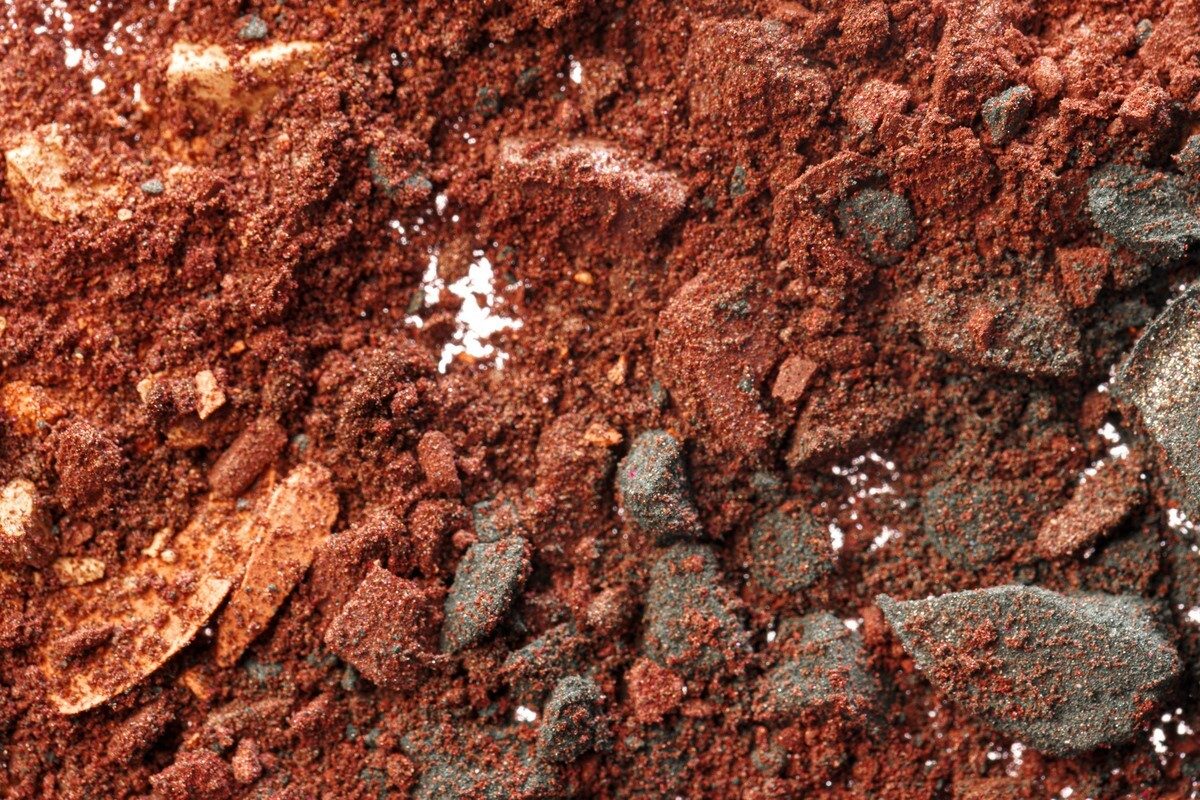
I have chosen a topic today which is probably most widely studied and has received extensive attention among technologists and researchers who are connected with primary aluminium industry players worldwide. Still, this question comes back to the table of large corporates and research advisory management boards repeatedly for an effective solution.
So, the question is whether bauxite residue is a massive obstacle or a valuable opportunity for alumina refineries. Historically viewed strictly as a hazard, alumina refineries are increasingly considering it as a lucrative secondary mineral reserve mainly for rare earths and titanium to offset environmental, storage and handling costs.
Bauxite residue: The environmental reality
The Bayer process of refining bauxite ore to aluminium oxide (alumina) at a refinery, on average, takes 4.5 tonnes of bauxite to produce 2 tonnes of alumina (and ultimately one tonne of aluminium). Thus, around 2.5 tonnes of dry bauxite residue are produced for every tonne of aluminium, globally between 150 and 200 million tonnes a year.
The issues involved in the management of this significant volume of waste are many and varied, with risks related to safe containment, high pH, dusting, land use, leachate treatment, security and monitoring all being relevant and with specificities per location.
Today more than 4 billion tonnes of bauxite residue are in storage around the world and by 2050 this number could reach 10 billion tonnes. The industry must continue to work towards some breakthrough solutions for bauxite residue.
Rare earth recovery: Opportunity meets economic reality
The techno-economic hurdles are probably most appropriate to make a comparison for producing RE from natural sources (like bastnasite or monazite) vs that from bauxite residue (BR).
Recovering rare earth elements (REEs) from natural ores is currently considered more economically viable than recovering them from bauxite residue. While natural ore processing is more cost-effective provided the concentration of REEs in ores is to the tune of 0.5% or even exceeding that.
Extracting REEs from red mud may be cost-prohibitive on a commercial scale, largely due to high reagent consumption and also the locking nature of REEs and therefore difficulty in liberation of the same. However, if the quantity of REEs in demand is more than that available from primary sources, then comes the role of secondary sources like bauxite residue.
With the above factors in mind, I have my analysis and while BR is a reliable secondary source, we have to remember that besides the extraction of around 200 to 300 ppm of REEs alone may not be the only factor, processing of BR has to focus on full recovery of Al, Fe and Ti as well.
Besides, the primary source of the critical mineral like Scandium is very much critical. Recovery of Scandium from BR is a big plus point. Also, the quality of bauxite is becoming poor, which means availability of alumina locked in BR needs to be considered an important factor for its recovery to improve sustainability of alumina refinery.
The real challenge: Building a collaborative business ecosystem
However, these points are more or less known to us; what I have experienced is that the real obstacle is elsewhere. Processing of red mud by a single company is probably the most important challenge which exceeds various advantages. Bauxite Residue gives rise to a wide range of products which need to be produced in a way that they are required in their downstream to render these materials useful.
Lack of coordination of various supply chain stakeholders with a single source or producer is very difficult to achieve. Therefore, an effective business model should be the formation of a cooperative in which the customer-supplier chain will operate. Common to our perception, innovation happens only in breaking technology barriers; here, the innovation needs to happen in association of more than one industry to build an ecosystem where every stakeholder is a winner.
Also, some kind of incentive in terms of the saleable price of REEs will probably be essential because of the critical nature of these ‘CRITICALS’. Sounds like an abstract; think about this. Sometimes, difficult questions bring rewarding results.


 Voyagerman Technology


