SMM review of alumina and aluminium production in November and forecast for December 2025
SMM's monthly aluminium and alumina production data is released at the end of each month, aiming to uncover the true fundamentals and help industry chain participants and investors gain a clearer grasp of the future direction of the non-ferrous metal market.
According to SMM statistics, domestic aluminium production in November 2025 (30 days) increased by 1.47 per cent Y-o-Y but decreased by 2.82 per cent M-o-M. Starting in November, aluminium consumption gradually transitioned from the peak season to the off-season, leading to a decline in downstream operating rates and a reduction in the proportion of liquid aluminium.
The industry's proportion of liquid aluminium dropped by 0.5 percentage points to 77.3 per cent this month, a smaller decline than initially expected, primarily due to:
1) further capacity expansion at some processing plants near aluminium smelters, which increased the proportion of liquid aluminium;
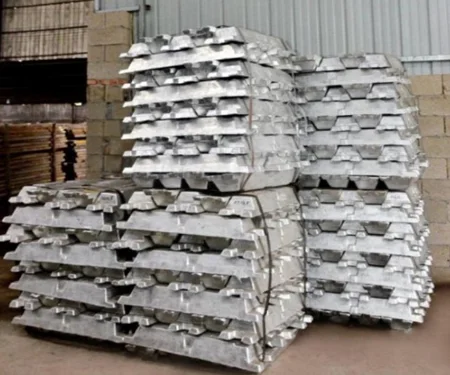
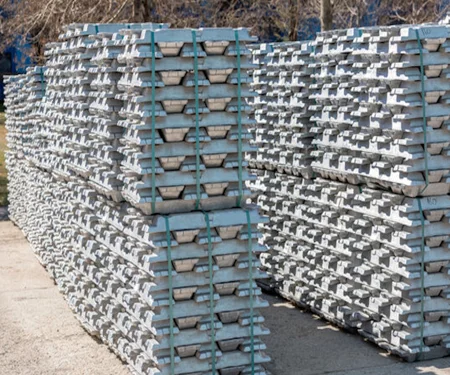
2) in the second half of November, aluminium prices retreated from highs, while aluminium billet processing fees strengthened, leading to better production willingness among billet plants. Based on SMM's liquid aluminium proportion data, domestic aluminium casting ingot volume in November decreased by 13.4 per cent Y-o-Y and fell by 0.78 per cent M-o-M to around 828,000 tonnes.
Capacity changes: As of the end of November, SMM statistics showed domestic existing aluminium capacity was approximately 46.12 million tonnes, while domestic operating aluminium capacity was around 44.225 million tonnes.
Production forecast: Entering December 2025, operating aluminium capacity is expected to increase slightly M-o-M. Some new aluminium projects are expected to start pot commissioning from the end of 2025 to early 2026, and their commissioning progress requires attention. Regarding the proportion of liquid aluminium, market feedback indicates marginal weakening in downstream demand, leading to stronger enterprise expectations for casting ingot.
However, it is reported that in December, some scrap utilisation enterprises, facing difficulties in procuring aluminium scrap or high procurement prices, chose to purchase more liquid aluminium, causing the liquid aluminium proportion to increase against the trend. Additionally, capacity commissioning and volume increase at individual processing plants near aluminium smelters are expected to raise the liquid aluminium proportion.
Overall, the liquid aluminium proportion is forecast to decrease by 0.7 percentage points to 76.6 per cent. Subsequent attention should be paid to the substitution of primary aluminium for aluminium scrap and changes in the operating rates of downstream processing plants.
Alumina
According to SMM data, China's metallurgical-grade alumina production in November 2025 (30 days) decreased by 4.44 per cent M-o-M but increased by 1.36 per cent Y-o-Y. As of the end of November, China's existing metallurgical-grade alumina capacity was approximately 110.32 million tonnes, while the actual operating capacity decreased by 1.26 per cent M-o-M, with an operating rate of 82.04 per cent.
This month, alumina daily average production showed a slight decline but remained at a relatively high operating level, mainly due to phased production cuts and equipment adjustments at some enterprises in north China, while operations in south China were relatively stable, providing some support to overall production.
Mid-month, some enterprises concentrated on production line maintenance work; at the same time, with the start of the heating season and the annual carbon emission verification entering a critical stage, environmental protection compliance pressure increased significantly, prompting some enterprises to implement production cuts to meet regulatory requirements. Additionally, some other enterprises were advancing production line upgrade projects, leading to a slight drop in production this month.
Alumina production in South China was not significantly disrupted, with overall operations remaining stable. Entering late November, the unfavourable factors affecting production gradually subsided. As enterprise maintenance work was successively completed and production line upgrade projects were wrapped up, alumina enterprise capacity began to gradually recover, driving a slight rebound in production by month-end.
Next month forecast: The alumina market in December is expected to continue in an oversupply pattern. As the monthly average price continues to decline, some high-cost enterprises in Shanxi and Henan have fallen into losses, with operational pressures intensifying.
Supply side, overseas alumina showed a net import trend in November, continuously impacting the domestic market, and import volume in December is expected to remain at last month's level, further suppressing the domestic alumina market. Against this backdrop, some enterprises may resort to voluntary production cuts or scheduled maintenance to cope with the pressure. Overall, industry operating capacity in December is projected to remain around 88.69 million tonnes.
Overseas Aluminium
According to SMM statistics, total overseas aluminium production in November 2025 increased by 2.1 per cent Y-o-Y; the monthly average operating rate was 88.8 per cent, down 0.3 percentage points M-o-M but up 0.5 percentage points Y-o-Y. By the end of November, cumulative production for 2025 had risen by 2.8 per cent Y-o-Y.
On October 21, Century Aluminium Company announced that its wholly-owned subsidiary, Norðurál Grundartangi ehf, temporarily halted one of the two potlines at the Grundartangi aluminium smelter in Iceland due to an electrical equipment failure. The smelter's second potline was unaffected and continued operating at full capacity. This shutdown reduced the smelter's production by approximately two-thirds. No casualties occurred during the incident.
On November 6, Century Aluminium Company stated at its Q3 earnings conference that the production line shutdown is expected to reduce Q4 shipments by 37,000 tonnes; the restart of the production line depends on the manufacturing, transportation, and installation speed of replacement power transformers, which is expected to take 11-12 months to complete.
The first phase of the Indonesian aluminium project PT Kalimantan Aluminium Industry, with a capacity of 500,000 tonnes, began pot startup at the end of November and is expected to reach full production of the first phase by October 2026.
Looking ahead to December, the operating capacity of newly commissioned aluminium projects in Indonesia is expected to gradually ramp up, and daily average aluminium production is expected to increase. However, the newly commissioned projects are expected to increase existing aluminium capacity, diluting the global aluminium operating rate. The overseas aluminium operating rate in December is projected to be approximately 87.7 per cent, down 1.1 percentage points M-o-M and down 0.7 percentage points Y-o-Y.
Overseas metallurgical-grade alumina
According to SMM statistics, overseas metallurgical-grade alumina production in November 2025 increased by 5.89 per cent Y-o-Y; the average operating rate of overseas alumina enterprises rose to 82.9 per cent, up 0.8 per cent M-o-M and up 1.2 per cent Y-o-Y. By the end of November, cumulative production in 2025 had increased by 4.2 per cent Y-o-Y. Overall, alumina production remained stable during the month, with no news of production cuts or new capacity commissioning.
The monthly increase mainly came from Indonesia: the third phase (1 million tonnes per year) of PT Bintan Alumina Indonesia (BAI), commissioned in June under Nanshan Holding, is steadily ramping up production and is expected to achieve full production by year-end, followed immediately by the commissioning plan for the fourth phase (1 million tonnes per year) in 2026.
Meanwhile, public information during the month indicated that Inalum stated that the feasibility study for the second phase of its Mempawah alumina refinery (SGAR) in Mempawah, West Kalimantan Province, is about to be completed. The project is expected to commence construction in December 2025 and be commissioned by the end of 2028. Inalum's alumina production will increase from 1 million tonnes per year to 2 million tonnes per year, providing support for Indonesia's long-term supply.
In Australia, on November 18, Rio Tinto announced on its official website that it will cut the capacity of its Yarwun alumina refinery in Gladstone by 40 per cent starting from October 2026. The main reason is that if the current operating capacity is maintained, the refinery's current tailings storage facility is expected to reach saturation by 2031.
This production cut decision aims to provide the plant with sufficient time to achieve long-term operation by seeking technological breakthroughs. The current reduction decision can extend the alumina refinery's operation by four years to 2035. The company stated that although it has explored the option of building a second tailings facility for many years, the required investment is substantial and the current economic feasibility is insufficient, falling short of expectations.
This move will reduce annual alumina production by approximately 1.2 million tonnes, but it will not affect customer demand or the group's other businesses. Bauxite mining and aluminium operations will continue to run at full capacity. According to SMM analysis, the production cut at this project is unlikely to reverse the oversupply situation in the overseas alumina market. As overseas alumina projects are gradually completed and put into operation in 2026, overseas alumina prices are expected to maintain a fluctuating downward trend.
Looking ahead to December, overseas metallurgical-grade alumina production is expected to increase by 5.7 per cent Y-o-Y, with the operating rate reaching 83 per cent, up 0.15 per cent M-o-M and 1.03 per cent Y-o-Y.
Note: This article has been issued by SMM and has been published by AL Circle with its original information without any modifications or edits to the core subject/data.
DAILY: Chinese spot alumina prices remain weak
Next articleAlpha HPA Limited update signals fresh ASX capital move
Grow with
AL Circle