Futures: SHFE aluminium 2601 closed at RMB 22,165 per tonne in the night session, down 0.23 per cent. Technically, moving averages formed a bullish alignment but flattened in the short term, with MA5 (22,165) and MA10 (22,163) converging above MA30 (22,158.67) and MA60 (22,154.25), indicating support remains in the medium to short term but momentum weakened. In the MACD indicator, DIF (2.8142) was above DEA (2.0748), and the histogram (MACD: 1.4788) was positive but not expanding significantly, suggesting limited upward momentum. Resistance for SHFE aluminium is suggested at 22,250-22,350, with support at 22,000-22,100. LME aluminium closed at USD 2,900.5 per tonne in the night session, up 0.45 per cent, with moving averages across periods highly convergent—MA5 ( USD 2,903.30) to MA60 ( USD 2,904.48) nearly forming a straight line—indicating the market is in an extremely tight equilibrium. The MACD indicator was below the zero axis, with DIF (-0.4403) and DEA (-0.2512) slowly converging, and the green histogram (-0.3783) contracting, signalling weakening downward momentum but no trend reversal yet.
Macro front: Li Lecheng, Secretary of the Party Leadership Group and Minister of the Ministry of Industry and Information Technology, chaired a brainstorming session to study and plan work ideas and measures for the "16th Five-Year Plan" and its inaugural year. Li Lecheng emphasised the need to make strenuous efforts in "strengthening the foundation" and value creation, striving for excellence and winning through quality, to fully promote stable growth in the industrial economy. Comprehensive rectification of "involution-style" competition should be a focus, further deepening reforms comprehensively. It is essential to ensure the security of key industry chains and supply chains, enhance security capabilities in areas such as networks, data, and artificial intelligence, to form competitive advantages and gain strategic initiative. (Bullish ★) The US core PCE price index YoY unexpectedly pulled back to 2.8 per cent in September, hitting a three-month low, while market expectations were for it to remain at 2.9 per cent for the third consecutive month. (Neutral ★) White House Economic Council Director Hassett stated that it is time for the US Fed to prudently cut interest rates. (Bullish ★)
Fundamentals: Domestically, individual new aluminium projects began powering up pots, with operating capacity edging up and weekly production showing a slight increase; overseas, new aluminium projects in Indonesia are ramping up production, and supply is expected to increase m-o-m. Regarding the proportion of liquid aluminium, last week's SMM weekly proportion of liquid aluminium recorded 76.6 per cent, down 0.26 percentage points w-o-w. As the off-season deepens, downstream operations showed a marginal decline, with aluminium billet enterprises expected to implement more production cuts in December. Inventory-wise, according to SMM statistics, domestic aluminium ingot inventory in mainstream consumption areas recorded 595,000 tonnes this Monday, destocking 1,000 tonnes compared to last Thursday. On one hand, aluminium ingot transportation in Xinjiang faced seasonal resistance, with tight transport capacity, leading to an expected buildup of aluminium ingots in the region. On the other hand, high absolute prices reduced downstream purchase willingness, and warehouse withdrawals were expected to be affected.
Primary aluminium market: In the morning session, the SHFE aluminium 12 contract continued to fluctuate upward. With absolute prices rising further, the East China market saw sluggish transactions. High absolute prices prompted aluminium plants to actively sell, resulting in ample supply, but downstream buyers were cautious. Some downstream buyers quoted at premiums of -RMB 30 to -RMB 20 per tonne against the SMM average price. Traders' discount purchases increased slightly, with actual transaction prices hovering around -RMB 20 to -RMB 10 per tonne against the SMM average price. Last Friday, the East China market's selling sentiment index was 2.7, down 0.04 m-o-m; the purchasing sentiment index was 2.62, down 0.03 m-o-m. SMM A00 aluminium closed at RMB 22,090 per tonne, up RMB 70 per tonne from the previous trading day, at a discount of RMB 80 per tonne against the 12 contract, down RMB 20 per tonne from the previous trading day.
As aluminium prices continued to strengthen, traders' purchasing sentiment weakened, mostly for hedging purposes, leading to a relatively cold market. Holders were optimistic about prices, showing high selling sentiment, but the market cooled with fewer transactions. The final transaction price in the central China market ranged from parity to a RMB 30 per tonne discount against the central China price. Last Friday, the central China market's selling sentiment index was 2.89, down 0.08 m-o-m; the purchasing sentiment index was 2.77, down 0.05 m-o-m. SMM central China closed at RMB 21,940 per tonne, up RMB 50 per tonne from the previous trading day, at a discount of RMB 230 per tonne against the 12 contract, down RMB 40 per tonne from the previous trading day. The price spread between Henan and Shanghai was -RMB 150 per tonne, down RMB 20 per tonne from the previous trading day.
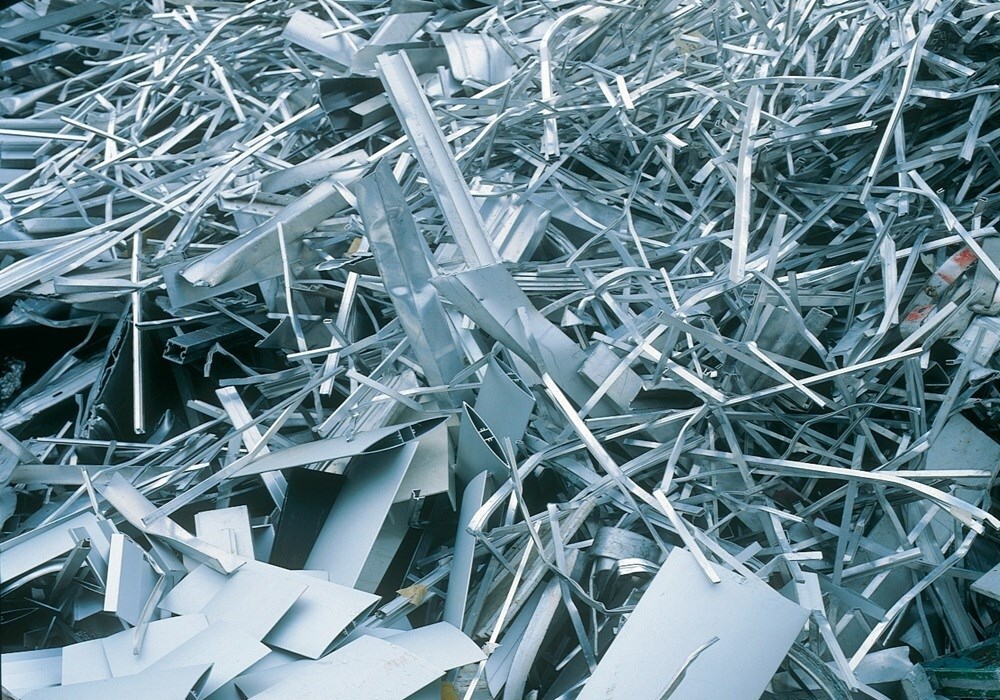
Recycled aluminium raw materials: Last Friday, spot primary aluminium prices rose compared to the previous trading day, with SMM A00 spot closing at RMB 22,090 per tonne, while the aluminium scrap market remained stable. Entering December, demand for aluminium scrap diverged significantly. Demand for casting-grade aluminium alloys was robust and showed slight growth, providing more support for consumption. In Henan, year-end environmental protection measures intensified, and transportation restrictions affected shipping efficiency. Meanwhile, some scrap utilisation enterprises reported high inventories of extrusion scrap collected during the peak season, lacking sufficient orders on hand to offset raw material inventory, thus slowing the procurement pace for extrusion scrap. Last Friday, baled UBC scrap was concentratedly quoted at RMB 16,450-16,950 per tonne (excluding tax), and shredded aluminium tensile scrap (priced based on aluminium content) was concentratedly quoted at RMB 18,400-18,900 per tonne (excluding tax).
Baled UBC prices were up RMB 50 per tonne m-o-m, while clean tapping aluminium wire, mixed aluminium extrusion scrap free of paint, mechanical casting aluminium scrap, scrap motorcycle wheel, and mixed aluminium tense scrap prices remained unchanged m-o-m. In terms of the price difference, on December 5, the price difference between A00 aluminium and shredded aluminium tensile scrap closed at RMB 1,814 per tonne, and the price difference for bare bright aluminium wire in Jiangsu was RMB 885.6 per tonne. The secondary aluminium scrap market is expected to hover at highs next week, with the mainstream quotation range for shredded aluminium tensile scrap (priced based on aluminium content) at RMB 18,500–19,200 per tonne (tax excluded). The tight supply situation is difficult to change, as import and recycling constraints persist, providing a floor for prices.
Demand side, the push for annual targets at year-end by secondary aluminium enterprises and the dampening effect of high prices are intertwined, causing scrap utilisation enterprises in extrusion and rolling sectors to be cautious about purchasing due to high prices. Primary aluminium price trends serve as the core guidance, coupled with the impact of environmental protection-driven production restrictions and transportation constraints in central China, market sentiment remains cautious. Overall, the tug-of-war between sellers and buyers continues, requiring close monitoring of primary aluminium fluctuations, environmental protection policies, and downstream procurement pace, while staying alert to the risk of a pullback from highs.
Secondary aluminium Alloy: Futures side, the most-traded cast aluminium alloy futures contract (2602) opened at RMB 21,040 per tonne last Friday, reached a high of RMB 21,320 per tonne and a low of RMB 20,970 per tonne, and finally closed at RMB 21,190 per tonne, up RMB 120 per tonne or 0.57 per cent from the previous close. Trading volume was 8,304 lots, and open interest was 16,876 lots, mainly driven by increased long positions. The price spread between AD and AL continued to widen to around RMB 1,200 per tonne. Spot side, the SMM A00 aluminium spot price rose again by RMB 70 per tonne to RMB 22,090 per tonne last Friday, hitting a new high for the year, while the ADC12 price held steady at RMB 21,700 per tonne, with the inverted price spread between the two continuing to widen. Cost side, aluminium scrap prices partially increased following aluminium prices last Friday, while copper prices continued to rise, reaching a new high of RMB 91,585 per tonne, leading to continuously rising raw material costs.
The cost share of aluminium scrap and copper auxiliary materials continued to increase, with cost remaining the main driver of ADC12 price increases. Demand side, aluminium prices surging to yearly peaks have suppressed the short-term procurement pace downstream. Some die-casting enterprises faced shrinking profits due to cost pressure, and some fell into losses, resulting in lower operating rates. However, year-end demand from end-users to push for annual targets still supports industry resilience. Overall, ADC12 prices are expected to continue fluctuating at highs in the short term. Looking at the weekly spot-futures price spread, the futures showed an upward trend in the first three days, but spot prices remained relatively stable, leading to an expansion of the futures discount.
Subsequently, cast aluminium alloy futures came under pressure, diverging significantly from SHFE aluminium trends—SHFE aluminium futures surged strongly to a high of RMB 22,350 per tonne, driving rapid increases in aluminium scrap prices. Combined with rising copper prices, production costs were significantly pushed higher. Against this backdrop, spot ADC12 prices followed up quickly, and the spot-futures price spread narrowed significantly. Import side, current overseas ADC12 quotations are in the range of USD 2,600–2,640per tonne. As domestic prices rise, the immediate import loss has narrowed to around RMB 200 per tonne.
Aluminium market summary: The domestic MIIT is planning for the 16th Five-Year Plan period, emphasising promoting steady industrial growth, ensuring the security of key industry chains, and curbing "involution-style" competition. This clarifies the policy's supportive direction for the real manufacturing sector, helping to stabilise market expectations for downstream aluminium processing and end-use consumption, and providing a policy floor for aluminium demand. US core PCE inflation pulled back, coupled with White House officials urging the US Fed to cut interest rates cautiously, reinforcing market expectations for a shift to looser monetary policy. This eased upward pressure on the US dollar, boosting risk appetite and valuation support for commodities represented by aluminium from the perspectives of financial attributes and global liquidity.
Overall, the macro front currently features a strong, favourable atmosphere, with rising copper prices driving aluminium prices higher. Fundamentals side, this year's Chinese New Year break occurs relatively late, limiting the extent of weakening demand for aluminium in December. The release of production from new aluminium capacity still requires some time, resulting in limited production growth in December. Additionally, transportation of aluminium ingots in Xinjiang is expected to face certain seasonal obstacles, leading to relatively favourable inventory performance for aluminium ingots, which provides some fundamental support for rising aluminium prices. However, excessively high aluminium prices are expected to strongly suppress end-use consumption, necessitating vigilance against the risk of a pullback in aluminium prices at high levels.
Note: This article has been issued by SMM and has been published by AL Circle with its original information without any modifications or edits to the core subject/data.

Responses