您想继续阅读英文文章还
是切换到中文?
是切换到中文?

THINK ALUMINIUM THINK AL CIRCLE

Futures: Due to the New Year holiday, the SHFE aluminium night session did not trade on the last day before the holiday. Before the holiday, the SHFE aluminium daytime session closed at RMB 22,925 per tonne, with prices holding above all key moving averages (MA5 22,918, MA60 22,921.33), showing a strong consolidation pattern. In the MACD indicator, the DIF (-0.9677) and DEA (-4.4827) remained below the zero line, but the histogram turned significantly positive to 7.0301, indicating weakening downward momentum and a relatively strong short-term rebound. The core trading range for SHFE aluminium is suggested at RMB 22,700-23,200 per tonne. LME aluminium closed at USD 3,021 per tonne, up 0.80 per cent. Prices continued to trade above all moving averages (MA5 3,022.20, MA60 3,021.22), with short-term moving averages showing a bullish divergence and a strong structure. Both MACD lines were above the zero line (DIF 0.1392, DEA 0.1045), with the histogram slightly positive (0.0694), maintaining a mild bullish pattern. The core trading range for LME aluminium is suggested at USD 3,000-3,050 per tonne.
{alcircleadd}Macro front: In a speech prepared in advance for the American Economic Association annual meeting on Saturday (3rd), Paulson stated, "I believe inflation will moderate, the labour market will stabilise, and this year's economic growth rate will be around 2 per cent. If all these goals are achieved, some minor adjustments to the federal funds rate later this year may be appropriate." Overall, she suggested that moderate further interest rate cuts might be possible later in 2026, but she indicated this outcome depends on a favourable economic outlook. (Bullish ★) David Rosenberg, former chief North American economist at Merrill Lynch, known as the "Wall Street prophet," recently stated that the US economy faces significant challenges in 2026, with the job market potentially experiencing a sharp contraction. This would weaken the economic outlook and force the US Fed to take dramatic, aggressive interest rate cuts. (Bearish ★)
Fundamentals: Supply side, new aluminium projects in China and Indonesia continue to ramp up production, with daily average production continuing to increase. Additionally, a new aluminium project in Inner Mongolia announced a successful power-on on December 20; in the near future, the daily average production of aluminium is expected to continue growing. Demand side, high prices are suppressing downstream cargo pick-up demand. Before the holiday, the operating rate of leading aluminium downstream processing enterprises in China fell 1 percentage point w-o-w to 59.9 per cent. Coupled with the ongoing intensification of environmental protection-related controls in central China, some local aluminium processing enterprises have completely halted production. Spot aluminium demand has subsequently continued to shrink, with production expected to gradually resume after the holiday.
The overall operating rate for downstream sectors showed a downward trend in December, with the proportion of liquid aluminium also declining, down 0.8 percentage points M-o-M to 76.5 per cent, a decrease larger than expected at the beginning of the month. Based on SMM's proportion of liquid aluminium data, domestic aluminium ingot production in December decreased 13.4 per cent Y-o-Y but increased 7.7 per cent M-o-M. Inventory-wise, according to SMM statistics, aluminium ingot inventory in major domestic consumption areas recorded 680,000 tonne on the first day of the holiday, building by 20,000 tonne compared to pre-holiday levels. Given high aluminium prices suppressing warehouse withdrawals, smooth shipments from north-west China, and expectations for continued increases in ingot production before the Chinese New Year, SMM expects inventory to rise to around 730,000 tonne by the end of January 2026, with an overall inventory buildup trend anticipated for Q1.
Primary aluminium market: The SHFE aluminium 2601 contract rose in the morning session, with its price centre moving higher compared to the previous trading day. Last Wednesday, influenced by the approaching holiday and year-end closing, market sentiment in eastern China weakened overall, resulting in sluggish trading. Last Wednesday, mainstream transaction prices were mainly in the range of a discount of RMB 20 per tonne to a discount of RMB 10 per tonne against the SMM average price. The selling sentiment index for the East China market was 1.99 last Wednesday, down 0.03 w-o-w; the buying sentiment index was 2.11, down 0.13 w-o-w.
SMM's A00 aluminium price was quoted at RMB 22,460 per tonne, up RMB 280 per tonne from the previous trading day, at a discount of RMB 210 per tonne against the 2601 contract, down RMB 10 per tonne from the previous trading day. Last Wednesday, trading in the central China market remained sluggish; intensified environmental protection-related controls, coupled with another rise in aluminium prices, further weakened demand. Additionally, as the New Year's Day holiday approached, some enterprises halted trading for year-end closing, resulting in low overall market trading volume, primarily consisting of traders selling off goods at low prices. Last Wednesday, actual transaction prices in the central China market hovered between parity and a discount of RMB 40 per tonne against the central China price. The selling sentiment index for the central China market was 2.66 last Wednesday, down 0.06 w-o-w; the buying sentiment index was 1.50, down 0.03 w-o-w. SMM's central China aluminium price closed at RMB 22,240 per tonne, up RMB 270 per tonne from the previous trading day, at a discount of RMB 430 per tonne against the 2601 contract, down RMB 20 per tonne from the previous trading day; the price spread between Henan and Shanghai was -RMB 220 per tonne, down RMB 10 per tonne from the previous trading day.
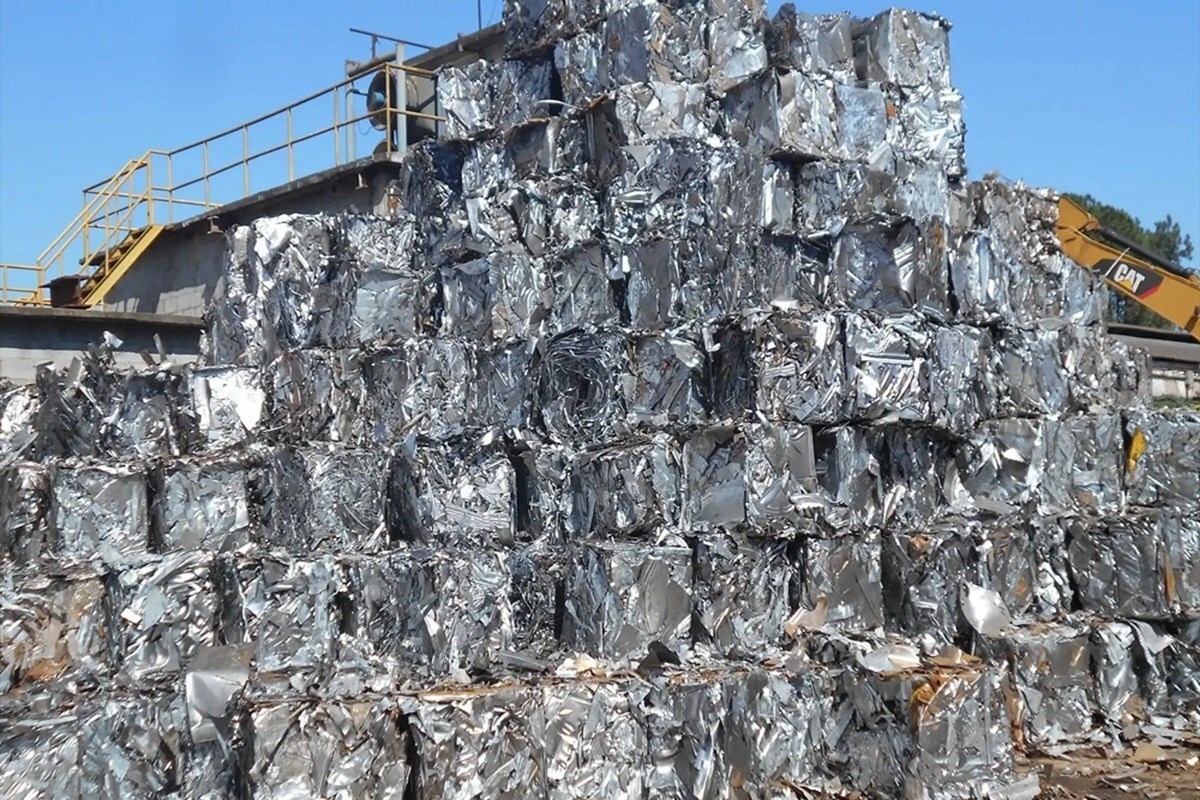
Recycled aluminium raw materials: Last Wednesday, spot primary aluminium prices increased compared to the previous trading day, with SMM A00 spot closing at RMB 22,460 per tonne; the aluminium scrap market followed the rise in primary aluminium prices. Some scrap utilisation enterprises reported high inventories of wrought aluminium alloy scrap collected during the peak season and lacked sufficient orders on hand to hedge against raw material inventories, leading them to temporarily slow their procurement pace for related scrap.
As 2026 approaches, the implementation of resource recycling policies still faces significant obstacles, with issues concerning natural persons and invoice upper limits remaining difficult to resolve. Some recycling enterprises have already chosen to pass on the additional tax burden to the aluminium scrap supply side, posing a risk of downward pressure on the bottom of aluminium scrap prices. Last Wednesday, baled UBC was quoted in the range of RMB 16,800-17,200 per tonne (tax excluded), and shredded aluminium tensile scrap (priced based on aluminium content) was quoted in the range of RMB 18,400-18,900 per tonne (tax excluded). Last Wednesday, prices in Shanghai, Zhejiang, Jiangsu, Tianjin, and Shandong increased by RMB 200-300 per tonne, while prices in Guizhou, Henan, Jiangxi, and Hubei rose by RMB 100 per tonne or remained largely stable.
Regarding the price difference between A00 aluminium and aluminium scrap, the price difference between A00 aluminium and mixed aluminium extrusion scrap free of paint in Foshan stood at RMB 3,084 per tonne on December 31, while the price difference between A00 aluminium and shredded aluminium tensile scrap was RMB 2,009 per tonne. The domestic aluminium scrap market price is expected to hover at highs around the New Year's Day holiday, though caution is warranted against a potential high-level correction. On the supply side, the issue of tax burden shifting is further affecting the market supply structure. Demand side, stocking demand from secondary aluminium alloy enterprises ahead of the Chinese New Year will continue to support procurement of aluminium tensile scrap, but signs of slowing demand from downstream die-casting enterprises are becoming increasingly evident, coupled with wait-and-see sentiment due to aluminium price fluctuations, leading to a decline in overall demand support for prices.
Policy-wise, uncertainties from repeated environmental protection-driven production restrictions in central China and Chongqing will continue to suppress local demand in the short term. In terms of price trends, the centre for shredded aluminium tensile scrap (priced based on aluminium content) is expected to remain in the range of RMB 18,200-18,700 per tonne (excluding tax). Short-term focus should be on signals of the easing of environmental protection-driven production restriction policies, changes in procurement pace of downstream enterprises, and the impact of tax burden shifting on the price floor.
Secondary aluminium alloy: Futures side, last Wednesday, the most-traded cast aluminium alloy contract 2603 opened at RMB 21,480 per tonne, dipped slightly to the day's low of RMB 21,425 per tonne in the morning session before stabilizing and rebounding, then maintained an upward pace throughout the day, surging to the day's high of RMB 21,865 per tonne towards the close, and finally settled at RMB 21,855 per tonne, up RMB 345 per tonne or 1.60 per cent from the previous settlement. Bullish momentum continued to amplify, with prices breaking through recent highs, and the short-term bullish trend remains dominant.
Spot market, last Wednesday, aluminium and copper prices strengthened jointly again; the SMM A00 aluminium price rose by RMB 280 per tonne to RMB 22,460 per tonne, driving up the cost centre for recycled aluminium raw materials, while the SMM ADC12 price followed with an increase of RMB 150 per tonne to RMB 22,450 per tonne. Despite strong upward sentiment on the raw material side, demand performance was weak; die-casting enterprises, affected by order reductions and high aluminium prices, exhibited strong risk-averse procurement sentiment, resulting in a stalemate in transactions, and the number of holiday stoppage days (1-3 days) for New Year's Day increased compared to previous years. During the week, driven by a widening spot-futures price spread, traders actively sold goods, accelerating the destocking pace of social inventory. In summary, although there is support from the cost and supply sides, weak demand and fear of highs have suppressed the upside room for prices. ADC12 prices are expected to fluctuate at highs in the short term. On the import side, current overseas ADC12 offers are in the range of USD 2,660–2,690 per tonne; as domestic prices rise again, the real-time profit margin for imports has expanded to around RMB 500 per tonne.
Aluminium market summary: Overall, recent positive macro signals continue to be released; the domestic fiscal work conference clarified that 2026 will see expanded expenditure and efforts to boost consumption, with a focus on areas such as new quality productive forces. Moreover, the implementation of the 2026 national subsidy plan and fund allocation, aimed at stimulating trade-ins for consumer goods, is expected to boost downstream aluminium demand in the medium to long term, forming a policy-backed floor expectation.
Demand side, significantly impacted by high-price suppression and environmental protection-driven production restrictions, saw the operating rate of leading downstream processing enterprises decline in December, with the proportion of liquid aluminium dropping 0.8 percentage points M-o-M to 76.5 per cent, and end-use consumption showing a seasonal weakening trend. Overall, strong macro policy expectations are undoubtedly the hot topic of recent attention and trading in the aluminium market, also constructing a bottom defence line for aluminium prices. However, the reality of suppressed fundamental consumption and continuously increasing inventory will significantly restrain the momentum for prices to surge further. Aluminium prices are expected to mainly fluctuate at highs in the short term, with obvious resistance above.
Note: This article has been issued by SMM and has been published by AL Circle with its original information without any modifications or edits to the core subject/data.

Responses







_0_0.jpg/500/0)