As of mid-July 2025, China’s bauxite supply chain stands at a crossroads, flush with incoming cargo but showing signs of lagging shipments. The latest Mysteel survey, dated July 11, 2025, paints a contrasting picture of China’s bauxite trade dynamics, revealing a week-on-week increase in seaborne cargo volume, even as actual shipments to Chinese ports dropped dramatically. The story here is not just about numbers; it’s about timing, trade strategies, and potential implications for the aluminium supply chain. The latest survey captures this divergence vividly: while seaborne cargo volumes surged past 16.38 million tonnes, the volume of shipments received at Chinese ports plunged by over 1 million tonnes week-on-week.
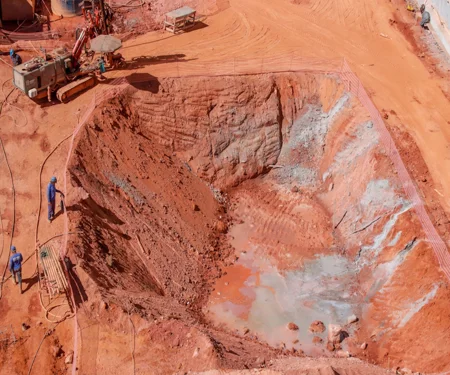
Image for representational purposes only
Seaborne volumes climb, driven by Guinea
The total seaborne bauxite cargo volume bound for China reached 16.38 million tonnes, a sharp week-on-week increase of 982,600 tonnes. Unsurprisingly, Guinea was the primary driver, contributing 14.97 million tonnes, up a hefty 1.19 million tonnes from the previous week. Guinea's consistent dominance reaffirms its irreplaceable role in feeding China’s alumina refineries, despite the political overhang and export uncertainty that continue to loom over the West African supplier.
In contrast, Australia’s seaborne cargoes dropped to 1.41 million tonnes, down by 211,400 tonnes week-on-week. Australia’s export performance has been trending downward in 2025 due to increased mining costs and competitive disadvantages against West African players who offer higher-grade bauxite at lower landed prices.
Shipments to China plummet
While the ocean traffic looks robust, the volume of bauxite actually delivered to Chinese ports shrank dramatically. Total weekly shipments dropped to 1.71 million tonnes, a sharp fall of 1.06 million tonnes, or 38.3 per cent from the prior week.Guinea’s port shipments fell to 1.17 million tonnes, down by 559,800 tonnes, a 32.3 per cent drop. Australia’s shipments halved, landing at 537,400 tonnes, down 500,600 tonnes, a 48.2 per cent W-o-W fall.
This divergence between seaborne volumes and landed shipments raises critical questions: Are Chinese ports facing unloading delays? Are customs inspections slowing throughput? Or is this part of a broader inventory management strategy where China is accumulating in-transit stock as a hedge against future supply shocks?
With Chinese refineries likely still working through inventory stockpiled during Q2 2025, the temporary slowdown in port receipts may not be a supply-side panic button just yet. However, if this shipment shortfall persists over multiple weeks, it could signal a more structural issue, possibly in logistical handling, port capacity, or even a shift in sourcing preference.
Past trends set the context
Looking back, China’s bauxite appetite has grown substantially over the last decade, driven by aggressive expansion in its alumina refining capacity. Guinea, since 2015, has become the cornerstone of this supply chain, pushing out traditional exporters like Indonesia and Malaysia due to its high-grade reserves and fewer export restrictions. However, the political and regulatory volatility in Guinea always keeps the industry on its toes.
Earlier in June 2025, Mysteel had reported relatively steady seaborne bauxite volumes, but with price softening due to easing supply concerns and lukewarm demand. That calm appears to have shifted, at least on the logistics front. With Guinea now consistently shipping over 1.3 million tonnes per week, the operational risk may be transitioning from “source-country” concerns to “destination-country” bottlenecks.
Looking forward: What’s Next for China’s Bauxite Chain?
The July 11 data release could be a short-term statistical anomaly — or it could be the beginning of a more pronounced decoupling between supply-in-transit and actual deliveries. If the trend continues, three major implications are likely:
- Port congestion risks: Chinese ports may see rising bauxite queues, stressing storage and unloading infrastructure, which could delay processing and affect refinery operations.
- Inventory rebalancing: Traders and refiners may be deliberately building floating inventory, betting on geopolitical disruptions or pricing advantages in the months ahead.
- Price volatility ahead: While prices have been relatively subdued, a sustained mismatch between seaborne arrivals and shipments received could jolt the market, especially if refineries are caught in a squeeze between rising costs and uneven supply.
The week of July 11 marks more than just a data checkpoint. It’s a pivot point for China’s bauxite import strategy. The rising tide of seaborne bauxite cargoes, dominated by Guinea’s supply chain, signals continued upstream strength. But the corresponding drop in shipments to Chinese ports demands scrutiny. As China balances geopolitical and trade uncertainty, domestic inventory cycles, and infrastructure capacity, the bauxite trade will remain a barometer of broader aluminium industry health.
For now, the numbers speak of a market in motion — but not yet in sync. The challenge ahead lies in aligning this transit momentum with real-time demand at the refinery gate.
Note: This news is published under the collaboration with Mysteel, based on the data and information given in Mysteel Survey: Bauxite shipments and seaborne cargoes to China – 2025.07.11













_md.webp)
_md.webp)