您想继续阅读英文文章还
是切换到中文?
是切换到中文?

THINK ALUMINIUM THINK AL CIRCLE

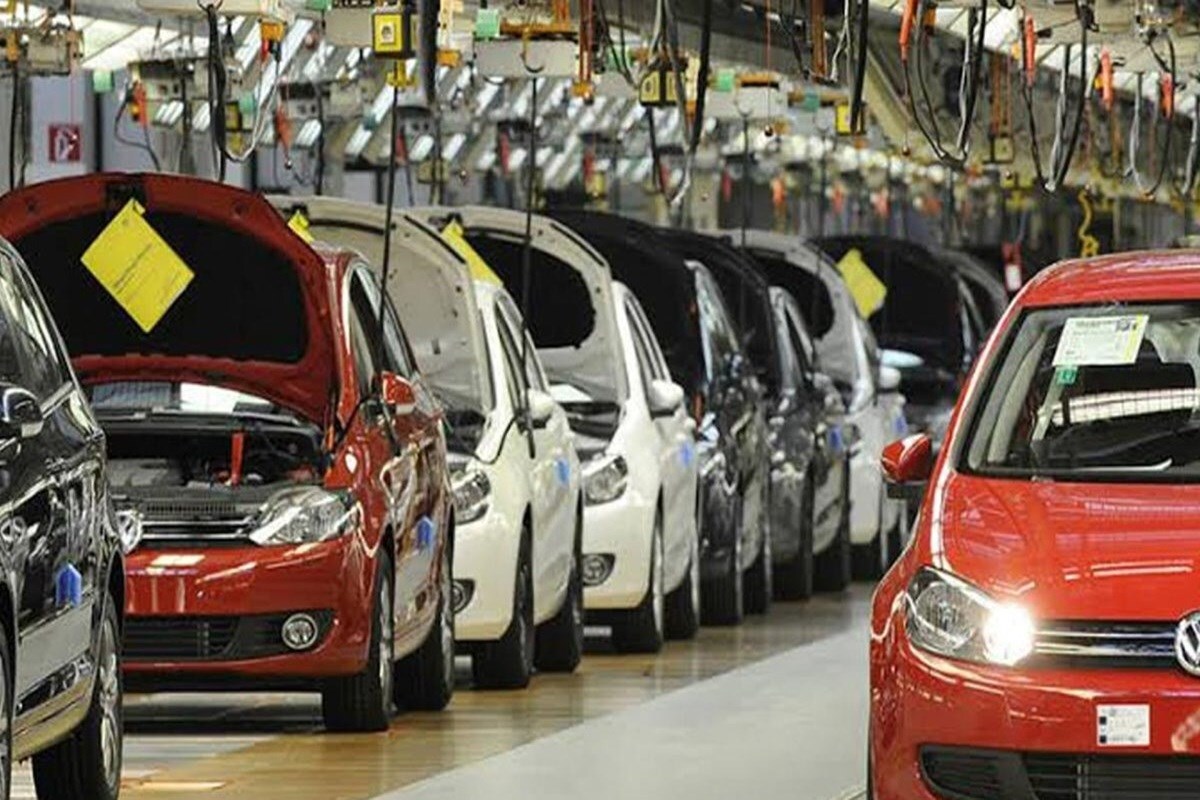
Industry dynamics: According to CAAM, in 2025, auto production and sales totalled 34.531 million units and 34.4 million units, respectively, hitting new historical highs and ranking first globally for 17 consecutive years. Among them, the passenger vehicle market grew steadily and, as the core component of auto consumption, effectively boosted the overall auto market growth; the commercial vehicle market recovered, with production and sales achieving growth of over 10 per cent and returning to above 4 million units; new momentum accelerated, with NEV production and sales exceeding 16 million units, accounting for over 50 per cent of domestic new auto sales, becoming the dominant force in China's auto market; foreign trade showed strong resilience, with auto exports exceeding 7 million units and NEV exports reaching 2.615 million units, taking exports to a new level.
{alcircleadd}Futures: The cast aluminium alloy 2603 contract opened at RMB 23,395 per tonne overnight, fluctuated downward after opening and hit a bottom of RMB 23,185 per tonne, then rebounded to a high of RMB 23,550 per tonne, before pulling back to RMB 23,425 per tonne by the close, up RMB 45 per tonne or 0.19 per cent from the previous close, with the increase mainly driven by bulls adding positions.
Spot-Futures price spread daily: According to SMM data, on January 14, the theoretical premium of the SMM ADC12 spot price against the closing price of the most-traded cast aluminium alloy contract (AD2603) at 10:15 narrowed to RMB 490 per tonne.
Warrant daily: SHFE data showed that on January 14, the total registered warrant volume for cast aluminium alloy was 68,861 tonnes, a decrease of 30 tonnes from the previous trading day. By region: Shanghai's total registered volume was 4,757 tonne, unchanged; Guangdong's total registered volume was 21,994 tonne, down 30 tonne; Jiangsu's total registered volume was 12,498 tonne, up 60 tonne; Zhejiang's total registered volume was 22,912 tonne, down 30 tonne; Chongqing's total registered volume was 5,979 tonne, up 60 tonne; Sichuan's total registered volume was 691 tonne, down 30 tonne.
Aluminium scrap side: On Wednesday, the spot primary aluminium price rose again compared to the previous trading day, with the SMM A00 spot price closing at RMB 24,670 per tonne, and aluminium scrap market prices generally followed the increase. Supply side, environmental protection-driven production restrictions in central China were lifted, but inventory levels of wrought aluminium alloy scrap remained saturated. Baled UBC was mainly offered at RMB 17,900-18,300 per tonne (ex-tax), shredded aluminium tense scrap (priced based on aluminium content) was mainly offered at RMB 19,550-20,050 per tonne (ex-tax). Regarding the price difference between A00 aluminium and aluminium scrap: on January 14, the price difference between A00 aluminium and mixed aluminium extrusion scrap free of paint in Foshan was RMB 4,373 per tonne, and the price difference between A00 aluminium and shredded aluminium tense scrap was RMB 3,029 per tonne. The aluminium scrap market is expected to hover at highs this week.
Silicon metal side: On January 14, SMM non-oxygen blown #553 silicon metal in east China was at RMB 9,100-9,300 per tonne; oxygen-blown #553 at RMB 9,200-9,300 per tonne; #521 at RMB 9,300-9,500 per tonne; #441 at RMB 9,300-9,500 per tonne; #421 at RMB 9,500-9,800 per tonne; #421 for silicone use at RMB 9,800-10,200 per tonne; #3303 at RMB 10,200-10,500 per tonne. Silicon prices in Kunming, Huangpu Port, Tianjin, Shanghai, Xinjiang, Sichuan, and north-west China remained stable.
Overseas market: Current overseas ADC12 quotations rose slightly by USD10 to the range of USD2,880–2,890 per tonne, while the real-time profit margin for imports remained around RMB 500 per tonne.
Summary: On Wednesday, aluminium prices continued their strong performance, with A00 prices rising by RMB 370 per tonne in a single day to RMB 24,670 per tonne, and SMM ADC12 prices increasing by RMB 250 per tonne to RMB 24,200 per tonne. The secondary aluminium market showed clear follow-up momentum, with mainstream quotations generally raised by RMB 200-300 per tonne. However, the market's "nominal price without actual transactions" feature remained prominent, with actual transactions mainly driven by rigid demand and the downstream acceptance of high prices was limited. In terms of market drivers, cost support and a tight supply-demand pattern provided a floor for aluminium prices, but weak demand constrained further price increases. Overall, buoyed by short-term macro tailwinds, ADC12 prices are expected to hover at highs. Currently, bullish and bearish factors are intertwined, requiring close attention to changes in the supply-demand pattern and macro policy direction.
Note: This article has been issued by SMM and has been published by AL Circle with its original information without any modifications or edits to the core subject/data.

Responses






_0_0.jpg/500/0)