World primary aluminium production growth hits 5-year low in 2025 as GCC output weakens and China nears 45MT ceiling
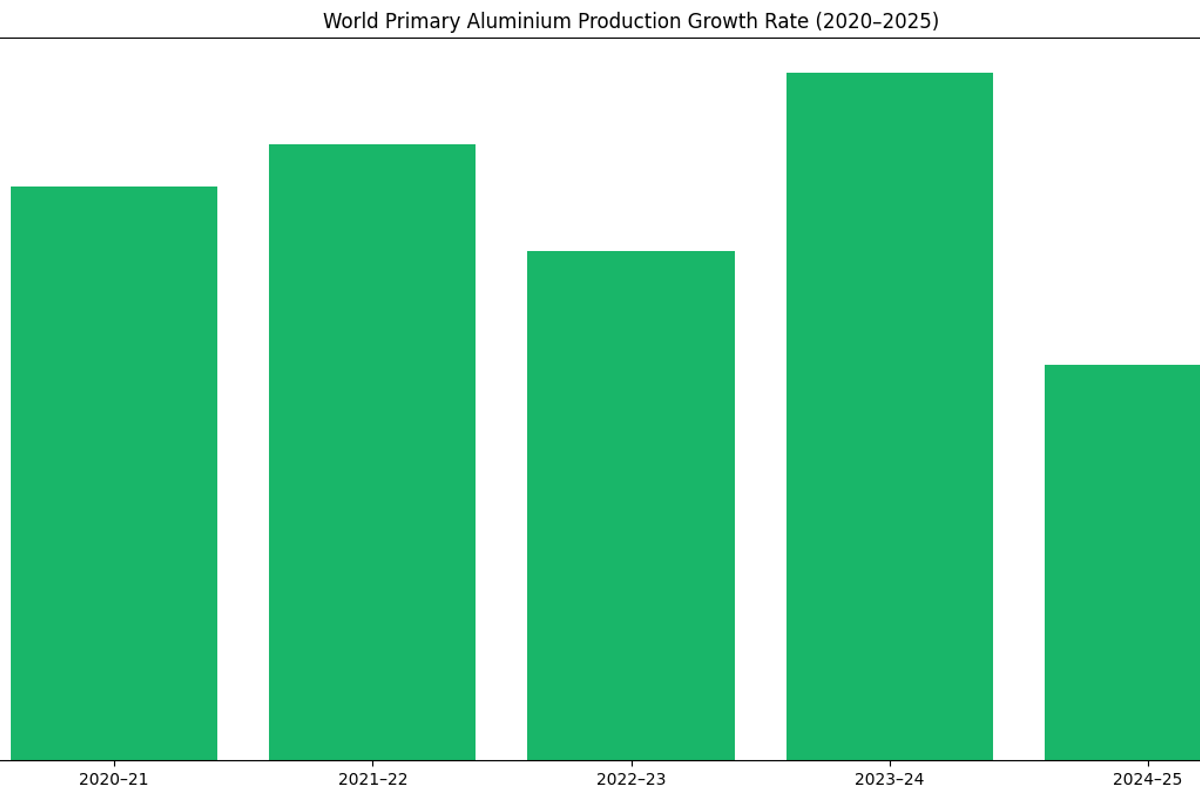
Going by the world primary aluminium production trend since 2020, 2025 saw the slowest pace in half a decade, reflecting a structural shift rather than a cycling dip. According to the International Aluminium Institute, world primary aluminium production grew by only 1.06 per cent, a sharpest deceleration from the 3.24 per cent growth recorded in 2024. Between 2020 and 2023, the world primary aluminium production growth remained between 2.4 and 2.9 per cent, underscoring how exceptional 2025 proved to be. Yet despite this muted growth, 2025 became one of the most closely watched years for the aluminium industry, as it coincided with China nearing its long-anticipated 45‑million‑tonne production cap and a visible pivot across regions from primary production to recycling-led supply strategies.
To be noted, this slow growth rate in the world primary aluminium production was not only due to China’s tightened output. Asia (ex-China), Europe, and also the Americas delivered slower growth in their respective domestic output, while GCC countries churned out lowest volume since 2020.
Global output: modest growth, muted momentum
Unlock full access – sign up for FREE.
Key benefits
LME aluminium cash offer rises 2.63% to $3,175/t as opening stocks fall to 507,275t
Next articleUS aluminium prices break away as tariffs collide with global supply strain
Grow with
AL Circle