As the United States deepens its bilateral trade ties with Indonesia and Vietnam, a lion’s share of European exports to these Southeast Asian economies faces a potential risk of trade dislodgment. According to a recent media analysis, around 10 per cent of the European Union’s total exports to these two nations are now under competitive threat due to newly signed preferential trade agreements between Washington and the two southeastern nations.
Image for referential purposes only
Scale of the potential disruption
In 2023, the EU exported EUR 11.4 billion of goods to Vietnam (and imported EUR 47.7 billion), while trade with Indonesia stood at EUR 11.3 billion of export goods (and import of EUR 18.4 billion), as per Eurostat data. Based on a modelling assumption, if 10-12 per cent of that is at risk, European exporters could be facing a revenue exposure between EUR 6.18 billion and EUR 7.41 billion over the next 12-18 months, particularly in sectors where tariff advantages now tilt toward the US.
The US and Vietnam have recently agreed on a new trade deal that involves reciprocal tariff adjustments. Trump had originally imposed a 46 per cent tariff on Vietnamese exports to the US. Under the agreement, Vietnam will face a 20 per cent tariff on most of its exports to the US, and a higher 40 per cent tariff on goods transhipped through Vietnam from third countries, notably China. In return, Vietnam has agreed to eliminate tariffs on US products entering Vietnam.
The EU’s Directorate-General for Trade noted in its March 2024 country report that the segments being targeted, i.e. electrical machinery, pharmaceuticals, automotive parts, and processed food products, form the backbone of EU export flows to these markets.
Over the past quarter, the US Trade Representative’s Office has formalised separate bilateral agreements with both Indonesia and Vietnam, removing or significantly reducing tariffs across a wide spectrum of goods.
In Indonesia’s case, the US secured zero or near-zero tariff treatment on 92 per cent of its export categories as part of the Strategic Trade Expansion Agreement signed in May 2025 (source: Office of the USTR, Indonesia Bilateral Trade Factsheet, May 2025). Vietnam’s terms are similarly generous under the US-Vietnam Enhanced Market Access Framework, which lowers tariffs on US-made auto parts, electronics, grains, medical devices, and semiconductors.
Jakarta believes the fallout of the lowered tariff rate could boost its GDP growth by 0.5 percentage points, the presentation said.
The economic consequences
According to preliminary data from Vietnam’s General Department of Customs, US imports into Vietnam increased 8.4 per cent year-on-year in Q2 2025, while EU shipments declined by 6.4 per cent over the same period. Indonesian Ministry of Trade data shows a 5.1 per cent increase in US imports in the first five months of 2025, while EU goods saw marginal growth of just 0.8 per cent, well below the national average.
The European Commission’s attempt to secure long-term access through multilateral frameworks has not kept pace with these US-driven shifts. The EU–Vietnam Free Trade Agreement, which came into force in August 2020, was initially seen as a strategic win.
However, several key provisions, particularly those related to government procurement and digital trade, have either stalled or remain partially implemented, according to the 2024 implementation review published by the European Parliament’s INTA Committee. In Indonesia’s case, negotiations for a Comprehensive Economic Partnership Agreement (CEPA) have dragged through 19 rounds since 2016, with unresolved issues around intellectual property, raw material export restrictions, and sustainable development clauses.
A June 2025 update from the Indonesian Ministry of Trade confirmed that a draft agreement text has been prepared but is unlikely to be finalised before 2026.
In contrast, the US has opted for narrower but faster bilateral tracks. The Trump administration’s strategy appears to favour trade segmentation by sector, locking in access in areas of US competitive advantage such as agricultural commodities, aerospace, and digital infrastructure, while offering strategic sweeteners like foreign investment guarantees via the US Development Finance Corporation.
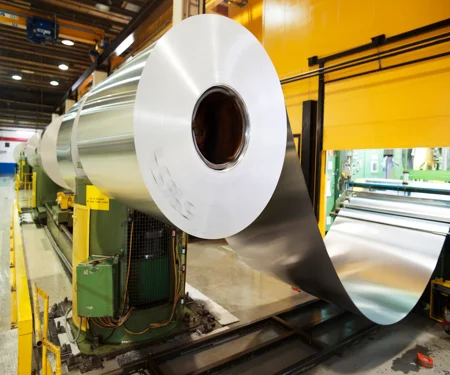
The EU and Vietnam trade a variety of aluminium products. Key exports from the EU to Vietnam include unwrought aluminium, both alloyed and unalloyed, and aluminium products like tubes and pipes. Vietnam’s exports to the EU include unwrought aluminium and possibly other aluminium products as part of its broader export profile, which includes machinery, textiles, and footwear.
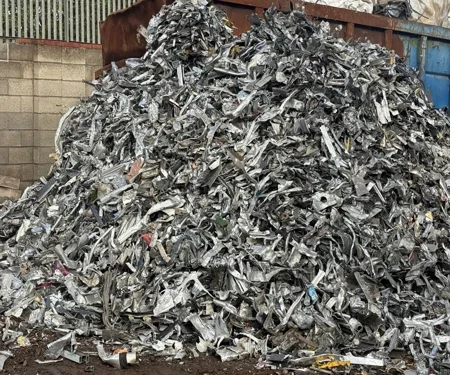
Similarly, EU and Indonesia engage in trade of various aluminium products, including aluminium bars, rods, profiles, articles not elsewhere specified, powders and flakes, and structures and parts of structures according to Trading Economics. Additionally, waste and scrap aluminium are also traded between the two regions.
Indirect opportunities for emerging economies, particularly India
India does not currently have free trade agreements with either Vietnam or Indonesia beyond its engagement within the ASEAN-India Framework Agreement.
However, the Indian Ministry of Commerce has indicated that bilateral exploratory talks with Vietnam resumed in March 2025, with a scoping study expected by September. India’s trade with Vietnam was valued at USD 14.8 billion in FY 2023-24, according to data from India’s Directorate General of Foreign Trade, and Vietnamese customs officials have stated that Indian suppliers could gain preferential access in pharmaceuticals, textiles, and light engineering products if a bilateral deal is concluded.
Similarly, India’s trade with Indonesia reached USD 38.8 billion in FY2023-24, with Indian exports at USD 10.2 billion. With the US and EU now competing in that market, Indian firms could position themselves as price-efficient suppliers, particularly in categories like aluminium extrusions, auto components, electrical cables, and raw pharmaceutical ingredients, where Indian competitiveness is structurally stronger.













_md.webp)