The US aluminium market is navigating a period of shifting dynamics, as scrap recovery rates, rising import volumes, and longer-term supply considerations converge to influence its trajectory.
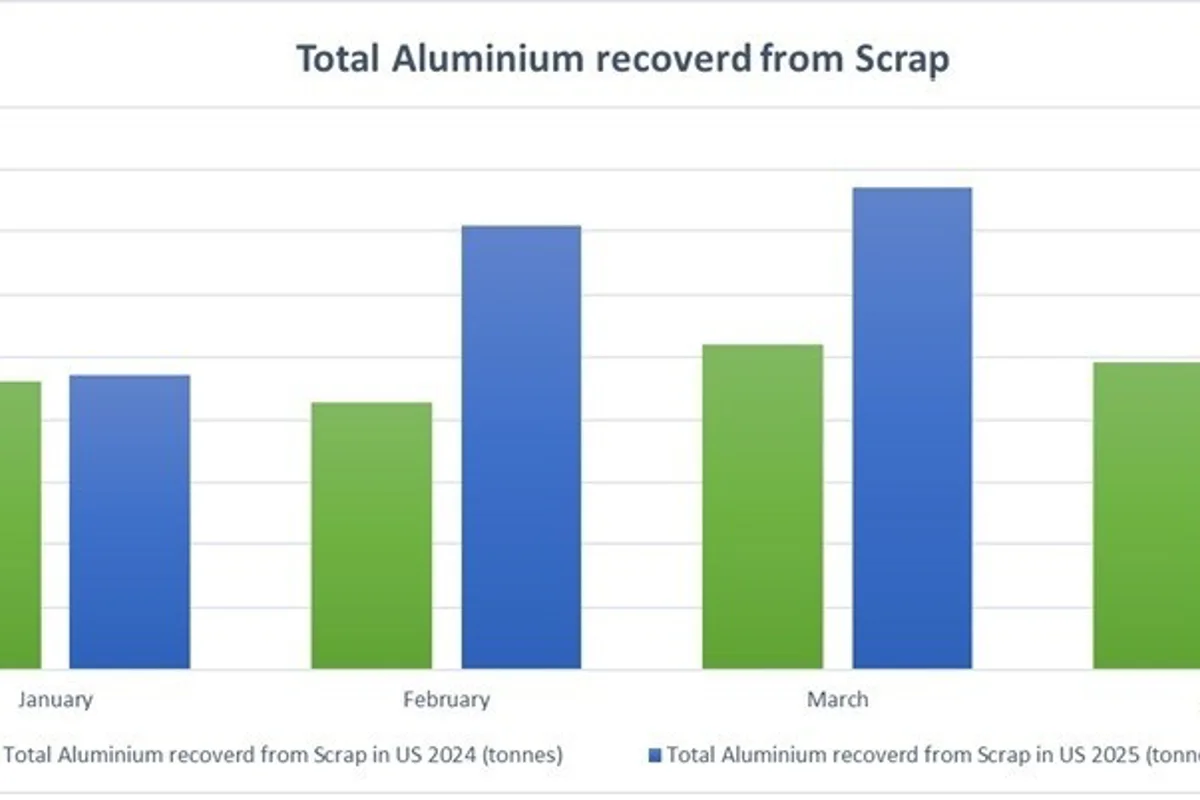
In the first four months of 2025, the US recovered 1.222 million tonnes of aluminium from scrap up 2.7 per cent from 1.19 million tonnes during the same period in 2024.
April 2025 marked a downturn in US aluminium scrap recovery, falling 7.4 per cent to 277,000 tonnes from 299,000 tonnes a year earlier.
This drop followed two strong months, March saw an 8.3 per cent increase to 327,000 tonnes, while February jumped 9.6 per cent to 321,000 tonnes. January had started the year on a steady note at 297,000 tonnes, just 0.3 per cent higher than in January 2024.
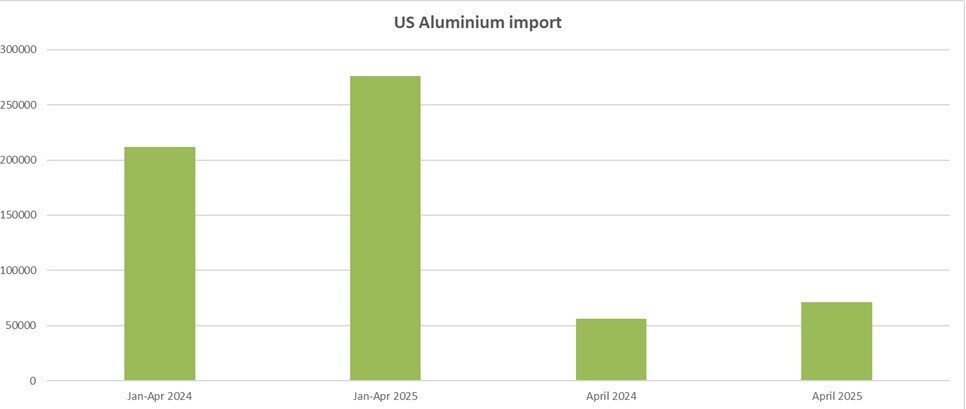
Imports of aluminium also saw a notable upswing. Between January and April 2025, the US brought in around 276,000 tonnes—roughly 30 per cent more than the 212,000 tonnes imported in the same period of 2024.
April alone accounted for 71,100 tonnes, a 27 per cent increase from 55,900 tonnes a year earlier. For the full year 2024, aluminium scrap imports totalled 701,000 tonnes.
Canada retained its position as the top supplier in 2025, increasing shipments by 13,000 tonnes to 142,000 tonnes. Mexico recorded even stronger growth, with exports to the US climbing from 64,600 tonnes to 91,900 tonnes—up by 27,300 tonnes.
US scrap production has grown steadily over the past four years, with gains recorded in both old and new scrap categories.
Aluminium recovered from old scrap output climbed from 1,420 thousand tonnes in 2020 to 1,520 thousand tonnes in 2021, dipped slightly to 1,480 thousand tonnes in 2022, then rebounded to 1,560 thousand tonnes in 2023 and reached 1,600 thousand tonnes in 2024.
Aluminium recovered from new scrap production followed a stronger upward trajectory, rising from 1,630 thousand tonnes in 2020 to 1,780 thousand tonnes in 2021 and 1,920 thousand tonnes in 2022. After a modest pullback to 1,870 thousand tonnes in 2023, output hit a record 2,000 thousand tonnes in 2024.
Scrap inventory in April 2025 was 18.9 per cent higher year-on-year, supported by tariff policies that exempt scrap imports from duties levied on primary aluminium. This has made scrap an increasingly cost-effective choice for domestic manufacturers.
Capacity expansions vs. supply constraints
The US is aggressively expanding its re-melt capacity, with at least 14 new investments announced since 2022. Once fully operational by 2028–2029, these projects will add 2.75 million tonnes of capacity, pushing annual domestic aluminium scrap demand to 6.5 million tonnes. However, after factoring in imports and exports, a supply shortfall of around 3.5 million tonnes is expected, according to The Aluminium Association.
Rising international competition could intensify this gap. China—already a major consumer of global scrap is scaling up its re-melt capacity, projected to be three times greater than that of the US in the coming years.
The risk is compounded by the fact that a large share of US scrap is shipped abroad. In 2024, more than 2.4 million tonnes were exported, up 17 per cent from 2023, even as domestic demand tightened.
The green aluminium drive
The US aluminium industry is leaning heavily on scrap recycling as the backbone of its “green aluminium” strategy. Producing aluminium from recycled scrap requires about 95 per cent less energy and emits far fewer greenhouse gases compared with primary production from ore.
This shift is being driven by sectors such as automotive, aerospace, packaging, and construction, which are under mounting pressure to meet sustainability targets and reduce costs. By relying more on secondary aluminium, manufacturers can align with corporate ESG goals while securing a lower-carbon supply chain.
Note: To feature your brand and share insights, contribute an article or interview in our forthcoming e-magazine "American ALuminium Industry: The Path Forward."












_md.webp)
_md.webp)
_md.webp)







