In the upcoming free trade deal negotiations with the European Union, India is set to request a three-year exemption for its micro, small, and medium enterprises (MSMEs) from a proposed mandatory tariff on carbon-intensive imports. Two sources familiar with the matter disclosed this stance, underscoring India's ongoing resistance to the carbon tariff, which it also opposed at the World Trade Organisation's ministerial meeting in Abu Dhabi earlier this year, as reported by Mint.
The eighth round of free trade agreement (FTA) discussions is scheduled to take place in Brussels from June 24 to 28, 2024. During these talks, India plans to reiterate its concerns and seek relief for its MSMEs, which it argues would be disproportionately affected by the imposition of the carbon tariff. The proposed exemption is seen as a crucial measure to protect the competitiveness of Indian small businesses on the global stage while they adapt to evolving environmental regulations.
CBAM, a green tariff on carbon-intensive products, is part of the European Green Deal. It will take effect in 2026, following a transitional phase from 2023 to 2025.
Which industries and products are impacted by the CBAM regulation?
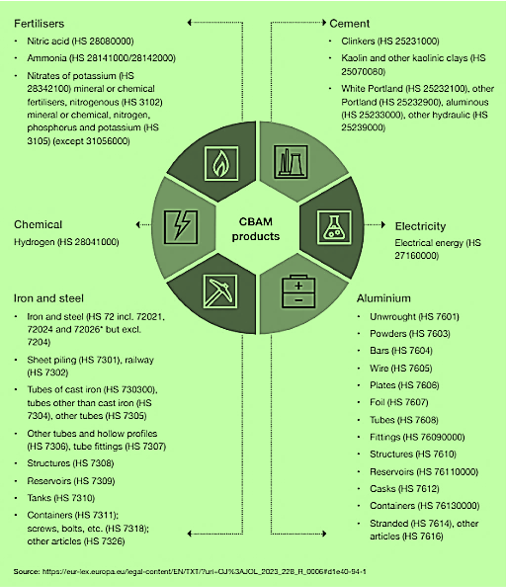
The CBAM applies to six sectors: Aluminium, cement, electricity, iron and steel, fertilizer, and chemical (hydrogen). The regulation specifies the applicable products' Common Nomenclature (CN) codes. The EU selected these sectors based on their high carbon leakage risk and high emission intensity. Once fully implemented, these sectors will represent over 50 per cent of the emissions in the industry sectors covered by the ETS. In the future, additional ETS sectors might be included under the CBAM.
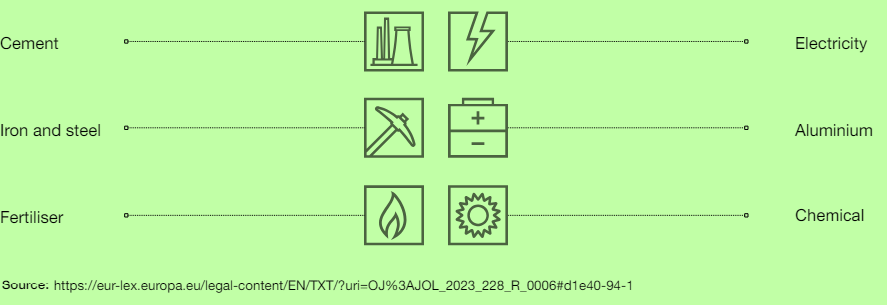 Courtesy: PWC
"India will make a strong point during the FTA talks that the unilateral decision taken by the EU is not in India's interest," said one individual who asked to remain anonymous.
"India is likely to seek a three-year exemption for MSMEs from the EU's Carbon Border Adjustment Mechanism (CBAM)," the person added.
In the upcoming talks, the two sides will address contentious issues such as the carbon tax, India's request for the EU to relax its rules on the maximum allowable pesticide residues in agricultural imports, rules of origin, and related services.
Detailed overview of CBAM goods
The carbon tax is anticipated to affect Indian European exports, particularly iron and steel, aluminium, and cement. With this expanded scope, CBAM will eventually, once fully implemented, encompass over 50 per cent of emissions in the energy, manufacturing, and transport sectors.
"The EU has been defending its stance on CBAM by stating that it has a target to achieve, which is carbon-free production by 2050," a second source explained.
"The Indian industry, on the other hand, believes its production costs will increase massively due to the carbon tax on products like steel, cement, and aluminium," said someone who requested anonymity."
Trade experts predict that the EU's proposed Carbon Border Adjustment Mechanism (CBAM) and Deforestation-free Regulation (EUDR) will affect approximately 8-10 per cent of India's agricultural, steel, and aluminium exports to the bloc. This has become a central issue in discussions between the two sides.
According to a recent Global Trade Research Initiative (GTRI) report, "There is a concern that Indian products entering the EU and UK might face additional tariffs, ranging from 20 to 35 per cent, under the CBAM charges. A suitable text may be inserted in the FTA chapters dealing with this possibility."
EU negotiators argue that their industry can only compete by imposing a carbon tax on imports. Meanwhile, India, committed to achieving carbon-free production by 2070, contends that such a tax would be detrimental to its trade, according to the first person mentioned above.