您想继续阅读英文文章还
是切换到中文?
是切换到中文?

THINK ALUMINIUM THINK AL CIRCLE

UC RUSAL, the leading global aluminium producer, announces its operating results for the fourth quarter 2016 and full year 2016.
As reported in the result, Rusal produced 930 thousand tons of aluminium in Q4 2016, registering a 1.0% growth quarter on quarter. Smelters utilization remained on average at a high of 95% and 94% of the total aluminium output was contributed by Rusal’s Siberian smelters.
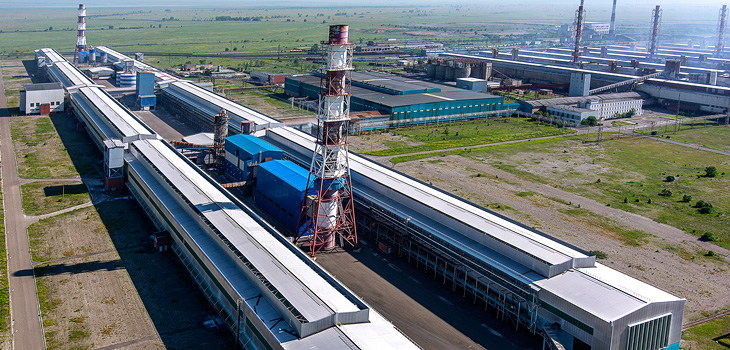
Aluminium production for the full year 2016 totalled at 3.68 million tons, up 1.1% YoY.
The total aluminium sales volume for Q4 2016 stands at 922 thousand tons registering a 6.0% drop QoQ. Out of that, Value Added Product sales contributed 405 thousand tons. Aluminium sales dynamics are dependent on the previous period high base effect and seasonal increase of goods in transit.
{googleAdsense}
For the full year 2016, aluminium sales volumes totalled 3,818 thousand tons registering a 4.9% growth YOY. The increase was largely attributable to the additional volumes of the Boguchansky smelter. For the full year 2016, Value Added Product sales increased 6.7% YoY to 1,677 thousand tons.
In Q4 2016, the average realized all-in aluminium price increased 2.6% QoQ to USD1,799/t. The increase was largely driven by the positive movement in London Metal Exchange price of aluminium which increase by 2.7% QoQ to USD1,648/t in 4Q16. The average realised aluminium premium was USD151 per ton for the fourth quarter.
For the full year 2016, the average realized all-in aluminium price was USD1,732/t which dropped 13.4% YoY. The average price reduction is due to the structurally different market environment in 2015 Vs. 2016 and lower aluminium LME prices and premiums YoY.
In its market overview, Rusal has attributed the stable LME aluminium price above USD1,800/t in the beginning of 2017 to a growing global metal deficit of approximately 0.7 mn tons in 2016, driven by the US, EU and continued supply moderation in China along with rising production cost. The US manufacturing sector ended 2016 on a buoyant note, with promising signs that growth could pick up further in 2017. According to Rusal, the Chinese aluminium supply would continue to be challenged by significant cost inflation, environmental regulation as well as the continuation of supply side reform in 2017, keeping aluminium price high.
Responses


A proud
ASI member
AL Circle Private Limited | CIN: U72200WB2017PTC221175
Registered Office: Ecospace Business Park, Block 3A, Unit 401A, New Town, Rajarhat, Kolkata, WB 700160
Corporate Office: Ecospace Business Park, Block 3A, Unit 401A, New Town, Rajarhat, Kolkata, WB 700160
© 2026 AL Circle. All rights reserved. AL Circle is not responsible for content from external sources.