Trimet Aluminium SE brings up Alloy for 3D Printing

TRIMET now offers an aluminium alloy, using the name trimal®-05AM, and that the materials specialist has developed especially for the production of light metal parts in 3D printing. The alloy, which is based on the material trimal®-05 developed by TRIMET, is suitable for additive manufacturing processes that use selective laser melting (SLM) for the production of ultra-high-strength serial parts without subsequent heat treatment.
Thomas Reuther, a member of the Executive Board of TRIMET Aluminium SE, says: “With the new alloy, we are expanding the application areas for aluminium. The transport sector alone increasingly relies on additive manufacturing, thereby raising the demand for materials that have been developed for this process.”

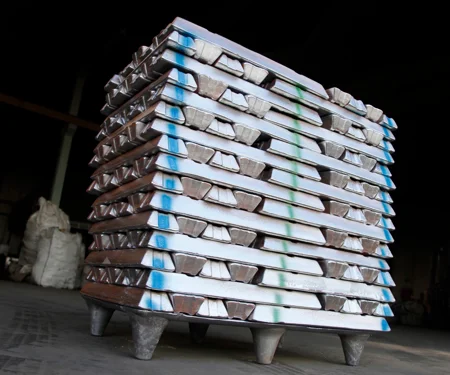
In 3D printing, the alloy, cast as ingots, is atomized into powder. In the process, the material is liquefied and atomized under high pressure to form metal drops, which then solidify into spherical powder particles. Using selective laser melting, the powder-based material is applied in layers to a base plate and completely re-melted locally using laser radiation. After solidification, a solid material layer is brought about. This cycle is repeated until the component is produced completely.
In contrast to conventional casting processes, SLM 3D printing does not require any tools or moulds. A further advantage is the high degree of geometrical freedom. For example, weight-optimized components with bionic structures can be produced by comparatively inexpensively. After classic T6 heat treatment, the mechanical properties are comparable to those of cast components. This also allows trimal®-05AM to be used for prototype production.

The alloy trimal®-05AM has undergone comprehensive testing, conducted by TRIMET in cooperation with the Leibniz Institute for Material-Oriented Technologies (IWT), Bremen, with proof of suitability for additive manufacturing. In addition to powder characteristics and layer thickness, SLM process parameters were also investigated. For example, the distance between parallel melt paths and the speed of the laser beam has a decisive influence on the component properties. To determine the mechanical properties, tensile tests were carried out before and after classic T6 heat treatment, a process that is also used for gravity die castings, for example.
Additive manufacturing is becoming increasingly important. Cheaper and more efficient processes make the production of metal powders and AM components more attractive. As a result, printed components are also increasingly being used as serial products. TRIMET has been conducting intensive research and development on material and process requirements for additive manufacturing for many years now and has a broad knowledge base in the area of powder production and 3D printing technology.
Aluminium operating rates in China improved by 0.2 percentage point last week owing to new alloy capacity : SMM
Next articleAluminium du Maroc: A drastic 30% slump in turnover for H1 of 2020
Grow with
AL Circle