“To address the aluminium recycling problem and improve sustainability in the industry, RecycleOS allows MRFs to accurately capture missorted cans to increase the recycling rate,” JD Ambati, founder and CEO of EverestLabs
- Category
- Interview
- Date
- 20 May 2024
- Source
- AlCircle.com
JD Ambati is the founder and CEO of EverestLabs, an artificial intelligence (AI) and robotics company enabling material recovery facilities (MRFs) to digitise and automate recycling. Steeped in more than 20 years of experience across AI, product development, and strategy – JD saw an opportunity to modernise MRFs to enable the decarbonisation of packaging at scale and contribute to a more sustainable environment.
Prior to EverestLabs, Ambati grew multiple companies from infancy to maturity and oversaw three exits, including WPP's acquisition of Decide Interactive and 24/7 Real Media for $650M, TPG's strategic investment in Wikia, and Vector Capital's acquisition of Rocket Fuel for $145M. Ambati holds a Master's degree in Computer Science and AI and a Bachelor's degree in Chemical Engineering.
AL Circle: Please explain the technicalities and functionalities of your all-inclusive AI and robotics solution, RecycleOS. How effective is the technology in accurately sorting contaminants from post-consumer waste?
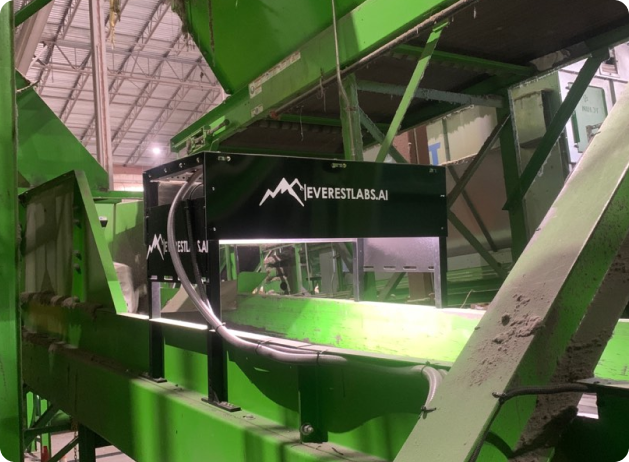
JD Ambati: RecycleOS is an AI-enabled operating system digitising the recycling stream to modernise Material Recovery Facilities (MRFs). RecycleOS' AI-enabled robots pick objects 2-3x faster than humans working in a recycling facility, picking as high as 60 attempts per minute with a success rate of over 85 per cent, and can reduce MRF landfills by 30-40 per cent. With cameras over the MRF conveyor belts, its AI system and robots automatically identify recyclable materials in need of sorting, ensure effective picking, and precisely balance the speed at which the robotic arm moves. It adapts the robot's trajectory depending on the shape, texture, and weight of each material, resulting in more recyclables being picked and recycled than original manual processes.
AL Circle: How does RecycleOS optimise business for aluminium recyclers, and what potential impact could it have on advancing sustainability objectives within the aluminium industry?
JD Ambati: Less than half of aluminium beverage cans are actually recycled by US consumers, and of the ones that are, 25 per cent end up missorted or lost due to non-recovery, per CMI. To address the aluminium recycling problem and improve sustainability in the industry, RecycleOS allows MRFs to accurately capture these missorted cans to increase the recycling rate. By funnelling aluminium cans onto the correct recycling lines and steering them away from landfills, RecycleOS is contributing to the role aluminium can and should play in the circular economy. Additionally, using recycled aluminium for new packaging only requires about 10 per cent of energy expenditure compared to the carbon footprint of creating new material. One EverestLabs robot can help avoid 1053 mtCO2e in GHG emissions in one year.
AL Circle: What challenges did you encounter during the production of this AI-based technology for materials recovery facilities?
JD Ambati: There are a few challenges to address in order to create an accurate AI and reliable robotic system for identifying and sorting materials in recycling plants. On the AI side, the dataset needs to accommodate for the variability in appearance and condition of used packaging materials that end up in a recycling facility. The AI also needs to identify overlapping and obstructed objects in the field of view of the camera on a conveyor with hundreds of objects per frame. On the robotics end, the robot needs to be flexible to adapt to fast-moving conveyor belts to keep up with the speed of object picking. The robot needs to be programmed to prioritise the objects to pick, find the right location to land on the object, and deliver that object to the right bin in the shortest time possible, , repeating this 24/7. EverestLabs provides a professionally monitored service for AI and robotics so that the recycling facilities can be completely hands-off, eliminating the concerns for robot performance and monitoring.
AL Circle: In what ways do you plan to support LRS using your RecycleOS material sorting robot? What other services will you offer to LRS through your partnership term?
JD Ambati: The RecycleOS robot assists in LRS maintaining quality control for over 350,000 pounds of recycled aluminium each month at its facility, The Exchange, which equates to approximately 12 million aluminium beverage cans. Through this deployment, EverestLabs will be supporting LRS’ residual line recovery and also helps the facility increase its revenue.
AL Circle: What sets RecycleOS more competitive than other similar sorting technologies in the market? In your view, are there any areas where RecycleOS could be further enhanced to empower recyclers to maximise their productivity?
JD Ambati: RecycleOS accurately picks 50 per cent more recyclable materials from a conveyor than market competitors. RecycleOS also identifies hundreds of objects in a frame in ~15 mS (faster than AI in self-driving cars), while other robotic systems only identify recyclable objects and no other materials on the belt. RecycleOS is developed with a hand-created library of recyclable and non-recyclable objects, making it the only solution that can perform both positive and negative sorting. It also offers the smallest footprint on the market, meaning it's the only solution designed for easy placement anywhere in an MRF. Unlike other robotics, RecycleOS can be installed on inclined, declined, textured, or u-shaped belts without retrofitting the facility or causing any downtime. RecycleOS was created as a sustainable solution that can clean up the residue left by other sorting equipment in the MRF. No other company has effectively done this yet.
AL Circle: What maintenance does RecycleOS need over time for optimal performance? Do you customise the technology with additional features to meet unique requirements of your customers?
JD Ambati: EverestLabs offers Robot as a Service that is designed for ease of use and eliminates the burden for MRF operators. The only maintenance required is the regular cleaning of the robot’s end-of-arm tools. Our simple-to-maintain design requires just one suction cup change per week and occasional end-of-arm cleaning. Both of which can be completed in a matter of minutes. We provide our customers with a short training and a packet on how to do this. EverestLabs also provides consumables, repairs, and replacements at no additional cost.
As part of our service, we also provide 24/7 monitoring of RecycleOS with our Robot Operations Centre (ROC). This monitoring ensures the performance and health of our systems and immediately contacts our team and the MRF if any problems need to be addressed, taking the burden off of the MRF operator.
Yes, RecycleOS can be customised to meet the needs of each customer. For one customer, our initial prototype robot did not meet performance expectations, which allowed us to better understand customer priorities, and what obstacles needed to be overcome and changes needed to be made to provide a better fit for their MRF.
AL Circle: How has digitisation transformed aluminium sorting and recycling processes in your view? What further advancements do you expect in this field in the coming years?
JD Ambati: The digital transformation revolution has allowed MRFs to seek AI solutions such as RecycleOS to efficiently improve aluminium recycling rates with accurate sorting. In the coming years, we will continue to see MRFs use AI and computer vision not only for sorting, but also in regard to monitoring and compliance to extract more data that provide valuable insights into MRF practices.
AL Circle: What important role does sorting play in aluminium recycling and establishing a circular economy? Do you feel there’s still a lack of awareness of sorting practices? If yes, how do you want to address the issue?
JD Ambati: The first part of the question is answered in Question 2.
There is still a lack of awareness of what robotic sorting can do to improve the circular economy, as many industries are still cautious when implementing new AI tools into their practices. When relying on human sorters for so long, MRFs are typically unaware of the options to use technology to their advantage and can be sceptical of the value of solutions such as RecycleOS.
