The importance and emergence of Industry 4.0 during the COVID-19 pandemic

Even before the COVID-19 pandemic, AMETEK Land and AMETEK Surface Vision had identified the need for connectivity and moved into Industry 4.0.
Industry as a whole depends on getting accurate data from systems and providing this to management within companies, enabling them to make data-driven decisions.
Industry 4.0 facilitates this by allowing operators to access accurate data at any point in time and from anywhere, which is exactly what has been needed during the pandemic to ensure companies can make key decisions quickly and remotely.
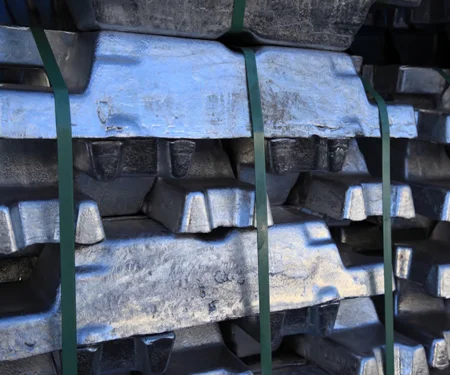
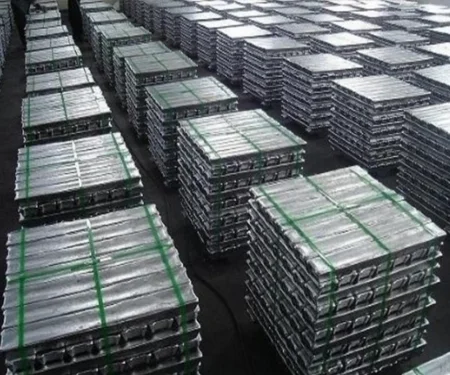
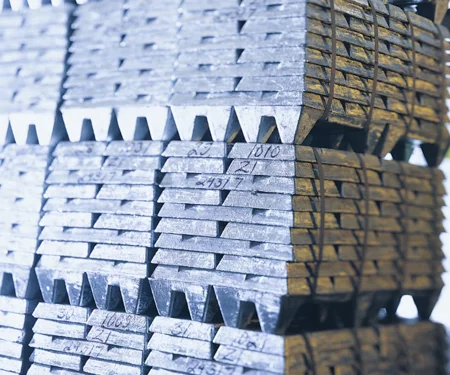
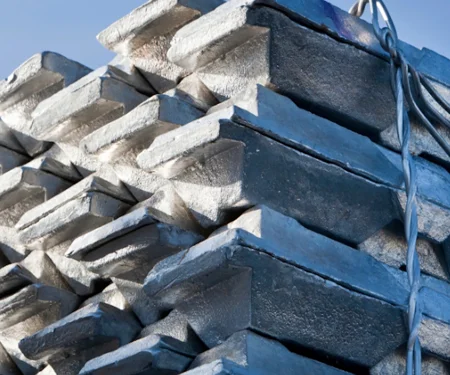
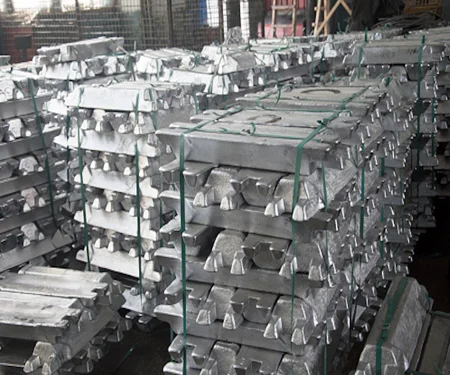
This has been emphasised by market sectors such as textiles and aluminium, which have experienced high demand during the pandemic – they are operating in a very fast turnaround situation, for example when producing personal protective equipment (PPE). They need systems in place to solve problems fast and allow them to transform their processes to respond quickly to changes in demand.
For a lot of companies, this period has been a proving ground for Industry 4.0, with many businesses having seen the benefits. However, for instrumentation providers like AMETEK Land and AMETEK Surface Vision, it has simply been the continuation of a theme that we have been working on for many years.
We have found that many companies have the data but do not know how to manage and use it to their advantage; this is where we come in. Our technology can generate large quantities of data, for example video files, but this is useless unless you know what to do with it – it simply uses up computer space.
Our experts and engineers, however, can understand the processes and systems of a company, and use our expertise to refine, tailor and fine-tune the technology to deliver the most useful information.
At both LAND and Surface Vision, we spend a great deal of time working out problems and providing solutions. Our systems tailor information and provide customers with the specific data that is important to them.
LAND is focusing on melting furnaces in the aluminium industry, where we can transfer the extensive experience we have gained in the glass and steel industries, using our range of thermal imaging borescopes, to provide live thermal images of conditions inside the furnace.
By measuring conditions within the furnace, we can deliver increased efficiencies by ensuring the furnace is not operating too hot and expending too much energy, which helps to reduce emissions. This is supported by our flue gas monitoring solutions to ensure greenhouse gas emissions are minimised.
Some furnaces have been running for more than 40 years using the original operating system, with only a couple of people who are able to manage it. Thermal imager borescopes can provide details on individual burner combustion performance and allow remote live refractory inspection.
AMETEK Surface Vision is a leader in surface inspection of aluminium strip products, providing live video streaming and intuitive defect identification and classification data for operators and management tailored to suit individual requirements.
AMETEK Land and AMETEK Surface Vision have both been challenged during this period. Historically, our service, support and maintenance activities all take place on-site. The restrictions imposed by the pandemic has meant we have fast-forwarded our plans to expand our service provision by offering more remote services.
Continuous remote monitoring, using live information, has been much more appealing to many people in this pandemic, as it means no contact is needed. This is especially important when sites and locations are on complete lockdown. It is also faster, as data can be checked almost immediately, without the delays of travel or waiting time.
Because of this, there now appears to be more of an acceptance for OEMs to move to remote monitoring as a solution, both during the pandemic and beyond.
The pandemic has changed the way that people work and think about work. There has been a significant move to home-working unless there are business-critical reasons to prevent it. It has been proved that many companies can operate just as efficiently working from home, or remotely from the office or site.
Some manufacturers have looked at what technologies they have and how they can be adapted to meet immediate demands during the pandemic. AMETEK Land is an expert in the field of industrial non-contact temperature measurement systems, so we have been able to develop our existing systems for human body temperature screening because we already had the systems, processes, technologies, and expertise in place.
This has led to the rapid deployment of the VIRALERT 3 screening system, which scans individuals at the point of entry to a facility, from a distance that complies with social distancing. By identifying high body temperatures which could indicate a fever, this supports other precautionary measures against the transmission of COVID-19 and other viruses.
New product development and improvement has always been a priority for both AMETEK Land and AMETEK Surface Vision. We saw the need for connectivity and Industry 4.0 some time ago, and the pandemic has only accelerated our ongoing efforts in this area. We are now integrating Industry 4.0 into all of our products and ensuring they are compatible with all systems.
It is not a case of providing one single solution; there are many different ways that people want to connect to devices, so we are ensuring all our products are connectable to any form of digital and analogue communication.
The advantage is that we do not have to get up-close to devices – as long as there is an internet connection, we can access performance information and data.
Post-COVID-19, businesses appear to be slowly getting back to normal operation levels where possible, but many industries, including metals, are going to change. Processes will have to be more resilient and be able to cope with demand (both up and down), which will likely be highly variable while we go through the transition of back to work.
For example, metals processing working in a high-volume sector has seen a change in demand. People are uncertain about the future, so the demand for new cars has reduced significantly.
Automotive steel and aluminium manufacturers run high-volume production processes, continuously manufacturing thousands of tonnes of high-quality strip products. These processes tend to be quite stable and just change-monitored. As we go through this pandemic phase, we will likely see that automotive demand is slow to pick up, but other sectors might emerge quicker.
This means that cold mills and process lines that are set up for automotive markets will probably become more versatile, responding to where the demand comes from.
This changing industrial landscape will require better control and faster feedback to enable quicker production changes, utilising existing lines, equipment, and resources – and that is accomplished through digitalisation.
Artificial Intelligence is another factor in changing business models and Industry 4.0. It allows for faster response through digitalisation. We are now in a situation where we can develop and let machines learn from feedback from the data. As we finally emerge from the COVID-19 pandemic, this will become ever more important.
About AMETEK Land
AMETEK Land is a business unit of AMETEK, Inc., a leading global manufacturer of electronic instruments and electromechanical devices with 2020 sales of more than $4.5 billion. AMETEK Land designs and manufactures a wide range of instruments for industrial non-contact temperature measurement, combustion efficiency and environmental monitoring.
Yunnan YunLv Yongxin Aluminium Co., Ltd. receives ASI Performance Standard certification for aluminium smelting and casting
Next articleFives’ Digital Solutions for Equipment Monitoring, Process Optimisation and Emission Control
Grow with
AL Circle