South Korea’s import of aluminium cans drops with more focus on domestic shipments
South Korea is one of the fast growing economies and recently the country raised its growth outlook for this year and vowed to maintain an expansionary fiscal policy that would support job creation. The government projected economic expansion of 3% in 2017, the fastest since growth of 3.3% seen in 2014. The finance ministry’s latest outlook revised growth up from an earlier estimate of 2.6% and put it above the Bank of Korea’s forecast of 2.8%.
A growing economy implies more income and more consumption of packaged good including aluminium cans. Here is a look at South Korea’s import of aluminium cans in last three years for an understanding of the country’s consumption trends.
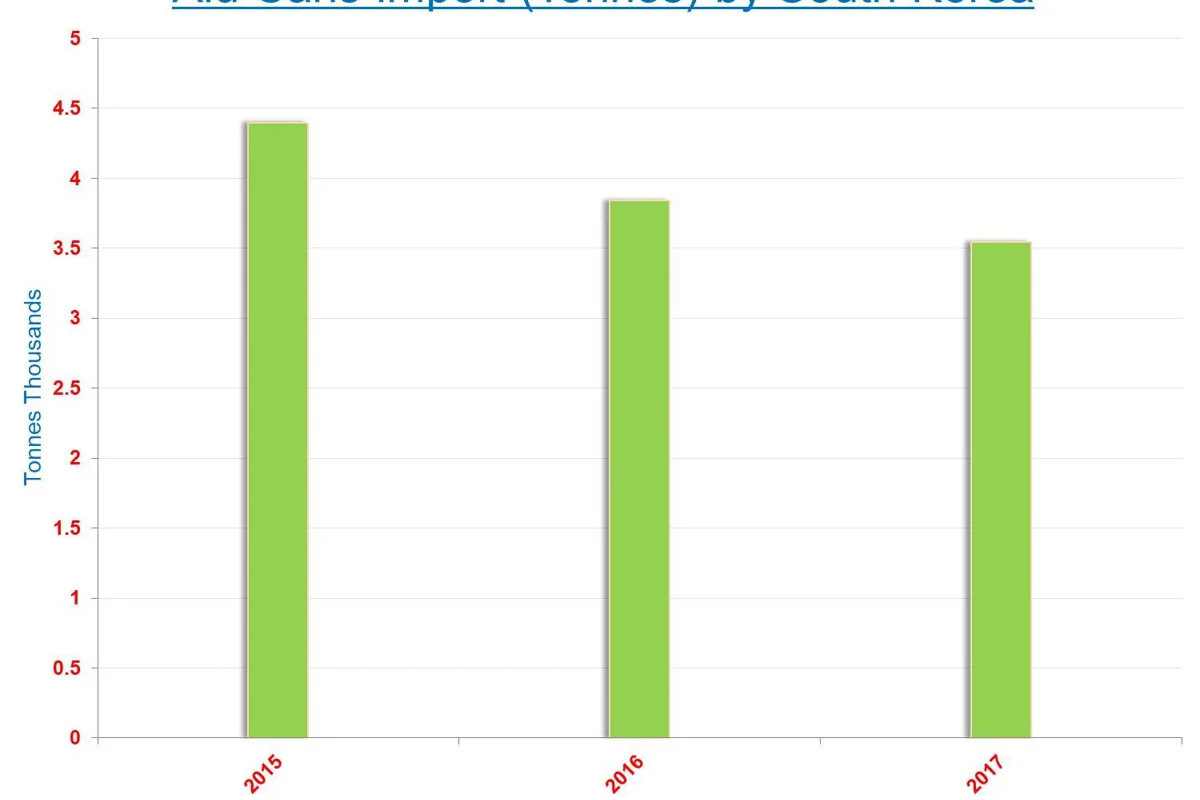
South Korea has been following a downward pattern for the import of aluminium cans. In the year 2015, South Korea exported about 4,396.2 tons of aluminium cans. The volume is estimated to increase further to 3,837.5 tons in 2016. For 2017, export of aluminium cans by South Korea is estimated to be about 3541.3 tons. The fall in import is driven by growing demand for packaged beverage by urban population and more reliance on domestic production.
The value of import stood at US$ 35.6 million in 2015. The value went up to US$ 35.7million in 2016. For 2017, the value of import by South Korea is estimated to be about US$ 31.1million. We can see the fall in import value is driven by more domestic purchase.

South Korea is today one of the key aluminium markets in Asia with 21.5 kg per capita consumption of the metal, driven mostly by growing end user demand in the automotive, construction and electronics and communication sector. However, the country’s consumption of aluminium cans have been rising and it is expected to drive aluminium consumption in the coming years.
Nokia 8 built out of 6000-series aluminium today launching for Indian market
Next articleSymonite supplies aluminium composite panels for property in Sydney
Grow with
AL Circle