您想继续阅读英文文章还
是切换到中文?
是切换到中文?

THINK ALUMINIUM THINK AL CIRCLE

As announced last week that Shandong made a seven-year plan to reorganise its aluminium sector from the ground up. Regulators anticipate that this move will yield significant benefits to the country’s processing and fabricating firms.
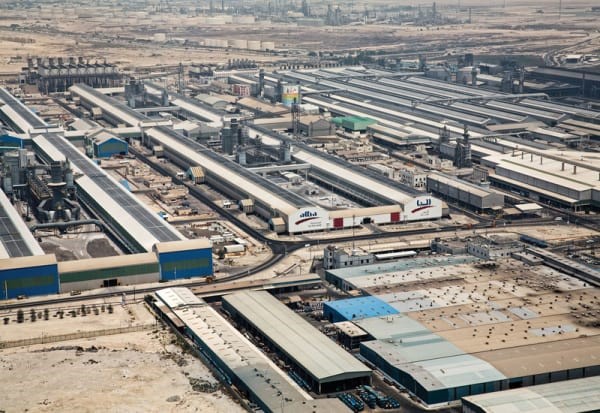
Shandong’s provincial government officially released this plan, entitled “Implementation Plan to Accelerate High-quality Development of Seven Industries with High Energy Consumption” on November 5, as part of an official notice.
The primary aim of this plan is to ramp up the operational efficiency and quality by streamlining the structure of several major industries in Shandong. The major industries include aluminium, steel, and petroleum coke production.
As per the report, the provincial government also intends to reduce the electrical usage, first by 12,800 kwh/tonne by 2022 and then by an additional 12,500 kwh/tonne by 2025. In addition, the province seeks to phase out electrolytic cells with amperage below 400kA entirely by 2025.
“The cost of electricity accounts for some 30% of the total production cost during the aluminium smelting process (so) reducing electricity consumption would help the sustainable development of aluminium smelters in the long run,” opined an unnamed a Shanghai-based aluminium analyst to industry media on Friday.

“Essentially, the addition of new aluminium smelting capacity is nearly banned in Shandong,” elaborated the analyst. “If the provincial government wants to improve the productive value of this industry, a good way is to raise the ratio of high-end products.”
The government, in the long run, seeks to have high-value added aluminium products comprise at least 60 percent of the industry’s total value, which it projects US$50.5 billion annually in total.
Responses


A proud
ASI member
AL Circle Private Limited | CIN: U72200WB2017PTC221175
Registered Office: Ecospace Business Park, Block 3A, Unit 401A, New Town, Rajarhat, Kolkata, WB 700160
Corporate Office: Ecospace Business Park, Block 3A, Unit 401A, New Town, Rajarhat, Kolkata, WB 700160
© 2026 AL Circle. All rights reserved. AL Circle is not responsible for content from external sources.