01 JULY 2014Financial Times
Rusal seeks court approval for debt restructuring
Edited by : AL CIRCLE
3 min read

Rusal is seeking court approval to force through its debt restructuring after failing to win unanimous backing from its creditors.
The lenders blocking the restructuring of the Russian aluminium group’s $10bn debt pile are Royal Bank of Scotland, which is 80 per cent owned by the UK government, and Portigon, a group tasked with winding up the assets of Germany’s WestLB, according to people familiar with the matter.
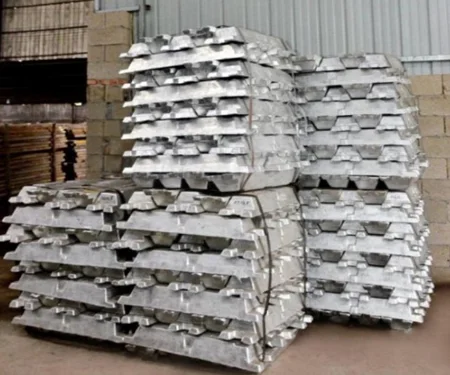
Rusal, controlled by Oleg Deripaska, has been negotiating with creditors since last year to change the terms of its debts, as its profitability is weighed down by years of low aluminium prices. While its Russian lenders have approved the restructuring, it has failed to achieve unanimous support for changes in the terms of about $5.2bn in credit lines from international banks.
On Friday the world’s largest aluminium producer said it had applied to courts in the UK and Jersey to implement a “scheme of arrangement” that would force through the restructuring even without the support of all its lenders. It said 94 per cent of the syndicate of lenders had approved the restructuring deal.
Oleg Mukhamedshin, director of financial markets at Rusal, said he was frustrated that two banks were holding up the deal. “There are a small number, in our case just two holdouts, trying to block the whole transaction which is in the interests of the all the other lenders,” he said. “The holdout banks are requesting specific terms which are not pro rata with the rest of syndicate. Clearly we cannot accept it.”
He refused to name the two holdouts, saying only that one was British and one was German.
British banks have pulled back from business in Russia since the annexation of Crimea and subsequent western sanctions on Moscow. Barclays pulled out of a project with VTB, Russia’s second-biggest bank, to jointly finance a deal in India, while Lloyds Bank withdrew from a financing deal involving Rosneft, the state oil company. RBS declined to comment on Rusal when contacted by the FT.
Mr Mukhamedshin rejected the suggestion that the deterioration in political relations between Russia and the west had influenced the negotiations. “We are not talking about a big amount?.?.?.?it’s pure commercial stuff,” he said.
A majority of Rusal’s banks have approved an extension to a so-called “forbearance” agreement first signed in April, allowing the company to avoid default while it continues negotiations over the restructuring, it added. Mr Mukhamedshin said Rusal’s other lenders were “obviously very frustrated because of the holdouts?.?.?.?Everyone wants to get on with other business.”
Rusal’s financial situation has improved markedly since it started talks with lenders about a year ago. On the back of export restrictions from Indonesia on unprocessed ores, the price of nickel has risen by a third this year, boosting the profitability of Norilsk Nickel, in which Rusal owns a 28 per cent stake. The export ban has also helped lift aluminium prices to a nine-month high.
Rusal’s Hong Kong-listed shares have risen 55 per cent since mid-March.
The lenders blocking the restructuring of the Russian aluminium group’s $10bn debt pile are Royal Bank of Scotland, which is 80 per cent owned by the UK government, and Portigon, a group tasked with winding up the assets of Germany’s WestLB, according to people familiar with the matter.
Rusal, controlled by Oleg Deripaska, has been negotiating with creditors since last year to change the terms of its debts, as its profitability is weighed down by years of low aluminium prices. While its Russian lenders have approved the restructuring, it has failed to achieve unanimous support for changes in the terms of about $5.2bn in credit lines from international banks.
On Friday the world’s largest aluminium producer said it had applied to courts in the UK and Jersey to implement a “scheme of arrangement” that would force through the restructuring even without the support of all its lenders. It said 94 per cent of the syndicate of lenders had approved the restructuring deal.
Oleg Mukhamedshin, director of financial markets at Rusal, said he was frustrated that two banks were holding up the deal. “There are a small number, in our case just two holdouts, trying to block the whole transaction which is in the interests of the all the other lenders,” he said. “The holdout banks are requesting specific terms which are not pro rata with the rest of syndicate. Clearly we cannot accept it.”
He refused to name the two holdouts, saying only that one was British and one was German.
British banks have pulled back from business in Russia since the annexation of Crimea and subsequent western sanctions on Moscow. Barclays pulled out of a project with VTB, Russia’s second-biggest bank, to jointly finance a deal in India, while Lloyds Bank withdrew from a financing deal involving Rosneft, the state oil company. RBS declined to comment on Rusal when contacted by the FT.
Mr Mukhamedshin rejected the suggestion that the deterioration in political relations between Russia and the west had influenced the negotiations. “We are not talking about a big amount?.?.?.?it’s pure commercial stuff,” he said.
A majority of Rusal’s banks have approved an extension to a so-called “forbearance” agreement first signed in April, allowing the company to avoid default while it continues negotiations over the restructuring, it added. Mr Mukhamedshin said Rusal’s other lenders were “obviously very frustrated because of the holdouts?.?.?.?Everyone wants to get on with other business.”
Rusal’s financial situation has improved markedly since it started talks with lenders about a year ago. On the back of export restrictions from Indonesia on unprocessed ores, the price of nickel has risen by a third this year, boosting the profitability of Norilsk Nickel, in which Rusal owns a 28 per cent stake. The export ban has also helped lift aluminium prices to a nine-month high.
Rusal’s Hong Kong-listed shares have risen 55 per cent since mid-March.
Previous article
Alba achieves 4 million work hours without LTI
Next articleAlba to start $2.5bn expansion work by year-end
Grow with
AL Circle