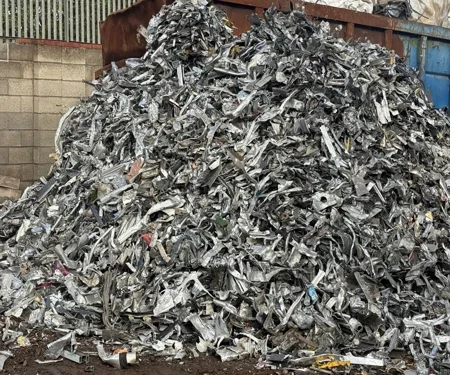
In the wake of the Trump administration's tariff hike to 50 per cent on aluminium excluding the scrap, alongside the UK coming into a discussion for relief, a rising concern has levitated in Europe. A silent "scrap battle" arises from Europe, which is deemed to have lost a vast amount of aluminium scrap and is said to be going into the US domains.
The demand surge for European aluminium scrap after the doubling of the US tariff on primary aluminium is creating a threat to the in-house recycling facilities. This has been a concern since European aluminium scrap is referred to as "strategic raw material" enriched with energy and value. Hence, an excessive outflow of scrap can affect the continent's sustainability goals.
Other threats include climate goals, energy security, and the foundations of Europe’s clean tech and defense industries.
Mr Evangelos Mytilineos, the CEO and President of Metlen Energy & Metals stated, "Europe is facing a silent crisis: aluminum scrap—the primary raw material for recycling—is leaving the continent at record levels. I fully support imposing restrictions on aluminium scrap exports. This is not protectionism; it's about consistency, resilience, and safeguarding Europe's future. We must stop giving away our competitive advantage and start defending it."
In 2021, the total US aluminium scrap import value stood at USD 1.23 billion, of which USD 35.4 million was imported from Europe. In the subsequent year, the US total imports rose by 15.45 per cent, standing at USD 1.42 billion, and Europe's contribution stood at USD 17.7 million, representing a dip of almost 50 per cent from last year.
However, in 2023, the total import was USD 1.2 billion, representing a downward trend, from which USD 33.5 million was Europe's contribution, representing a hike of 46.17 per cent.
Although there was a dip in imports from Europe in 2022, the volume rebounded in the following year, backing the plea presented by the CEO and President of Metlen Energy & Metals, urging for safeguard measures.
Mytilineous had pointed European policymakers to urgently impose restrictions on aluminium scrap exports, eroding the recycling systems and compromising the industry's resilience. His plea reflected a large shipment of recycled aluminium from the European territory to the US, directly implying a 50 per cent tariff not imposed upon the scrap as a strategic manipulation.
As Europe pushes for strategic autonomy and reduced reliance on foreign resources, Mytilineos highlights a pressing issue concerning Europe's vital materials slipping away when retaining them is key to industrial and geopolitical strength. Bold, swift action is needed for sustainability and to uphold national security.
Alongside Mytilineous, The Federation of Aluminium Consumers in Europe (FACE) have also proposed a similar plea to the EU policymakers. The invocation by the company urges immediate intervention to limit the export of European aluminium scrap. The organisation stresses that uncontrolled scrap exports undermine the EU's green transition and industrial resilience.
By exporting valuable secondary raw materials, Europe risks losing a crucial resource for decarbonisation and circular economy goals. FACE urges the EU to treat aluminium scrap as a strategic asset and implement targeted restrictions to retain it within Europe's industrial ecosystem.
However, earlier this year, the European recycling associations opposed proposed restrictions on aluminium scrap exports, arguing that such protectionist measures would harm the recycling industry. They emphasised that exports are essential for maintaining business viability and material flow, especially when domestic demand fluctuates.
The associations assert that policies should support open markets and promote sustainability through innovation and efficient recycling practices rather than restricting trade. They caution that limiting exports could disrupt the recycling ecosystem and negatively impact environmental goals.
On the other hand, the current structure of the EU's Carbon Border Adjustment Mechanism (CBAM) excludes aluminium scrap from emissions reporting, creating a loophole that experts warn could lead to serious data and enforcement challenges. With no clear guidelines on differentiating scrap types or verifying their origin and processing, the system risks being exploited by importers to avoid carbon costs.
This lack of traceability and standardisation threatens the integrity of CBAM and could allow high-emission materials to enter the EU market disguised as low-carbon scrap. Stakeholders call for urgent reforms to close this loophole and ensure robust, transparent implementation.












_md.webp)