Aluminium prices edged up by 0.08 per cent to close at INR 252.75 (USD 2.92) amid renewed investor optimism over China following comments from former US President Donald Trump hinting at a potential trade deal with the world's largest consumer of metals, as reported by investing.com. Market sentiment was further buoyed by developments within the European Union, which is preparing to impose sanctions on imports of primary aluminium from Russia. This anticipated move, the EU's geopolitical move of continual phasing-out of Russian aluminium, is a trend that has accelerated since European manufacturers began distancing themselves from Russian goods following the 2022 invasion of Ukraine.
Overview of China's aluminium trade front
China's aluminium export trade exhibited significant growth between 2020 and 2024, both in volume and value. Export volumes increased from approximately 4.85 million tonnes in 2020 to 6.65 million tonnes in 2024, representing a cumulative growth of around 37 per cent. In terms of value, exports rose from USD 13.13 billion in 2020 to a peak of USD 25.97 billion in 2022 before stabilising at USD 22.03 billion in 2024. This substantial increase in export value during 2022 likely reflects favourable global aluminium prices and heightened international demand amid supply chain disruptions. Despite subsequent price corrections, China's export strategy has remained robust, driven by its advanced production capacity and global trade partnerships.
China's aluminium import patterns exhibited notable fluctuations both in volume and value. Imports rose from approximately 2.70 million metric tons in 2020 to a peak of 3.21 million tonnes in 2021 before declining to 2.39 million tonnes in 2022. Import volumes rebounded to 3.74 million tonnes by 2024. The value of aluminium imports followed a similar trajectory, increasing from USD 6.28 billion in 2020 to USD 9.55 billion in 2021, then dropping to USD 7.50 billion in 2022. By 2024, the value of imports recovered significantly to USD 10.11 billion. This recovery highlights China's growing need for external aluminium supplies amidst tightening environmental regulations and geopolitical shifts.
The data underscores China's dynamic role in the global aluminium market. The record export value in 2022, alongside declining import volumes, suggests a strategic emphasis on strengthening export capacity during a period of high global demand. However, the recovery in import values by 2024 indicates China's focus on securing stable aluminium supplies to meet domestic demand and sustain industrial production. The rising import values also hint at an increase in global aluminium prices and China's reliance on higher-value aluminium products.
China's aluminium trade from 2020 to 2024 illustrates its adaptability in navigating both global market opportunities and challenges. The consistent rise in export values highlights its growing influence in the international market, while the fluctuating import patterns underscore the complexities of managing domestic demand and supply chains. With the ongoing impact of environmental regulations and geopolitical tensions, China's aluminium trade strategy will likely continue evolving, positioning itself to maintain resilience and competitiveness in a volatile market.
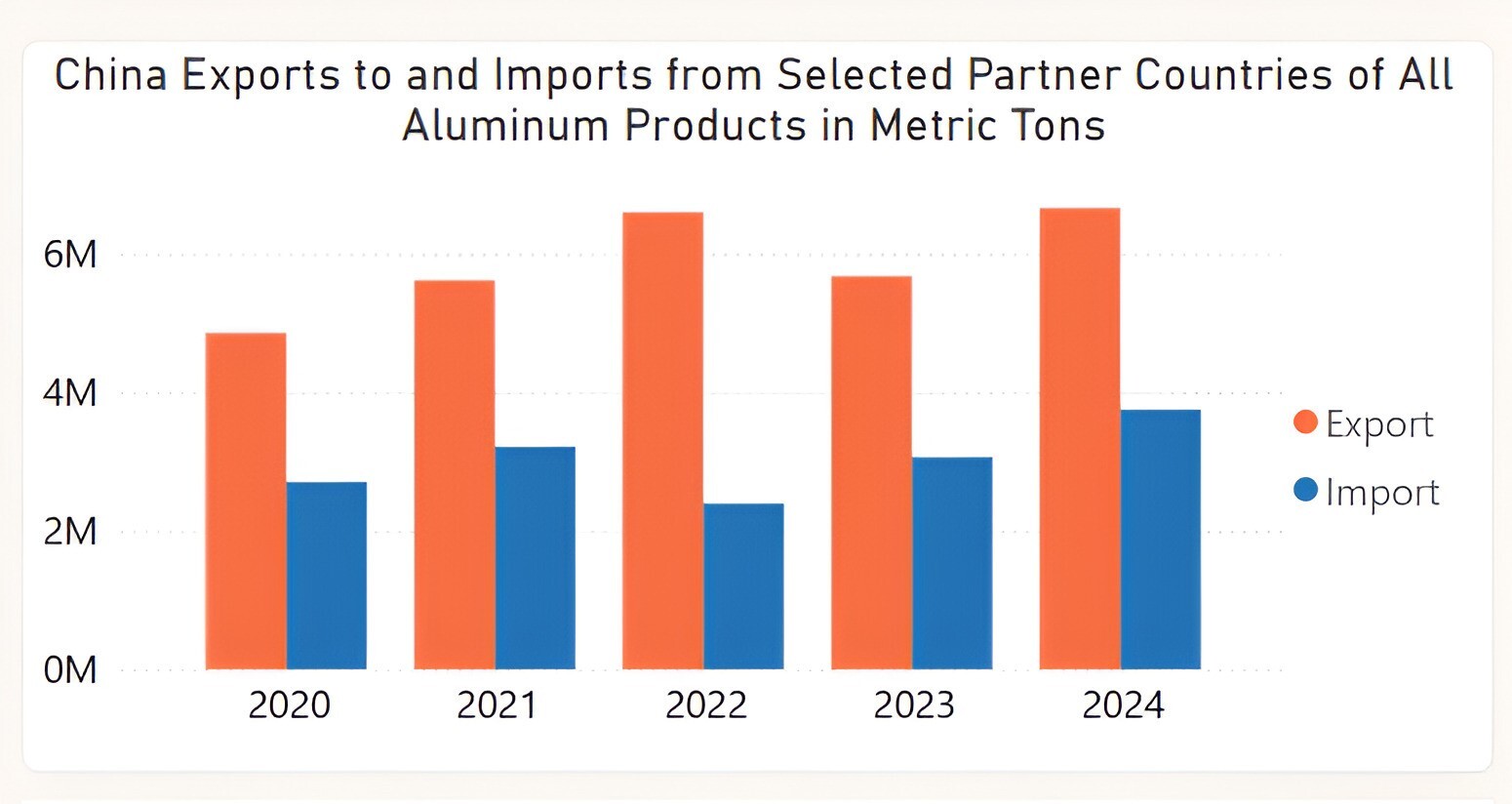 Image Source: International Trade Administration
Production front of China
In terms of production, global primary aluminium output in December rose by 3 per cent year-on-year to 6.236 million tonnes, according to data from the International Aluminium Institute (IAI) among which China's cumulative aluminium production rose by 4.2 per cent year-on-year to 3.77 million tonnes in December. However, aluminium producers in China faced challenges with rising costs, supply disruptions and energy constraints, turning the industry's average profit into a loss for the first time in three years. For 2024, China's total production amounted to 44.01 million tonnes, a 4.6 per cent increase compared to the previous year.
US-China trade relations: Past and present
The US government has at times criticised various aspects of the US-China trade relationship, including sizeable bilateral trade deficits and China's relatively inflexible exchange rates. The administrations of George W. Bush and Barack Obama imposed quotas and tariffs on Chinese textiles in order to shield US domestic producers, accusing China of exporting these products at dumping prices. During the Obama administration, the US additionally accused China of subsidising aluminium and steel production and initiated a range of anti-dumping investigations against China. During these two US administrations, US-Chinese trade continued to grow. During this time, China's economy grew to be the second largest in the world (using nominal exchange rates), second only to that of the US. Large-scale Chinese economic initiatives, such as the Belt and Road Initiative, the Asian Infrastructure Investment Bank and 'Made in China 2025' alarmed some US policymakers. More broadly, the US government has viewed China's economic growth as a challenge to American economic and geopolitical dominance. The trade relationship between the United States and China has evolved significantly over the past few decades, with aluminium playing a pivotal role in their economic interactions.
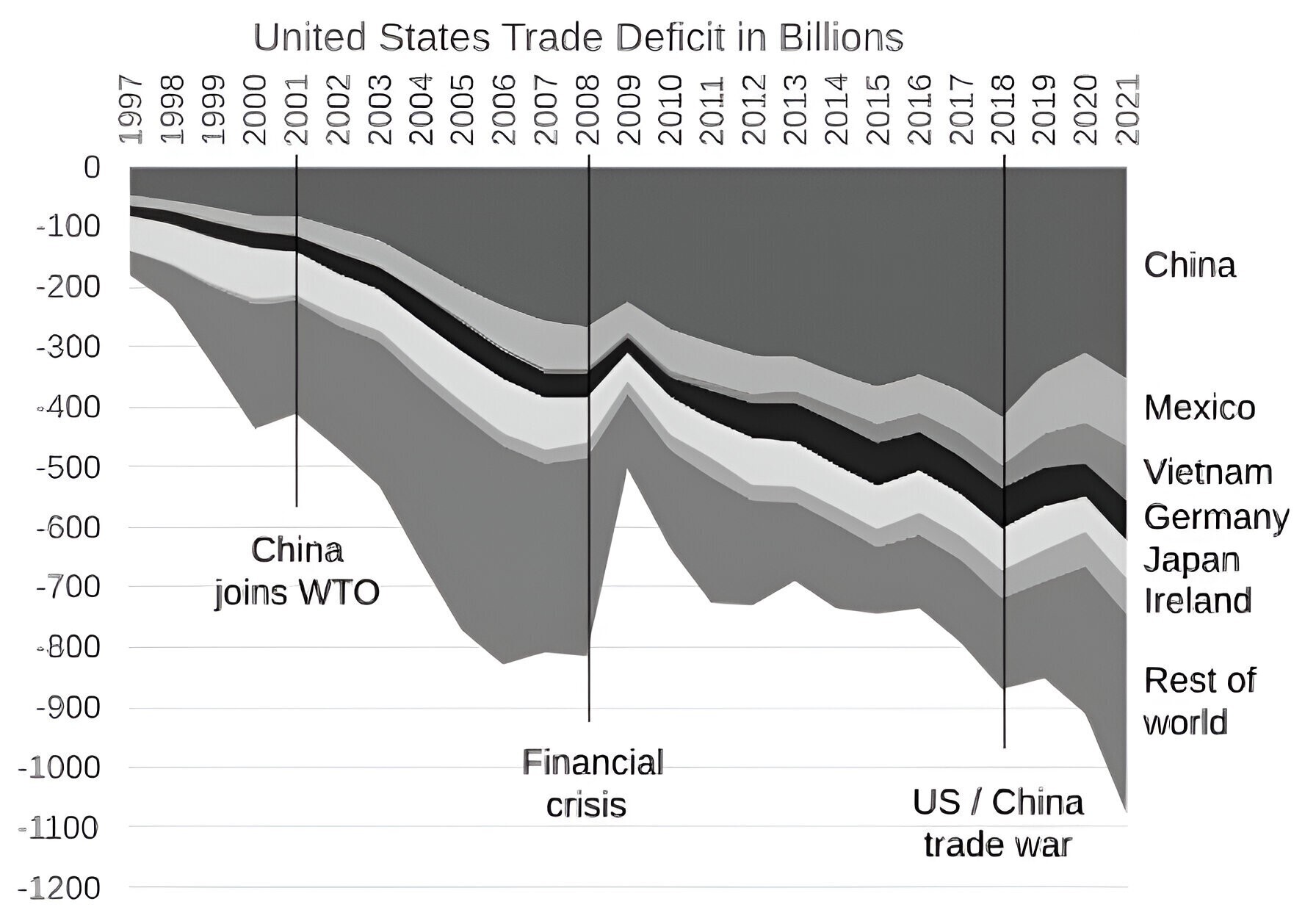 Image Source: Wikipedia
Following China's accession to the World Trade Organization (WTO) in 2001, trade between the US and China expanded rapidly. By 2023, China had become one of the largest export markets for US goods and services, while the US was the top export destination for China. This surge in trade brought benefits such as lower prices for US consumers and higher profits for American companies. However, it also led to challenges, including job losses in certain US industries due to increased import competition.
China's aluminium production has seen a dramatic increase, rising by over 1,400 per cent from 2000 to 2017. This growth was fuelled by substantial government subsidies, including concessional financing and tax incentives. Consequently, China accounted for 83 per cent of the global increase in aluminium production capacity during this period.
Despite the US imposing high anti-dumping and countervailing duties on Chinese aluminium products since 2017, the U.S. remains the largest importer of Chinese aluminium. This underscores the strong interdependence between the two nations in the aluminium sector.
In 2018, the US implemented Section 232 tariffs, imposing a 10 per cent duty on most aluminium imports to protect national security and support domestic production. These measures were primarily aimed at countering the effects of global excess capacity, notably from China.
The US has also maintained anti-dumping and countervailing duties on specific Chinese aluminium products, such as aluminium foil, to address concerns over unfair trade practices. These duties have been upheld to prevent material injury to the US aluminium industry.
As of 2025, the global aluminium market is experiencing significant turbulence due to geopolitical tensions and trade policy shifts. The US is considering imposing 25 per cent tariffs on aluminium imports from key suppliers like Canada and Mexico. Simultaneously, the European Union is contemplating a ban on Russian aluminium imports, leading Russia to strengthen its trade ties with China. These developments are contributing to market instability and could result in the fragmentation of the previously globalised aluminium market into regional segments.
While the US and China have benefited from their extensive trade relationship, especially in the aluminium sector, challenges such as trade imbalances, policy disputes, and market volatility continue to shape their economic interactions.
Anticipated impact of the EU's 16th package
The European Union's 16th sanctions package, announced to be implemented on February 1, 2025, will introduce measures that significantly impact China's aluminium industry. A key component of this package is the enforcement of the Carbon Border Adjustment Mechanism (CBAM), which imposes carbon tariffs on imports based on their associated greenhouse gas emissions. Aluminium, being an energy-intensive product, is notably affected by these regulations.
According to a report by Metals Wire, the CBAM aims to level the playing field between EU producers, who adhere to strict environmental standards, and foreign exporters from countries with less stringent regulations. As a result, Chinese aluminium exports to the EU have become subject to these carbon tariffs, leading to a significant decrease in trade volumes. In 2023, China's aluminium exports to the EU declined by 30 per cent, totalling 689,000 tonnes, with a corresponding 26 per cent drop in trade value to 22.76 billion ($3.16 billion).
This decline underscores the challenges faced by China's aluminium industry in adapting to evolving global environmental standards. The CBAM's implementation has prompted Chinese producers to reassess their production processes and supply chains to mitigate the impact of these tariffs. Additionally, the EU's definitive anti-dumping duties, ranging from 14 to 25 per cent on Chinese flat-rolled aluminium products since July 2022, have further complicated market access for Chinese exporters.
In response to these challenges, China has taken steps to adjust its trade policies. Notably, the country announced the termination of tax rebates on exports of semi-manufactured aluminium products, effective December 1, 2024. This move is anticipated to reduce Chinese aluminium exports by over 5 million tonnes annually, reflecting China's efforts to align with international trade dynamics and environmental considerations.
In a nutshell, the EU's 16th sanctions package, mainly through the CBAM, has exerted considerable pressure on China's aluminium industry. Chinese producers are now navigating a more complex trade environment, balancing the need to maintain export competitiveness with the imperative to meet stringent environmental standards.
All in all, aluminium has all the valid reasons to have witnessed short covering, with open interest decreasing by 9.05 per cent to settle at 1,226 as prices gained INR 0.2. Support is at INR 251.8 (USD 2.91), with potential for a test of INR 250.8 (USD 2.90). Resistance is seen at INR 254.4 (USD 2.94), and a break above this level could see prices moving toward INR 256 (USD 2.96).














_md.webp)








