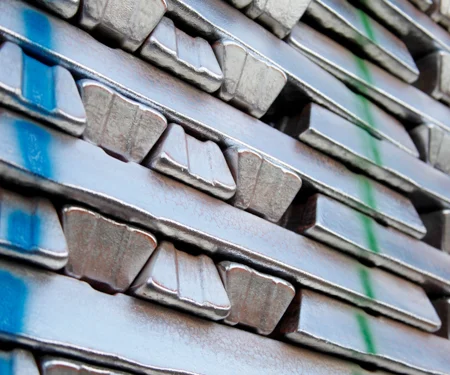
Low social inventory of aluminium ingots in China and ex-China persists, leaving limited room for a deep decline in aluminium prices
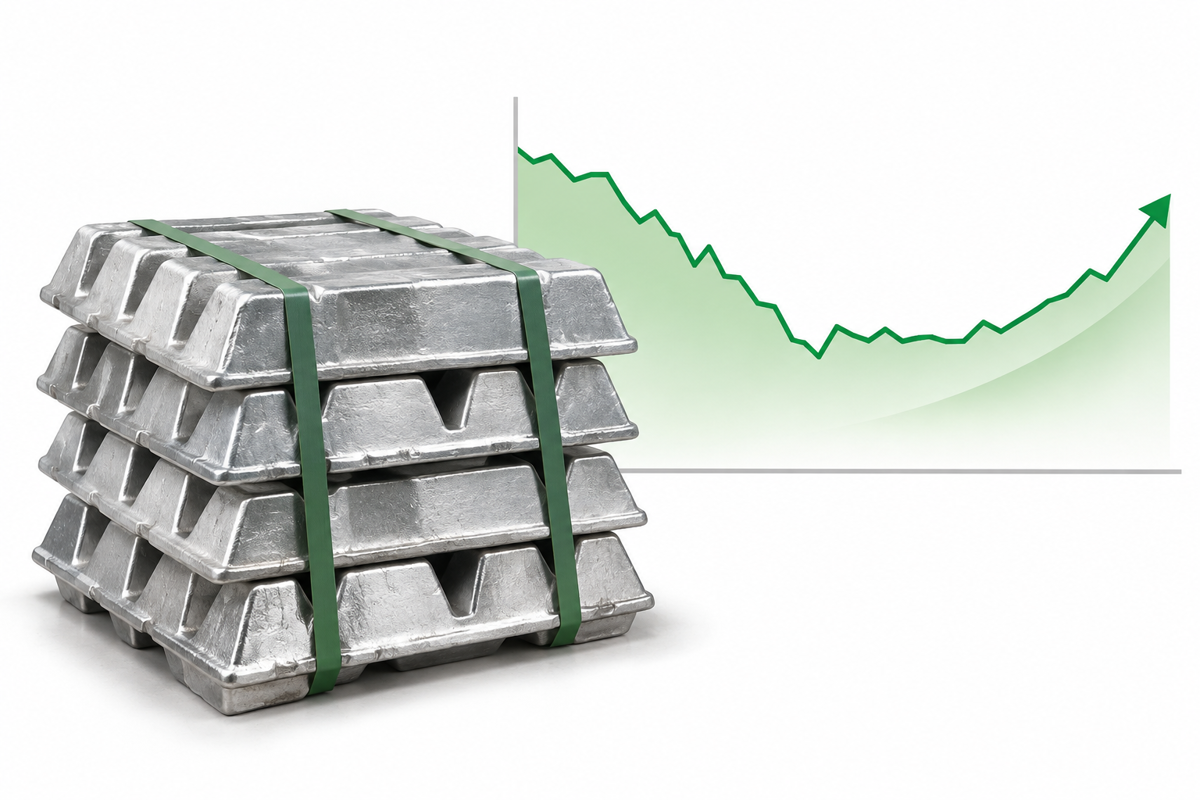
The image used in this article is generated with an AI tool and does not depict any real-time moment
Futures: SHFE aluminium closed at RMB 22,530 per tonne, rebounding 1.1 per cent. Despite the positive close, prices remained under pressure below all key moving averages (MA5=22,727, MA60=23,633), with the medium-term bearish alignment intact. MACD indicator lines (DIF=-244.16, DEA=-188.68) operated below the zero axis, but the green bars narrowed significantly to -110.96 (previous day -150.62), indicating a marked weakening of bearish momentum and initial signs of a technical bottom divergence repair. Trading volume expanded to 101,500 lots, suggesting capital inflows at the bottom. The recommended core trading range for SHFE aluminium is 22,000-22,800. LME aluminium closed at USD 3,078.5 per tonne, surging 2.02 per cent. Prices rebounded strongly, reclaiming MA5 (3,061.5), MA10 (3,064.3), and MA30 (3,058.8) in one move, with the short-term trend turning notably stronger. The MACD indicator formed a golden cross below the zero axis (DIF=-16.01, DEA=-23.40), with red bars expanding to 14.79, showing strong bullish momentum. Trading volume increased to 25,600 lots, with active buying. The recommended core trading range for LME aluminium is 3,050-3,160.
Macro front: According to the Wall Street Journal, US Vice President Vance is considering face-to-face talks with a senior Iranian security official to push for an end to the war. US President Trump recently stated he is open to Vance restarting negotiations with Iran and has granted him negotiating authority. Vance sent a letter in October to Mohsen Rezaei, secretary of Iran's Supreme National Security Council and a hardline figure, proposing a meeting between the two sides, though no date has been set. Iran's Islamic Revolutionary Guard Corps Navy said that on the night of November 10, two oil tankers attempted to secretly exit the Strait of Hormuz via an unauthorised route, struck mines, and triggered violent explosions. Iran warned that vessels failing to comply with its published navigation safety requirements in the Strait of Hormuz and the Persian Gulf would be deemed "a threat to Iran's national security."
Fundamentals: Supply side, China's operating aluminium capacity remained high, with weekly aluminium production continuing to edge up this week. Ex-China, production resumptions at Middle Eastern capacity that had previously cut production progressed slightly ahead of expectations, and with new capacity in Indonesia coming online, aluminium supply continued its recovery trend. LME aluminium inventory held near 229,000 tonnes, a near 20-year low. Demand side, the aluminium processing industry composite PMI fell below the 50 mark to 48.9 per cent in October, with increasing signals of weakening downstream processing demand as the peak season drew to a close. Downstream purchases were mainly just-in-time restocking. Inventory, according to SMM statistics, as of this Thursday, China's aluminium ingot social inventory destocked by 18,000 tonnes from this Monday and by 32,000 tonnes from last Thursday. Exports, unwrought aluminium and aluminium semis exports in October totalled 594,000 tonnes, down 62,000 tonnes or 9.5 per cent MoM from 656,000 tonnes in September, but still up 18.1 per cent YoY. Cumulative exports from January to October reached 5.916 million tonnes, up 17.9 per cent YoY. Aluminium semis exports have been the most resilient demand component this year, but the monthly figure turned from growth to decline, and the market widely expects November exports to continue falling M-o-M amid inverted domestic and ex-China prices.
Primary aluminium market: East China market: SHFE aluminium futures fell sharply, spot trading sentiment turned positive, and spot discounts returned to premiums. Notably, the price spread between futures contracts widened again to above RMB 300 per tonne during the day, and market quotes for the next-month contract are expected to show a higher trend. SMM A00 aluminium ingot prices traded between parity and a premium of RMB 20 per tonne during the day. Central China market: With mixed macro sentiment and a sharp drop in SHFE aluminium futures, central China traders quoted significantly higher premiums compared with yesterday, but downstream processing enterprises held high in-factory inventory, remained cautious, and showed low purchase willingness, leaving overall buying sentiment subdued. Sellers lowered quotes accordingly, and actual transaction prices in central China centered around discounts of RMB 20-80 per tonne against the SHFE aluminium November contract. South China market: Aluminium prices plunged yesterday, and the spot market recovered strongly. The sharp decline in absolute prices became the most important support, and with inventory destocking accelerating to new lows, quotes under the early contract rollover also helped smooth next-month basis fluctuations. Some market participants turned bullish on the outlook and held prices firm while holding back from selling, while others were forced to sell less or not at all due to insufficient supply. Mainstream quotes quickly rose from parity to premiums, and spot liquidity tightened further. The deep price drop stimulated incremental restocking and stockpiling, and with supply relatively weak and demand strong, higher-price purchases were widely accepted, with transactions increasingly showing undersupply. Spot transaction prices concentrated at premiums of RMB 535-575 per tonne against the SHFE aluminium 2612 contract.
Aluminium scrap: SMM A00 aluminium prices closed at RMB 22,690 per tonne yesterday, plunging RMB 600 per tonne from the previous trading day. The aluminium scrap market followed the decline actively, with Henan and other regions catching up on the previous day's drop, while some regional categories remained stable on a wait-and-see basis. On price differences, the price difference between A00 aluminium and mixed aluminium extrusion scrap free of paint in Foshan stood at RMB 2,022 per tonne on November 11; the price difference between A00 aluminium and shredded aluminium tense scrap stood at RMB 174 per tonne, at a historically low range. Supply side, tax inspections continued to deepen across multiple regions, with no easing in the scarcity of compliant, invoiced aluminium scrap. Invoiced-holding enterprises remained firm in holding prices, and most scrap quotes held steady at the start of the week on a wait-and-see basis. Demand side, off-season characteristics began to emerge. With scrap costs elevated and finished product price hikes difficult, theoretical margins compressed, and scrap utilisation enterprises' willingness to chase higher prices for purchases weakened notably. Wrought aluminium alloy enterprises continued to push for lower prices, with downward pressure on wrought aluminium alloy scrap continuing to release. In the short term, the triple factors of weakening primary aluminium support, rising import arrivals, and insufficient demand at the start of the off-season have notably weakened upward momentum, with prices more likely to show resilient adjustments after following primary aluminium slightly lower. By category, aluminium tense scrap remained relatively firm, supported by cast aluminium alloy orders and low inventory, while wrought aluminium alloy scrap still faces potential catch-up declines under pressure from wrought aluminium alloy enterprises. Going forward, focus on the spread of tax inspections and changes in invoicing quotas across regions, the actual realization of primary aluminium substitution after price differences compress to low levels, and the pace of downstream operating rate declines during the off-season.
Secondary aluminium alloy: ADC12 market prices broadly fell by RMB 200-400 per tonne yesterday, with downward pressure intensifying. SMM ADC12 prices dropped RMB 300 per tonne from the previous day. Primary aluminium prices and futures pulled back notably, further fueling bearish sentiment in the spot market. Enterprises adjusted quotes to follow the market, but the extent of price cuts remained somewhat divergent given cost and margin considerations. Raw material side, aluminium scrap purchases were affected by expectations of falling prices, with enterprises adopting a cautious purchasing stance. Meanwhile, copper prices remained relatively firm, providing some buffer to ADC12 costs, and some enterprises began considering adjusting the ratio of primary aluminium, copper, and silicon in raw material inputs to optimize production costs. However, downstream demand remained generally weak, with the market dominated by just-in-time procurement and insufficient willingness to restock proactively. End-use demand showed limited capacity to absorb prices. With downward price expectations not yet reversed and both supply and demand lacking clear positive support, ADC12 spot prices are expected to face some adjustment pressure in the short term.
Overall outlook: The recent decline in futures reflects the concentrated realization of three factors: exports turning negative MoM, expectations of a distant-month surplus, and inventory marginally shifting to increases. Capital flows showed position-building on the decline with distant-month contracts leading losses, representing a correction of expectations and structure rather than a collapse in spot fundamentals. Given that social inventory remains at a five-year low in absolute terms, ex-China visible inventory has hit a 30-year low, and spot premiums remain elevated, downside room for aluminium prices is limited.
Note: This article has been shared by SMM and has been published by AL Circle with its original information without any modifications or edits to the core subject/data.
Grow with
AL Circle












_md.webp)