您想继续阅读英文文章还
是切换到中文?
是切换到中文?

THINK ALUMINIUM THINK AL CIRCLE

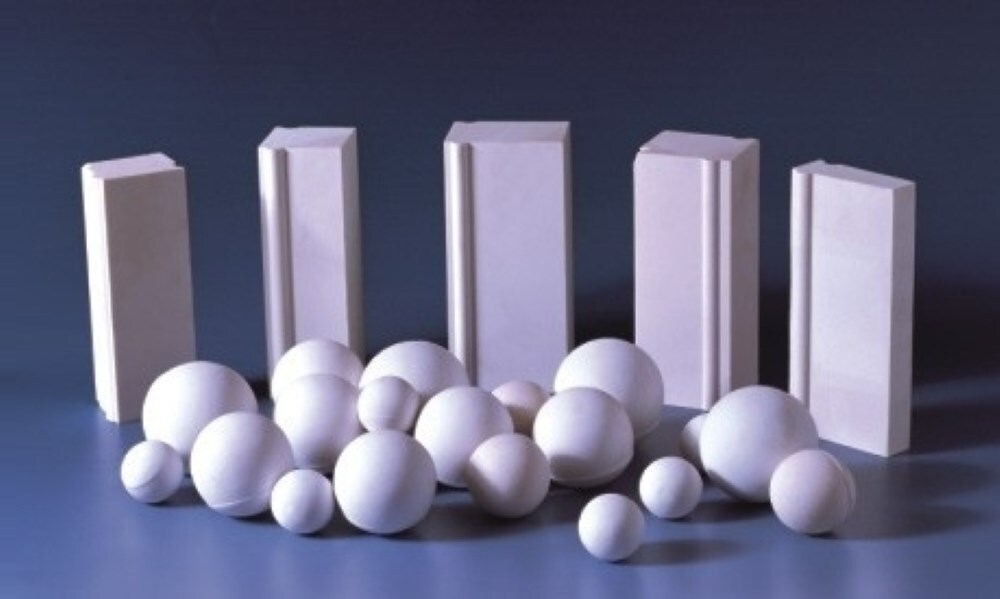
Widely used in ball mills for ceramics, minerals, pigments and chemicals, the alumina grinding balls are the hero, but what affects their performance? The alumina content in the alumina grinding balls is the most critical factor which can affect the performance, mainly when it ranges from 75 per cent to 95 per cent. The real difference is within the formation, where if the alumina content is higher, it means hardness and better wear resistance, but there are more nuances that need attention first.
From powdered potential to mighty milling warriors
Alumina balls are usually made from high-quality alumina powders, likely calcined α-alumina or the refined industrial alumina. The alumina content, which typically ranges from 65 per cent to over 99 per cent, increases along with its purity and performance. The higher-purity alumina balls usually offer better wear resistance and less contamination, and are highly known for their impressive hardness.
This hardness boasts a Mohs hardness of 9 and can resist both acidic and alkaline corrosion. Its features are able to withstand temperatures above 1000 °C and maintain their structural integrity under pressure. Its bulk density is typically between 3.6 and 3.8 g/cm³, facilitating efficient energy transfer during grinding. Wet milling tests reflect wear rates as low as 0.01 per cent, while dry milling conditions demand even greater strength and wear resistance.
Also read: WA alumina posts $8.2B record sales despite production decline
Wet vs Dry grinding conditions
The wet grinding conditions make use of liquid carriers like water or solvents to help distribute energy, reduce friction, and keep the materials cool. Within this method, the results are usually finer, more consistent particles while minimising thermal stress. Moreover, alumina balls, in these conditions, are deemed to have a lowered wear experience and are also easy to clear, but after the processing, the materials are required to dry.
On the other hand, within the dry grinding conditions, the process is entirely reliant on the mechanical forces where no liquid phase is present. This is because it is ideal for materials which are moisture sensitive or that demand simpler system setups. This is mainly because this condition is observed to release more heat, which can lead to uneven distribution or “dead zones.” This makes it crucial for dry grinding to require ball which has higher impact resistance as well as lower wear rates, which typically should be isostatically pressed types with densities around 3.68 g/cm³ and wear rates between 0.04 per cent and 0.08 per cent.
Mechanical strength and wear resistance of alumina balls
With alumina content rising, the internal crystal structure tends to be more uniform or consistent as well as tightly packed. This aids in directly improving the durability of the alumina balls. This increase in durability and support for greater hardness, with 92 per cent and 95 per cent alumina balls, presents higher resistance, which further enables them to resist the long million cycles' abrasive forces. Not only this, high purity of the alumina indicates much softer impurities which can be accelerated at the surface wear. This is the distinctive feature that supports the preparation of the high-intensity milling of the 92 per cent and 95 per cent alumina balls.
Contamination levels during the grinding
Grinding media purity helps in influencing the cleanliness of a final product. The higher the alumina content, the less contamination will be encountered. This indicates that the 95 per cent alumina balls release comparatively lower impurities than the 75 per cent or 85 per cent alumina types. Moreover, these are suitable for applying high-purity materials like batteries, electronics, ceramics and pigments, benefiting from the cleaner grinding conditions.
Must read: Key industry individuals share their thoughts on the trending topics
Impact resistance and toughness
Higher alumina increases hardness but does not always mean better toughness. The 75 per cent and 85 per cent alumina contents show slightly lower hardness but better impact absorption, suitable for coarse grinding. On the other hand, the 92 per cent and 95 per cent alumina contents are usually strong and durable under steady load, but require stable mill conditions to avoid cracking. Matching toughness to mill type prevents unnecessary ball breakage.
Grinding efficiency across different particle sizes
Every alumina grade shows different performance, which usually varies with the various milling stages. It has been observed that the 75 per cent and 85 per cent alumina are highly viable for reducing the initial size as well as handling the larger feed materials. Concurrently, the 92 per cent alumina is deemed to pose an excellent balance of cost, hardness and efficiency. But the 95 per cent alumina is considered to be the best for ultra-fine grinding or long-duration milling.
Cost differences and long-term savings
Upfront, the cost of the higher alumina grinding balls is deemed to be much higher, but they offer higher longevity. This is possible because lower wear does not require frequent refills. In addition to this, reduced contamination also further eliminates the downstream processing costs and higher efficiency reduces the time needed in milling. In most cases, the 92 per cent or 95 per cent alumina aids in a lower cost per tonne of output, even if the initial price is measured to be much higher.
Therefore, selection of the right alumina content creates an efficient balance in cost, overall performance, purity enhancement and the mill conditions. With a good understanding of the structure as well as the functions of the different alumina grinding balls, like the 75 per cent, 85 per cent, 92 per cent and 95 per cent, the result will be directly reflected on the operators. This is because the operators can make required improvements, for instance, the grinding efficiency, contamination reduction and boosting the product consistency.
Explore- Most accurate data to drive business decisions with 50+ reports across the value chain
_0_0.png)
Responses