Industry 4.0 in Practice: Examples and Impact of Smart Logistics - Quantillion
We believe in a primary aluminium industry in which people do not have to be exposed to the dangers of high current, molten metal and corrosive dust for their everyday operations.
And since aluminium plants are essentially a combination of logistical processes – related to anode transport, molten metal transport, bath transport and more – we believe that to achieve this vision, smelters have to come up with new approaches for their logistical processes.
We call this smart logistics, and it is an implementation of Industry 4.0 technologies for existing smelters. The business case for smarter logistics is clear: not only can it help to make the processes safer and more reliable, but the financial impact is also significant. We estimated over 4.5 million USD yearly OPEX savings for a 600,000 tonnes production site.
So, how does this Industry 4.0 application work in practice? What are the hurdles that smelters have to overcome, and how do they do so?
From push to pull: minimizing the amount of metal on the move
Firstly, we see smelters moving from pushing metal from the potroom to pulling it from the casthouse. On one hand, this helps smelters to achieve better cycle times, less waiting and higher asset utilization rates, but on the other hand, this also minimizes the amount of time that hot metal is on the move – improving health and safety.
Industry 4.0 comes in here, in predicting and communicating the work orders between casthouse, transport agents (e.g. AGVs) and the potroom. A layer of intelligence can learn from past actions, and use trusted data such as metal levels, metal composition and more to make recommendations.
To bring this into the potroom, there are multiple options. For example, we provide a mobile application to let potroom operators gather this data and let casthouses give orders to the operators for when to tap.
Keeping workflows separated: smart traffic management
Secondly, smelters look for ways to achieve working processes in traffic flows that have minimal ‘handshakes’. By ‘handshake’, we mean interactions between different AGVs, vehicles and/or operators. In an Industry 4.0 setting with mixed systems (e.g. AGVs among human driven vehicles), the extra care has to be taken for creating a good trusted data layer that helps to assess where everyone is and what they are doing.
Furthermore, such a system has to work with different equipment suppliers, as it needs to create a form of a Digital Twin based on process data from Automated Guided Vehicles, human-driven vehicles, pots, cranes and casthouse to get a full overview of the actual status of operations. Such a system needs to learn from this data and historical results to continuously improve.
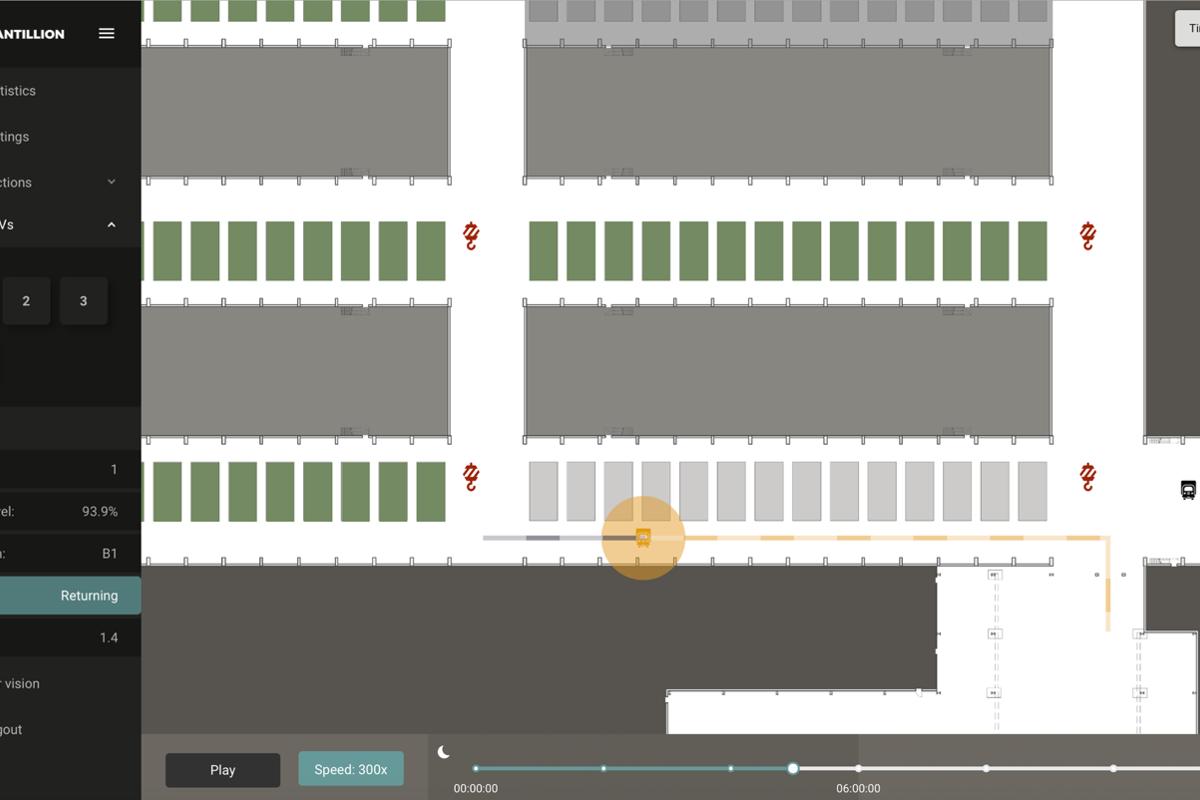
Example. Traffic Management System by Quantillion: a system that integrates real-time data from connected assets (e.g. vehicles, cranes, casthouse) and assigns work-orders based on its learnings from historical data
Next steps for smelters
The primary driver for change is the modularity and non-invasiveness with which these new Industry 4.0 applications can be validated and scaled. Many parts of these applications have been validated already for example in smart logistics, but we see successful test cases in dynamic pot control and predictive maintenance as well.
Digitalization and Industry 4.0: A Key for Aluminium Industry to Survive in Future Manufacturing
Next articleThe Learning Aluminium Plant A step towards a new industrial revolution: SMS digital GmbH
Grow with
AL Circle