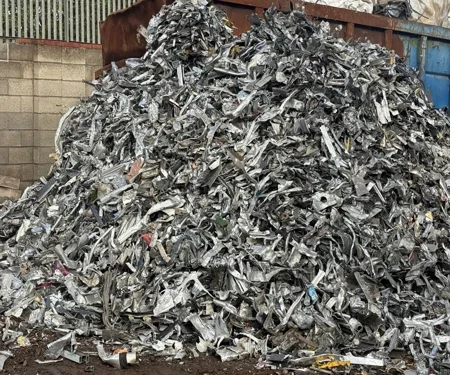
The demand for aluminium scrap in India is on the rise, standing at 2.5 million tonnes (approx.), driven by increasing focus on circular economy principles and the need for sustainable manufacturing practices. As per the Ministry of Commerce and Industry data, India imported a total of 0.42 million tonnes of aluminium scrap during Q1 2025, jumping from 0.34 million tonnes in Q1 2024.
If India continues to import in the same way, then the scenario may come to 1.6 million tonnes every year out of the 2.5 million tonnes. In Q1 2025 India imported a total of 45,661 tonnes of aluminium scrap from the UAE, recording a surge of 20.37 per cent from 37,931 tonnes in Q1 2024.
The other two regions that showed considerable growth were Saudi Arabia and the United Kingdom. During Q1 2025, India imported a total of 41,288 tonnes of aluminium scrap from Saudi, which jumped by 37 per cent Y-o-Y from 30,136 tonnes in Q1 2024. The United Kingdom reflected a surge of 27.37 per cent in Q1 2025 to 37,302 tonnes from 29,285 tonnes in Q1 2024.
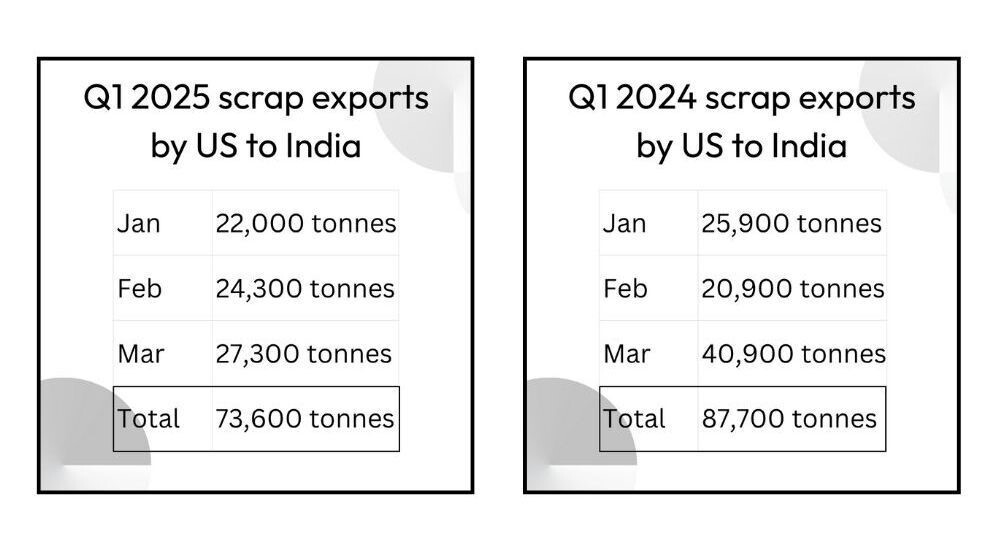
The above data shows that India is shifting its trading scenario. How? US, considered as one of the leading exporter of aluminium scraps to India, recorded a decline of 16.26 per cent Q-o-Q in 2025. From November to December 2024 (Q4 2024) the total of aluminium scrap exports stood at 87,900 tonnes. Although each month in 2025 the export numbers increased, overall data is painting a different outlook.
As per the US Geological Survey (USGS) data, in Q1 2025 India imported a total of 73,600 tonnes of aluminium scrap from the US which when compared Y-o-Y reflected a decline of 16.07 per cent from 87,700 tonnes in Q1 2024.
However, this doesn’t signal waning demand, but reflects a shift in India’s sourcing strategy, as trade tensions between India and the US influence procurement decisions. India and UAE’s strengthening ties under the Comprehensive Economic Partnership Agreement (CEPA) have facilitated smoother aluminium trade. A recent high-level meeting between India’s Union Steel Minister H.D. Kumaraswamy and UAE’s Economy Minister Abdulla Bin Touq Al Marri further reinforced collaboration, focusing on high-quality, low-carbon aluminium supply vital for India’s automobile and mobility sectors. The UAE’s close geographical proximity and robust shipping links also make it a highly efficient and cost-effective aluminium supplier for India.
Similarly, the newly signed Free Trade Agreement (FTA) between India and the UK is poised to streamline scrap flows, enhance cooperation, and bolster aluminium circularity. The FTA represents a major milestone with wide-ranging implications for the aluminium industry in both nations and beyond.
Note: To feature your brand and share insights, contribute an article or interview in our forthcoming e-magazine "Sustainability & Recycling: Aluminium's Dual Commitment."













_md.webp)