India’s free trade agreement with the UK is expected to be a big win for aluminium exporters, as it will remove the import duties. But there is also a catch. From January 2027, the UK will bring in its Carbon Border Adjustment Mechanism (CBAM) — a tax linked to carbon emissions. Industry executives warn this could claw back much of the benefit, leaving Indian producers struggling to keep prices competitive in the British market.
The FTA eliminates import duties on aluminium products, which previously ranged from 2 per cent to 10 per cent in the UK market. Industry players expect this change will improve India’s competitiveness.
Vedanta Aluminium Chief Executive Officer Rajiv Kumar said, “With the FTA now in place, the aluminium industry aims to treble its export to the UK by 2030 from the current 21 kilotonnes per annum (KTPA), worth USD 93 million, to approximately 65 KTPA, valued at around USD 220 million.”
Kumar added that duty-free access will make aluminium products more attractive and feasible across several high-potential sectors.
He added, “Given the UK’s portfolio of diverse aluminium consumption, Indian producers are well positioned to tap into construction, automotive components, food-and-beverage packaging, and renewable-energy infrastructure, particularly power transmission.”
CBAM: a major hurdle for Indian aluminium
While the FTA offers a tariff advantage, the CBAM, which will come to effect from January 2027, could negate these benefits. Under CBAM, exporters to the UK will face a carbon-related duty tied to the emissions intensity of production.
As per Kumar, the carbon-related duty burden could exceed 50 per cent, which would make exports from high-emission producers economically unviable and could offset the benefits gained through the FTA’s tariff concessions.
Analysts estimate CBAM-related tariffs could range between 14 per cent and 35 per cent, which translates to roughly USD 150 per tonne of CO₂ emissions.
Trade dynamics: exports vs imports
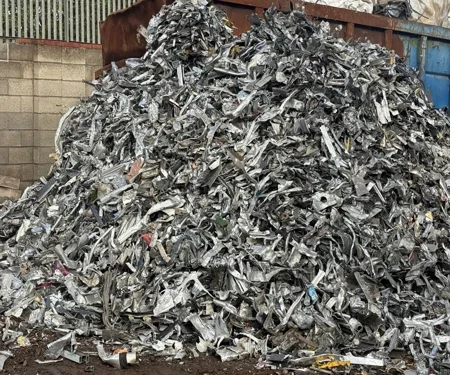
India’s aluminium trade with the UK has been on a steady climb in recent years, reflecting both rising demand and a stronger focus on sustainability. Data from UN COMTRADE shows that imports from the UK were worth around USD 55–60 million in 2022, dominated by unwrought aluminium, bars, rods, household items and scrap.
A year later, the figure rose to about USD 60–62 million, due to growing shares of scrap metal. The momentum was carried into 2024, with imports touching USD 64.76 million. What really stands out, is the first quarter of 2025: India’s scrap import shipment jumped 27.37 per cent year-on-year to 37,302 tonnes, underlining the country’s push towards recycling and sustainable resource use.
Exports have followed a similar upward path. India’s aluminium shipments to the UK were valued at about USD 94.83 million in 2024, up from roughly USD 85–90 million in the previous years. The includes unwrought aluminium and ingots, along with value-added products such as bars, rods, kitchenware, sanitary ware, stranded wires, cables, foil, and plates.
Beyond tariffs: R&D and sustainability
The agreement is also expected to deepen cooperation in research and development, particularly in the utilisation of aluminium byproducts.
Deloitte partner Rajib Maitra said, “Red mud, a byproduct of alumina processing, contains critical minerals such as gallium, titanium, and vanadium. India produces about 9 million tonnes of red mud annually. Aluminium dross also offers potential for recycling and extraction of critical minerals.”
Experts argue that policy intervention will be key to realising the full benefits of the FTA.
“Aluminium could be granted core-sector status, a domestic carbon pricing and trading mechanism could be implemented to align with CBAM compliance, and financial incentives, along with technology upgrade, could be extended to micro, medium, and small enterprises in downstream aluminium.” Maitra suggested.
He also called for green aluminium certification to promote low-carbon production and ensure competitiveness in global markets.
FTA’s promise vs. CBAM reality
The India-UK FTA, which covers goods, services, and investments, aims to eliminate tariffs on nearly 99 per cent of Indian exports to the UK, enhancing market access for sectors such as textiles, engineering goods, and marine products. For the UK, it ensures greater penetration into India’s growing consumer market.
However, for the aluminium industry, success under this FTA will depend on how effectively India addresses the carbon challenge. Without a robust domestic carbon pricing system and green certification standards, CBAM could turn what looks like an export windfall into a costly trade-off.












_md.webp)