The world primary aluminium production seems to have withstood all the recent hurdles like escalating trade tensions, raw material costs, and supply chain disruptions with a decent growth rate of 1.4 per cent year-on-year in the second quarter of 2025. Albeit a slower than in 2024, the growth in the world’s primary aluminium production in Q2 2025 was largely encouraged by the bullish aluminium price trend on the London Metal Exchange, ranging between USD 2,499 per tonne and USD 2,593 per tonne. However, the increased LME alumina (Platts) price reaching above USD 363 per tonne dampened the mood of primary aluminium producers slightly, offsetting the output volume.
Nonetheless, the world primary aluminium production closed the H1 with a Y-o-Y hike, amounting to 36.459 million tonnes versus 35.960 million tonnes in H1 2024. According to the data revealed by the International Aluminium Institute (IAI), the surge in Q2 production propelled the overall growth in H1, standing at 18.344 million tonnes. Compared to 18.115 million tonnes in Q1, the output in Q2 stood 1.26 per cent higher. Even on an annual basis, the production volume in Q2 recorded an increase of 1.6 per cent from USD 18.053 million tonnes.
June decline - a seasonal retreat or a warning sign?
On a monthly scale, June 2025 with 30 calendar days, saw a 3.3 per cent drop in global primary aluminium production, sliding from 6.251 million tonnes to 6.045 million tonnes. The decline in monthly production did touch upon across all the major primary aluminium producing regions, right from Africa to China. But not surprising because the primary aluminium production fall in June is an annual ritual due to operational slowdowns and seasonal adjustments. Even in June 2024, the global primary aluminium production dropped 2.4 per cent M-o-M, from 3.652 million tonnes to 3.566 million tonnes.
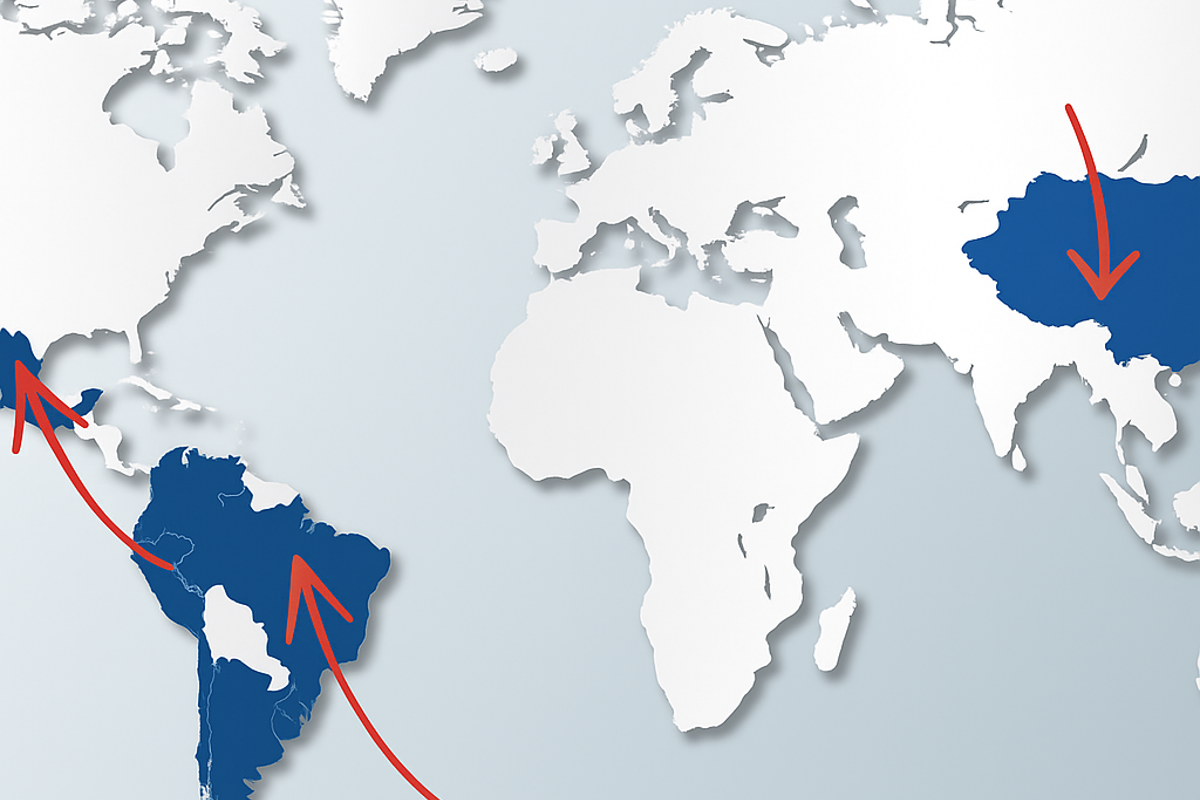
What needs to be pointed out here is that while some of the major producers’ output remained sluggish or restrained in June compared to the previous year (China an exception), some less highlighted regions like Africa and South America recorded an uptrend, standing at 133,000 tonnes in June versus 129,000 tonnes in the previous year. Similarly, the output in South America in the same month stood higher at 127,000 tonnes versus 125,000 tonnes.
Guinea’s upstream strategy boosts African output
A key development worth watching is Guinea’s gradual but strategic move up the aluminium value chain. Long known primarily as a bauxite powerhouse, Guinea is now beginning to leverage its vast reserves to expand domestic primary aluminium production. In the first half of 2025, Guinea produced 796,000 tonnes, a 4.46 per cent increase over the 762,000 tonnes recorded a year earlier. This uptick reflects early but encouraging results from the government’s policy to anchor more of the value chain within national borders.
Meanwhile, Guinea’s bauxite output soared to between 135 and 140 million tonnes in 2024, a significant leap from 123 million tonnes in 2023, providing a strong resource foundation to support future domestic aluminium smelting expansion.
Hydropower emerges as a production catalyst in South America
In South America, the improvement in hydroelectric power availability is playing a pivotal role in the region’s rising primary aluminium production. Major smelters like Albras in Brazil and Aluar in Argentina have been able to increase operations, bolstered by their proximity to clean and consistent hydroelectric energy sources.
As of 2024, the continent boasted an installed hydropower capacity of approximately 183 GW, including an additional 306 MW added during the year. This infrastructure generated an estimated 712 TWh annually, creating a more sustainable energy environment for power-intensive aluminium smelting.
China still commands the aluminium throne
Despite the regional developments, China continues to dominate the global aluminium landscape, accounting for nearly 60 per cent of world primary aluminium output. In H1 2025, China’s production rose by 2.5 per cent year-on-year, increasing from 21.3 million tonnes to 21.83 million tonnes.
In quarterly terms, China produced 10.995 million tonnes in Q2, up from 10.831 million tonnes in Q1 and 10.716 million tonnes in Q2 2024. This steady output growth reflects not just China's expansive smelting capacity but also its adaptability in navigating cost and environmental pressures.
Outlook: stable but shifting landscape
While primary aluminium production globally has demonstrated a commendable level of stability and adaptability, the dynamics are shifting. Traditional powerhouses like China continue to lead, but emerging players such as Africa and South America are beginning to carve out a more defined presence in the supply ecosystem.
With energy transition, decarbonisation mandates, and geopolitical realignments influencing production choices and capacities, the second half of 2025 and beyond may well define a more diversified and regionally balanced aluminium market.













_md.webp)
_md.webp)







