The Albanese government is pushing forward a multi-billion-dollar rescue plan to prevent the Tomago Aluminium smelter in New South Wales’ Hunter Valley from shutting down when its electricity contract expires in 2028. Taxpayer-owned Snowy Hydro is expected to take the lead in securing the long-term power supply that the smelter needs to keep operating.
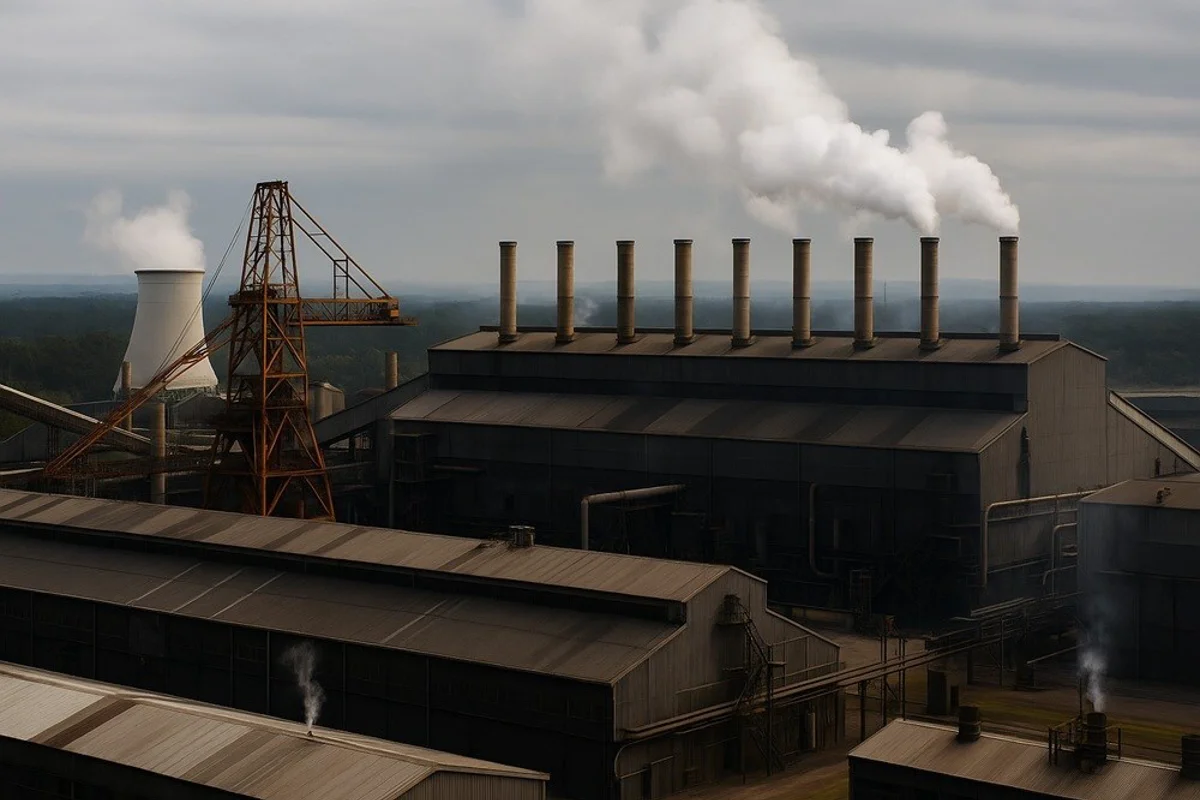
Image for representational purpose
Under the proposal, Snowy Hydro would underwrite or directly sign long-term, renewable-heavy power offtake agreements, giving the smelter access to stable, lower-cost and cleaner electricity. The plan follows growing pressure from unions, environment groups and industry bodies urging governments to secure a structural, renewable-based solution for the Hunter Valley’s largest employer and one of Australia’s most strategically important industrial assets.
Tomago’s dominance in Oceania
Tomago’s footprint in the Oceania’s aluminium market is enormous. The smelter’s annual capacity of 590,000 tonnes amounts to roughly 40 per cent of Oceania’s total output. Oceania produced 1.86 million tonnes of primary aluminium in 2024 and in the first ten months of 2025, it produced 1.56 million tonnes — underscoring how much of the region’s aluminium supply hinges on a single operation. If Tomago goes dark, more than a third of the region’s primary aluminium production disappears instantly.
Explore industry data to drive business decisions with our 50+ reports across the value chain
But the size of its output is only half the story. Tomago requires a constant feed of 850 megawatts of electricity to function — an extraordinary amount compared with the 13–15 megawatt-hours per tonne used by most modern smelters. To put that into perspective: the smelter alone consumes around 12 per cent of all power generated in New South Wales, enough to run between 600,000 and 800,000 homes. Its annual draw of more than 7.4 terawatt-hours makes electricity not just a cost pressure, but the defining factor in its survival. More than 40 per cent of Tomago’s operating costs are tied up in energy, whereas most manufacturers typically spend just 5–15 per cent on power.
A long-running energy crisis threatening a national asset
Tomago has been part of the Hunter landscape since 1983 and its ownership is split between Rio Tinto (51.55 per cent), Gove Aluminium Finance Ltd (36.05 per cent) and Norsk Hydro (12.40 per cent).
The smelter’s long-standing vulnerability became clear during the 2022 energy crisis, when global gas prices jumped, local power stations went offline and renewable output fell. As electricity costs soared, Tomago began looking for long-term renewable power deals, but none of the options it reviewed in 2022 and 2023 turned out to be viable.
By October 2025, the company publicly admitted what had been feared for years — it had no sustainable power option beyond 2028. Internal discussions about possible closure began, and on October 27, Rio Tinto confirmed that expected electricity price increases from 2029, across both coal and renewable sources, would make the operation uneconomic without government help. Talks between the smelter and both levels of government have intensified since, but officials warn that large renewable projects capable of supporting Tomago around the clock take at least three to five years to build. Any solution is likely to cost well over USD 1 billion and will almost certainly bring political scrutiny.
A sector in trouble, not just a single smelter
Tomago’s problems aren’t isolated. Other smelters across the country are also facing similar issues. In Tasmania, the Bell Bay smelter was heading towards a potential shutdown as its power contract nears expiry in late 2025, but got an extension of 12 months. Even with hydroelectricity, the pricing structure has dragged the operation into repeated financial losses, prompting Tasmania to ask Canberra for support and to explore low-carbon aluminium production incentives.
Up in Queensland, the Boyne smelter—bigger than Bell Bay—faces pressures from rising labour and electricity costs to unpredictable global aluminium prices and growing international competition.
Power prices at the core of Tomago’s crisis
Tomago’s entire business model depends on uninterrupted electricity. Any outage risks destroying equipment and forcing restarts that would cost millions. Electricity makes up more than 40 per cent of the plant’s total costs — raw materials sit at 25–30 per cent, labour and overheads at 20–25 per cent, and other expenses at 10–15 per cent — which leaves the smelter dangerously exposed to the volatility of the power market.
The scale of the potential fallout was captured by Paddy Crumlin, National Secretary of the Maritime Union of Australia, “The loss of the Tomago smelter would result in a significant loss of work in the Port of Newcastle, where wharfies and other supply chain workers handle alumina and aluminium ingots. As the world’s largest coal port, the Port of Newcastle needs more diversification, not the loss of yet another industry.
“We expect the government to take every possible step to secure the future of the Tomago smelter and ensure that it has access to cheap renewable power long into the future. A future made in Australia is framed to integrate Australian resources, energy and industrial capability to include the value adding from refining and smelting Australian bauxite into aluminium for use in shipbuilding, wind and solar components, and in many other industries.”
What closure would mean for Australia
A shutdown would hit the Australia’s Hunter Valley with a shock that would affect far beyond the smelter gates. More than 1,000 workers would lose their jobs immediately, and another 2,000–3,000 people employed in transport, supply chains, maintenance and local services would also be affected.
Economists expect the region could lose more than USD 500 million in economic activity each year, along with a significant drop in state and federal tax receipts. The difficulty is compounded by the specialised skill set of smelter workers, who would need extensive retraining to find equivalent work elsewhere. Tomago’s annual contribution to the region — more than USD 2.2 billion — shows just how hard the hit would be.
For now, the smelter sits in a precarious position. The stakes are high, the negotiations are delicate, and much depends on whether Snowy Hydro can anchor a deal in time. But for the first time in several years, the possibility of saving Tomago no longer looks out of reach.
Must read: Key industry individuals share their thoughts on the hottest topics