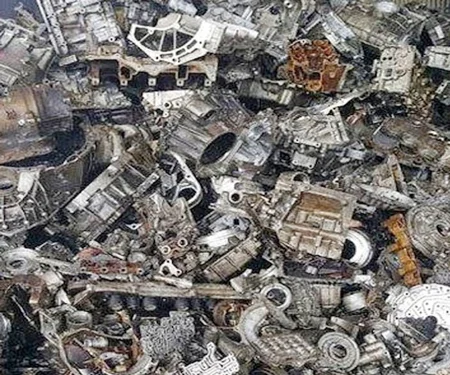
Germany exports about 1.5 million tonnes of aluminium plates, sheets and strips every year

Germany is the major aluminium market in Europe and is home to the world’s largest automakers. The country contributes 25% of total aluminium consumption in Europe. German aluminium producers and processors produce about 560,000 tonnes of aluminium. It comprises of about 260,000 tonnes of primary aluminium and 300,000 tonnes of recycled aluminium.
The aluminium rolling mills account for the largest share of aluminium semis production and the largest customers for rolled aluminium semis are the automotive industry along with packaging and industrial applications. We are analysing the export pattern for aluminium plates, sheets and strips by Germany in order to see the market trends.
According to the recent estimate, in 2015, Germany exported 1.47 million tonnes of aluminium plates, sheets and strips globally. The total revenue from plates, sheets and strips export amounted to about US$ 4.6 billion. Compared to 2015, in 2016, Germany exported an estimated 1.49 million tonnes of aluminium plates, sheets and strips. The total revenue from the export amounted to US$ 4.2 billion for the estimated amount.
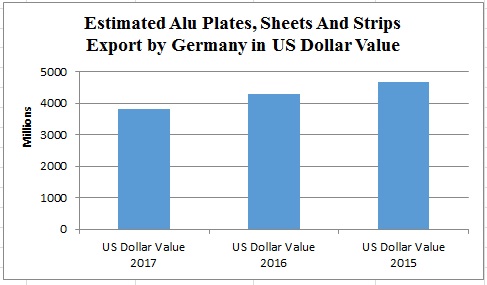
Considering the trend in last two years, the aluminium plates, sheets and strips export by the U.S. in 2017 is estimated to reach 1.50 million tonnes and the revenue from export is estimated to be about US$ 3.8 billion.
{googleAdsense}
The data shows upward trend for aluminium plates, sheets and strips export in Germany. Interestingly, the revenue from export has been on a downward graph. The trend indicates the falling aluminium and aluminium product prices in the international market due to over capacity and availability of cheaper material and products in the market. The product prices have become competitive in order to sustain in an oversupplied market.
The largest part of aluminium plates, sheets and strips from Germany is exported to UK, Belgium and France. USA, Canada, Italy and Netherland also import a considerable amount from Germany.
Hindalco to expand value added products capacity by 66 percent
Next articleTop five aluminium sheet, plate and strip manufacturers in the U.S.
Grow with
AL Circle