From wheels to wings: Aluminium’s dual impact on automotive & the aerospace industry
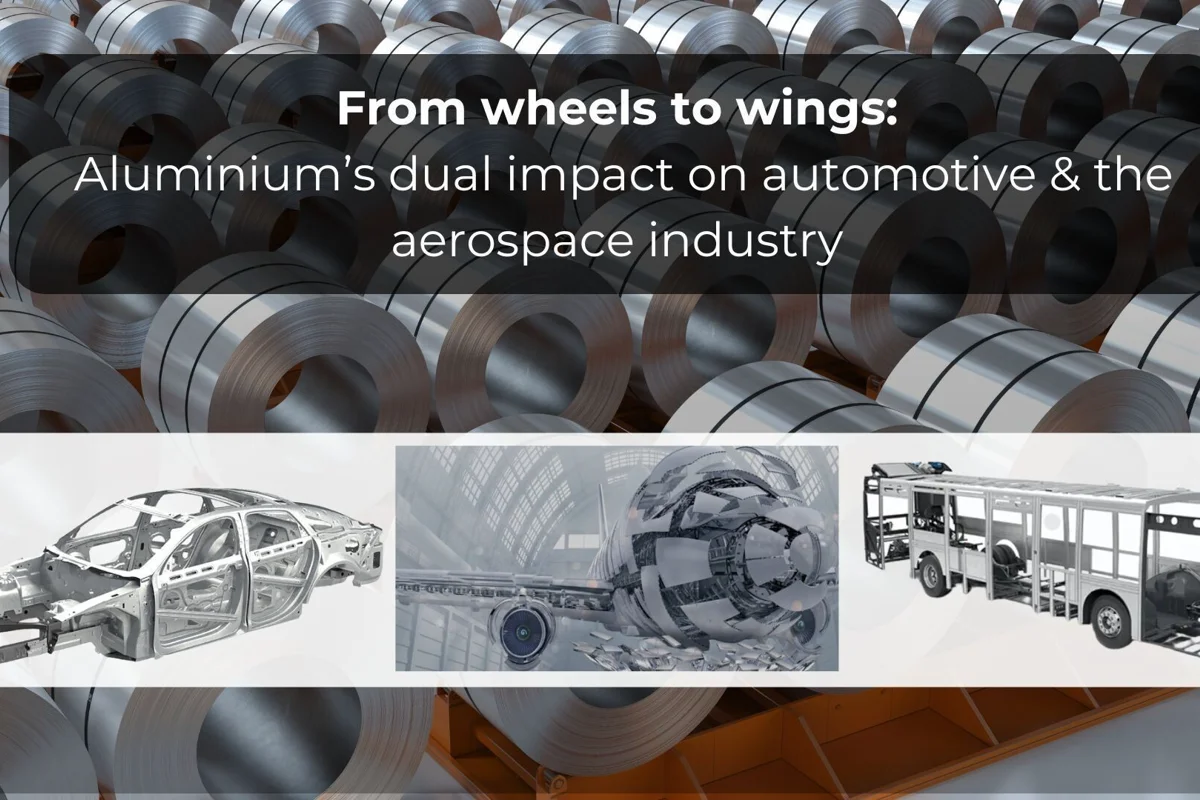
Aluminium, with its lightweight yet durable properties, stands as a cornerstone in revolutionising transportation across the automotive and aerospace industries. In automotive, integrating aluminium components significantly reduces vehicle weight, enhancing fuel efficiency and reducing emissions. Furthermore, its malleability enables intricate designs, fostering vehicle aerodynamics and safety advancements.
In aerospace, aluminium's strength-to-weight ratio makes it indispensable for constructing aircraft structures. This enables higher payloads and longer flights while maintaining structural integrity. Moreover, its corrosion resistance ensures longevity in harsh environments, which is crucial for aircraft longevity and safety.
Aluminium – the ultimate choice of automakers
Aluminum is a key component in both the passenger and commercial vehicle sectors due to its innate properties and characteristics. Its lightweight nature is paramount. Incorporating aluminium into automobiles can vastly enhance performance and bolster fuel efficiency. Furthermore, its strength is formidable.
Aluminium's exceptional strength-to-weight ratio makes it an indispensable material in transportation. While advancements in vehicular performance are important, safety is paramount. The combination of high strength and low weight in aluminium ensures enhanced safety for drivers and passengers, providing a reassuring factor in its use. You can trust Howard Precision Metals to deliver top-tier aluminium products that meet your automotive manufacturing needs with excellence.
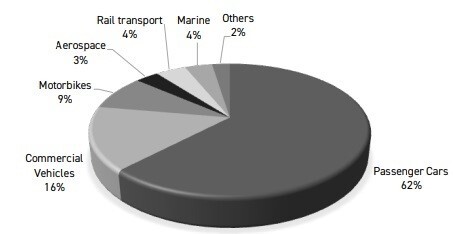
As per AL Circle's Outlook 2024 report, aluminium usage in the transportation sector stood at 27.5 million tonnes in 2023. The demand is likely to reach 28.2 million tonnes in 2023. Passenger cars are the single largest user segment of aluminium amongst other transport sectors, and the rise of EVs is also crucial.
Use of aluminium in buses and trains
However, aluminium bus coaches, trains, and shipbuilding also witnessed growth. With the benefits of aluminium fully realised, aluminium usage in passenger cars is likely to increase at a healthy pace as new car sales pick up. The aerospace sector has fully leveraged the benefits of aluminium as a lightweight material for many years.
The all- Aluminium body offers significant weight savings and improves the coaches' structural rigidity. A mere 10 per cent reduction in vehicle weight can yield a notable 6 per cent-8 per cent improvement in fuel economy.
Besides weight reduction and fuel efficiency, modern aluminium alloys used in vehicles are specifically designed for strength and durability, offering performance comparable to steel in most applications. Additionally, aluminium's natural oxide layer provides excellent corrosion resistance, reducing the need for additional coatings and extending vehicle lifespan.
Aluminium is highly malleable and formable, allowing for greater design freedom and improved aerodynamics than steel. This can further contribute to fuel efficiency gains. Furthermore, aluminium is one of the most recyclable materials.
This makes it an attractive choice for manufacturers aiming to reduce their environmental impact. The global market for aluminium in buses and trucks is expected to grow from USD 8.4 billion in 2022 to USD 15.2 billion by 2027 at a compound annual growth rate (CAGR) of 9.5 per cent. Factors such as increasing demand for lightweight vehicles, growing environmental concerns, and stricter fuel efficiency regulations drive this growth.
As the transportation industry advances, the focus on energy conservation and pollution reduction has become paramount. Since their inception during the Industrial Revolution of the 19th century, railways have undergone constant development to increase their efficiency, security, and ability to incorporate new technologies. The use of aluminium in trains has been steadily growing in recent years, and 2023 was no exception.
Aluminium is crucial in modernising trains and boosting energy efficiency. Using aluminium results in a 50 per cent reduction in the total weight of a rail car body. Aluminium, a prominent construction element used in modern train manufacturing, is currently being utilised to fabricate contrails that connect several components of the train's structure, including the floor, sidewall, ceiling, sideboards, and panels. Aluminium shows immense potential in revolutionising railway construction, embracing not just coaches and waggons but also diverse signalling systems and station décor.
Electric Vehicles (EV) drive aluminium demands to new heights
The automotive industry's demand for aluminium is expected to surge by 15-27 per cent, driven by the growing prevalence of electric vehicles (EVs). Compared to traditional internal combustion engine cars, plug-in hybrid and full battery electric vehicles utilise 25-27 per cent more aluminium, with a baseline of 160kg per vehicle in internal combustion engines.
While the rise in aluminium usage in traditional cars is mainly attributed to the weight reduction benefits, the surge in aluminium demand for EVs is equally influenced by innovative applications beyond aluminium body sheets. This shift highlights a broader transformation in the automotive industry as it adapts to the unique requirements of electric vehicle technology.
This surge in EV production and sales in China can be attributed to robust government policies and incentives aimed at manufacturers and consumers. Consequently, China has positioned itself as a frontrunner in the EV market, capturing around 60 per cent of global electric car sales in 2022.
Remarkably, more than half of the electric cars worldwide are now on Chinese roads, and the country has already surpassed its 2025 target of achieving a 20 per cent share in new energy vehicle sales, as the International Energy Agency reported. With the continuing growth in EV demand, the demand for minerals, including aluminium, used in their production is expected to rise, indicating a positive outlook for the aluminium industry.
China's new energy vehicles (NEV) sector, encompassing battery electric vehicles and plug-in hybrids, is experiencing rapid growth. According to China Customs data, NEV production in the first eight months of the year surged by over 37 per cent, reaching a total of 5.44 million units.
Some noteworthy examples of aluminium used in the electric vehicle sector are as follows:
- Swedish auto brand Polestar uses low-carbon aluminium components in its EVs for decarbonisation.
- VinFast is eyeing the world's 3rd largest automotive market with billions in investment.
- In a daring leap toward sustainability, Lamborghini is on the brink of introducing the successor to the Huracan, which features an aluminium structure.
- British-origin Nichols N1A supercar weighs only 900kgs for its lightweight aluminium chassis.
- Mercedes unveiled the first look of its Concept CLA Class EV featuring CO2-reduced aluminium components.
Aluminium in aerospace
Aluminium's role in the transportation sector, particularly aerospace, extends beyond its lightweight nature. This versatile metal is a critical component in modern aircraft and spacecraft due to its exceptional strength-to-weight ratio, corrosion resistance, and ease of fabrication.
These qualities make it ideal for constructing aircraft frames, wings, and other structural elements, enabling fuel efficiency and high-performance aviation. Get a deeper understanding by exploring AL Circle's industry-focused report, "Future of Aluminium in Transportation Sector - a market analysis and forecast to 2027".
The aerospace sector experienced a positive trajectory in 2023, marked by advancements and persistent challenges. While the industry exhibited adaptability to new technologies and made strides in addressing sustainability issues, the navigation of supply chain disruptions and workforce shortages remained pivotal for sustained growth in the future. Passenger air travel witnessed a robust rebound from pandemic lows, surpassing pre pandemic levels in various regions. This resurgence in demand led to an upswing in new aircraft orders, contributing to heightened production levels within the sector.
Some of the commonly used aluminium alloys in the aerospace sector includes:
- Aluminium alloy 2024
- Aluminium alloy 2014
- Aluminium alloy 5052
- Aluminium alloy 6061
- Aluminium alloy 7050
- Aluminium alloy 7068
The consequential weight reduction is pivotal in enhancing fuel efficiency, a critical factor for airline profitability and environmental sustainability. Approximately 80-90 per cent of an aircraft's components, including the fuselage, wings, and landing gear, can be crafted from aluminium. The aerospace sector is anticipated to experience a moderately optimistic outlook in 2024. Aerospace original equipment manufacturers (OEMs) are poised to benefit from substantial order books and clear revenue visibility.
Some noteworthy examples of aluminium used in the aerospace sector are as follows:
- AMAG is all set to transform the aerospace industry with precision innovation
- Boeing's Q3 revenue clocked $18.1 billion despite delivery challenges, demonstrating resilience with a $1.64 billion loss.
- NASA runs R&D on 3D-printed aluminium rocket nozzles for future space explorations.
- Aluminium-composed landing gear from TISICS promises to save emissions in planes.
- A recently formed segment of the Airbus Group, Airbus Atlantic, began producing lithium-aluminium components for the initial parts of its new A350F freighter model at the Nantes facility in France.
Conclusion
Over time, aluminium has witnessed a steady rise in prominence within the automotive manufacturing domain. Presently, it stands as the second most utilised metal in vehicles, trailing only steel. Moreover, its versatility knows no bounds. Aluminum finds application in an array of automotive components, ranging from:
- engines, transmissions, and suspension systems
- wheels
- brake elements
- frames
- components in tachometers and speedometers
Global automobile production partially recovered during 2022 and further improved in 2023. New passenger car production across the world mentioned in our report for the following regions stand at 64.27 million during the three quarters of 2023, an increase of around 7.82 per cent over the previous year, the same period.
Unlock full access – sign up for FREE.
Key benefits
Introducing the Nothing Phone (2a): Redefining sustainability and innovation
Next articleDriving innovation forward: Smartarchitecture, the driverless aluminium car hits the roads
Grow with
AL Circle