Fastmarkets, the price reporting agency whose assessments underpin the London Metal Exchange’s (LME) physical aluminium trade, has proposed incorporating the cost of the European Union’s Carbon Border Adjustment Mechanism (CBAM) directly into the aluminium P1020A benchmark premiums for Italy and Spain. The move, set for implementation from January 1, 2026, could redefine how carbon costs are priced across Europe’s aluminium supply chain. The consultation paper, released in early October 2025, details that CBAM costs would be integrated into the existing aluminium P1020A premium assessments — MB-AL-0316 (Italy) and MB-AL-0319 (Spain) — reflecting logistics, warehousing, regional demand-supply balances, and prevailing duty costs.
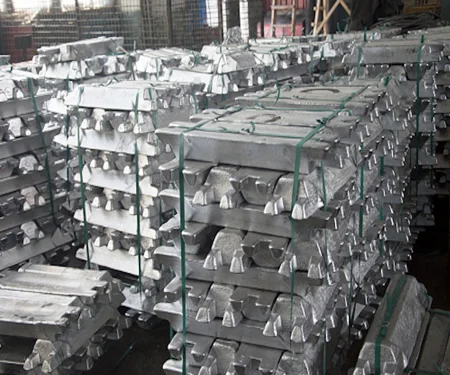
Image for referential purposes only
The consultation period runs until October 31, 2025, after which Fastmarkets will finalise whether CBAM costs are to be embedded within or tracked separately from regional premiums.
From transitional reporting to cost integration
CBAM entered its transitional phase on October 1, 2023, requiring importers to report embedded carbon emissions in goods such as aluminium, iron, steel, cement, and electricity without financial penalties. Under the final phase, beginning January 2026, importers will start purchasing CBAM certificates, effectively paying for the difference between the EU carbon price and that of the exporting country.
The EU Emissions Trading System (ETS), serving as the basis for CBAM pricing, has seen its carbon allowance price fluctuate between EUR 60 and EUR 90 per tonne of CO₂ in 2025. The European Commission projects CBAM-related carbon costs for aluminium imports could reach EUR 200 per tonne by 2035, depending on carbon intensity and power mix at origin.
Fastmarkets’ proposal recognises that aluminium imported from high-carbon-intensity regions such as China, the Middle East, or parts of Southeast Asia could face CBAM costs between EUR 50 and EUR 90 per tonne in the near term. In contrast, material sourced from low-carbon regions, particularly producers using hydropower or renewables (e.g., Norway or Canada), could face marginal CBAM exposure.
Specification overhaul for Italy and Spain
Under the revised framework, For Italy, the specification (designated MB-AL-0316) applies to P1020A aluminium with a minimum purity of 99.7 per cent (maximum 0.10 per cent Si and 0.20 per cent Fe). The offer is valid for a minimum quantity of 100 tonnes, delivered free-carrier duty-paid (FCA DP) across northern and southern Italy. Prices are quoted as a premium on top of exchange-listed aluminium, with delivery timelines set within four weeks. Payment terms require cash against documents within seven days of the bill of lading date. Prices under MB-AL-0316 will be published weekly, every Tuesday between 3–4 pm London time.
For Spain, the MB-AL-0319 specification covers the same quality and quantity parameters, with FCA DP delivery across the country. Premiums are quoted over LME cash prices and include CBAM costs, with delivery also targeted within four weeks. Payment terms mirror those for Italy, while price publication will occur bi-weekly on Tuesdays between 3-4 pm London time.
Both assessments will now include CBAM-related costs as an explicit part of the premium, expressed in USD per tonne.
The debate of integrated vs. separate CBAM approaches
Fastmarkets’ proposal has reopened the debate on whether carbon costs should be integrated into the aluminium benchmark or separately tracked. An Integrated CBAM Cost Model blends carbon and metal values, simplifying reporting and streamlining transactions — a potential benefit for physical spot markets. However, it also risks obscuring how much of the price movement stems from metal fundamentals versus carbon cost fluctuations.
Conversely, a Separate CBAM Tracking Model isolates carbon cost components, providing transparency on emissions exposure and allowing dual hedging — one for metal price risk and another for carbon volatility. This approach, while operationally complex, is favoured by traders and industrial buyers seeking visibility into how carbon liabilities evolve.
As one European trader told Fastmarkets, “Integrated pricing gives you speed but removes the clarity. In the CBAM world, clarity is everything.”
CBAM’s regional asymmetry: the China-EU gap
Data from the International Aluminium Institute (IAI) shows that global average CO₂ emissions from primary aluminium production stand at 16.8 tonnes of CO₂ per tonne of aluminium, with China averaging 17.6 tonnes, the Middle East around 15 tonnes, and Europe at 6.8 tonnes.
Applying the current EU ETS price of around EUR 70 per tonne CO₂, Chinese-origin aluminium would theoretically attract a CBAM charge of EUR 67-85 per tonne of aluminium, depending on carbon offset provisions and scrap content.
Discovery Alert estimates that by increasing recycled content to 60 per cent, Chinese exporters could reduce CBAM exposure and even derive a EUR 31 per tonne net benefit, exploiting CBAM’s current exemption for remelted scrap aluminium, which is treated as zero-emission regardless of origin.
This loophole covers up to 50 per cent of all aluminium entering the EU, creating distortions that disadvantage local recyclers bound by full carbon accounting under EU ETS.
Carbon cost visibility: a new risk metric
For European traders, the key uncertainty lies in whether CBAM costs will be fully passed along the supply chain. Fastmarkets notes, “CBAM certificate costs may not always fully be reflected or passed on from seller to buyer in the spot FCA DP prices.”
That implies potential divergence between assessed benchmark premiums and actual transactional prices, depending on brand origin, customs clearance timing, and origin-market carbon payments.
If adopted, the integration would effectively make Fastmarkets the first major price reporting agency to incorporate a regulated carbon adjustment directly into a commodity benchmark — a structural shift comparable to the introduction of duty-inclusive aluminium premiums in 2015.
Industry feedback will close by end-October 2025, followed by a final decision before January 2026, aligning with the EU’s definitive CBAM rollout. Fastmarkets has clarified that it will continue reviewing the benchmark methodology “in line with evolving EU regulations, carbon trading dynamics, and market feedback.”
The integration of CBAM costs into aluminium premiums marks more than a pricing change — it signals the beginning of carbon-normalised aluminium trade. For a market where a single euro in premium difference can move thousands of tonnes of physical trade, how Europe decides to price carbon could reshape global aluminium flows for the next decade.












_md.webp)
_md.webp)
_md.webp)