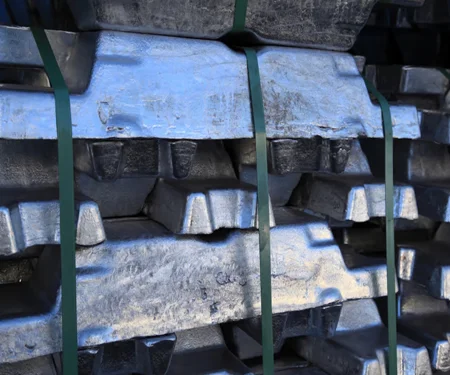
Lufthansa Group has announced the deployment of 40 brand-new Boeing 737-8 MAX aircraft to its value carrier, Eurowings. The gradual integration of these advanced short- and medium-haul jets will position Eurowings as one of the operators with the youngest fleets in European aviation.
Image Source: Business Traveller
The Boeing 737-8 MAX incorporates aluminium in its construction. This aircraft is built using high-strength alloys, including aluminium and titanium, engineered to endure extreme conditions. Equipped with cutting-edge, fuel-efficient engines, these next-generation aircraft will significantly lower fuel consumption and noise emissions.
The first delivery of the Boeing 737-8 MAX is set for 2027, with all 40 aircraft expected to join the fleet by 2032. These advanced jets will replace the Airbus A319 fleet and older Airbus A320 models. With a capacity of 189 passengers—39 more than the A319—the Boeing 737-8 MAX offers enhanced efficiency and greater seating capacity. Its extended range makes it an excellent choice for longer medium-haul routes, which are increasingly vital to Eurowings' services.
Eurowings' commitment to sustainable aviation
As part of Eurowings' commitment to sustainable aviation, these jets consume up to 30 per cent less kerosene and produce substantially reduced CO2 emissions. Representing a €5 billion investment at list prices, this acquisition marks the largest and most transformative sustainability initiative in Eurowings' 30-year history.
Based in Cologne, Eurowings has seen significant growth since the pandemic, solidifying its position as Germany's largest leisure airline and a market leader at key airports such as Düsseldorf, Hamburg, Stuttgart, and Cologne/Bonn.
Passengers can anticipate a redesigned cabin that delivers enhanced comfort and a modern travel experience, reflecting the latest airline standards. This upgrade reinforces Eurowings' commitment to quality and sustainability, strengthening its reputation in European aviation.
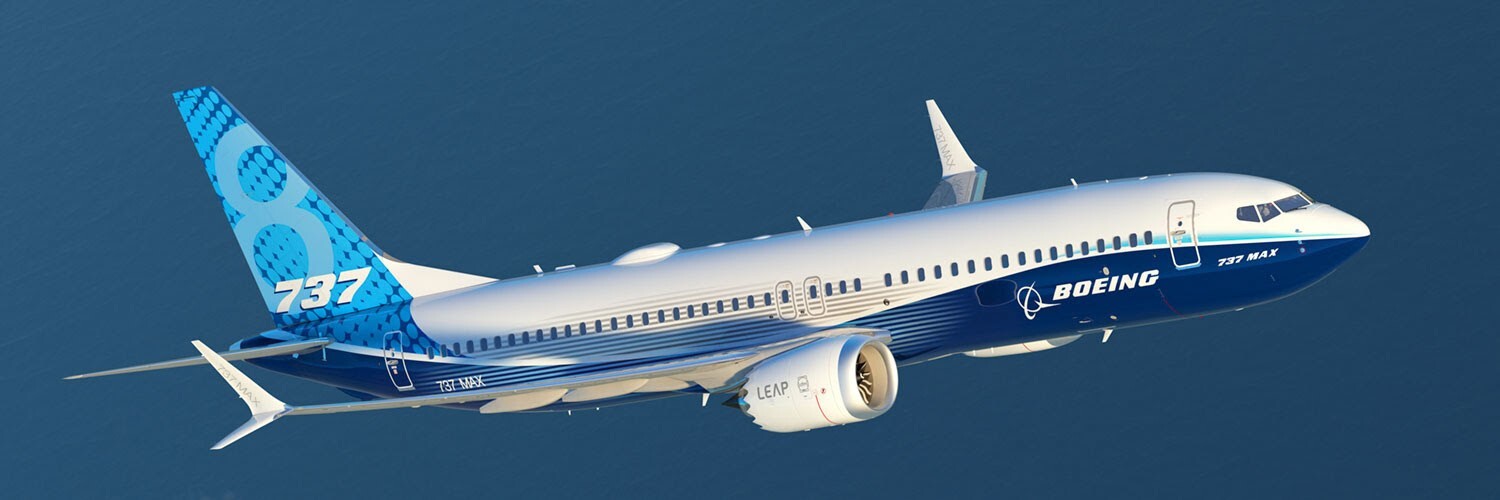 Image Source: Boeing website
Use of aluminium in aerospace industry
Aluminium is the most widely used material in the aerospace industry. Its popularity stems from its unique properties, including lightweight, high strength, excellent workability, damage tolerance, corrosion resistance, and cost-effectiveness. Commercial aircraft extensively incorporate aluminium in various components such as the fuselage, wings, and tail sections.
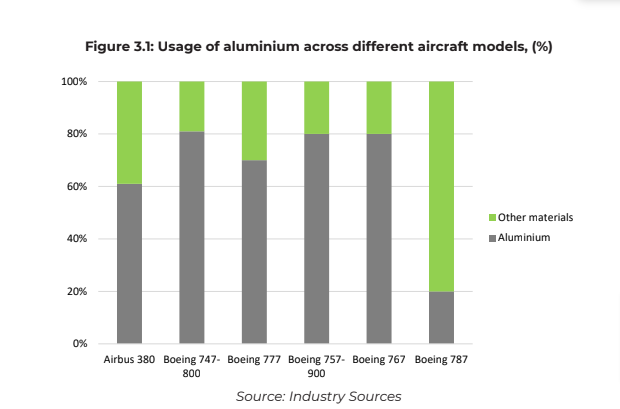
Despite the growing use of composites, aluminium alloys play a critical role in structural applications due to their lightweight nature, ease of fabrication, and affordability. Advances in alloy technology have further enhanced these properties. Modern commercial aircraft typically consist of 60–70 per cent aluminium by weight, with some models reaching up to 80 per cent. Even in newer aircraft featuring higher percentages of composite materials, aluminium remains indispensable.
Some of the commonly used aluminium alloys in the aerospace sector include:
- Aluminium alloy 2024
- Aluminium alloy 2014
- Aluminium alloy 5052
- Aluminium alloy 6061
- Aluminium alloy 7050
- Aluminium alloy 7068
CFRP vs Aluminium
While CFRP (Carbon Fibre Reinforced Plastic) and titanium alloys are prominent competitors, aluminium retains its relevance. For example, although the Boeing 787 Dreamliner and Airbus A350 feature significant composite usage, models like Boeing's latest 777-9 still rely heavily on aluminium. Notably, Airbus selected Al-Li alloy, a cutting-edge third-generation aluminium-lithium alloy, for the fuselage skin sheets of the A350, showcasing its advanced capabilities and ongoing importance in aerospace design.
A wide range of aluminium downstream products are utilised in aerospace applications, with flat-rolled products (FRP) such as plates and sheets making up over 80 per cent of the total aluminium usage in the sector. Extrusions, castings, forgings, and other downstream products fulfil the remaining aluminium demand.
Aircraft primarily use aluminium alloys from the 2xxx and 7xxx series, which offer exceptional strength and performance. In recent years, lightweight aluminium alloys containing lithium have gained popularity due to their reduced density and improved properties. Alloys from the 5xxx, 6xxx, and 8xxx series are also employed, though to a lesser extent.