Estonia’s importation of Aluminium wires reflects enterprising market during 2017-20

The Northern European country Estonia globally ranks 18th in ease-of-doing-business. The major industries that contribute to the nation’s GDP are engineering, electronics, telecommunications sector. The 2017 net debt to GDP ratio of Estonia was -0.6%, which means that the Estonian government has more assets than debts. Estonia's gross debt is very low anyway, as that low debt is the result of a government policy of paying back any borrowings as quickly as possible.
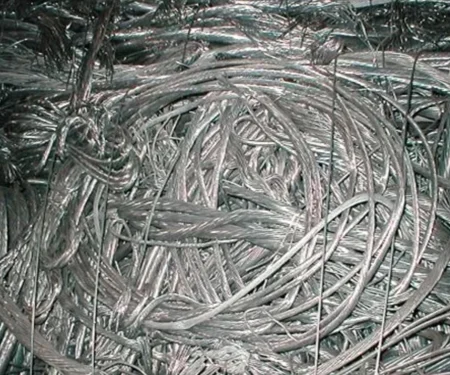
Estonia’s import of aluminium wires during 2017-19 has been recorded with rapid growth and marginal fall, as the export volume remained at 35,141 tonnes and the revenue expended stood at $65.07 million. Aluminium wires import for 2020 has been predicted to be at 17,882 tonnes and expenditure to outreach at $27.5 million. When the 2020 analysed export volume and expenditure gets assorted with the preceding three years, it stands at 53,023 tonnes and $92.57 million respectively.
In 2017, the European nation’s aluminium wires import was noted at 5,036 tonnes and the expenditure stood at $8.92 million, whereas in 2018 Estonia’s aluminium wires export reflected a rapid surge by 213.54%, as the export volume rose to 15,790 tonnes and expenditures also inclined to $31.32 million.

The importation of aluminium wires in 2019 exhibited with a marginal drop by 9.34%, as the import volume remained to 14,315 tonnes and the expenditures dropped to $24.83 million.
The projected import volume for 2020 has been analysed with growth by 24.91%, as the export volume is expected to climb at 17,882 tonnes, while expenditure to stand at $27.5 million.

Estonia’s major trading nations for the importation of aluminium wires are Belgium, Finland, France, Germany, Hungary, Italy, Poland, Russia, Switzerland, etc.
ETI rolls-out robust temperature measurement pair cased with extruded Aluminium
Next articleTime is over for Lithium-ion battery, Aluminium ion battery is the new ruler: Stanford University Research
Grow with
AL Circle