When energy heavyweights, financiers and geopolitical policymakers convened at CERAWeek 2025, they confronted a truth too long ignored: the path to a net-zero future is being redrawn by geopolitics, national security imperatives and a resurgent fossil-fuel lobby. The publication titled ‘The energy transition’s disrupted path forward’ by S&P Global Commodity Insights, which gathers all the key points from the convention, it is clear that what emerges is not an orderly glide to clean power, but a fractured landscape where ‘energy security’ increasingly trumps decarbonisation. For industry leaders and investors, this realignment demands recalibrated strategies, deeper risk assessments and a readiness to pivot on both policy and market fronts.
Image for representational purposes only (Source: https://commodityinsights.spglobal.com/energy-transition-disrupted-path.html)
To set things straight, when we discuss energy demand, we are referring to all energy uses, including electricity, transport fuels, and fuels for heating and industrial processes. Our current energy system is entering a significant period of transformation. To address the threat of climate change, we must eliminate fossil fuels from the UK energy system by 2050. While energy efficiency has improved and demand in the UK has decreased considerably over the past decade, it is essential to continue and strengthen this trend. It’s important to note that electricity demand is only one aspect of overall energy demand.
The US vs China energy rewind: Abundance beats decarbonisation?
The incoming US administration has formally reprioritised ‘energy dominance’ over climate objectives. In this stance, the US-China competition, owing to various economic, security, and technological arenas, is at play, wherein energy is a prime battle indicator.
Natural gas, evidently a cornerstone of baseload generation, has moved towards fortifying expansion plans to power next-generation AI and preserve America’s technological edge. Bloomberg’s analysis confirms that global gas demand surged by 115 billion cubic metres (2.7 per cent) in 2024, its highest growth rate since 2019, which was led by fast-expanding Asian markets. Crucially for investors, this pivot signals sustained capital flows into LNG infrastructure, even as carbon rules relax. Those backing renewables must hedge against potential reversals of US clean-energy tax incentives and looming trade barriers on solar imports, which together could shave 10 per cent off projected capacity additions by 2035.
China has established a strong position in clean energy, driven by its goal of enhancing energy security and reducing reliance on imported fuels. The country now dominates key international supply chains for solar energy, batteries, electric vehicles, and critical minerals, rapidly increasing its exports in these sectors.
The Trump administration’s swift efforts to revamp US trade and energy policies are introducing new risks and uncertainties across various sectors. One key concern is the future of the US clean energy tax credits. Initially, there was a consensus that the Trump administration would not drastically alter the Inflation Reduction Act (IRA) tax credits for emissions-free energy generation. However, indications from attendees at CERAWeek suggest that this consensus is beginning to wane.
Executives from across the energy sector assert that these credits are essential for attracting investment and supporting the administration’s “energy dominance” agenda. Nevertheless, unexpected policy reversals have raised doubts about the continuation of the IRA’s credits. Additionally, industry leaders are worried about tariffs increasing costs for steel and other materials, complicating project development. They point out that domestic steel supplies cannot meet demand in the short term.
This unpredictable landscape in trade and energy policy has led to a freeze in some investment decisions and deals, as companies are hesitant to proceed until they gain clarity on future policies and understand how they need to adjust their investments and supply chains.
Canada decisively moves away from the US following aggressive trade measures
The Trump administration’s aggressive trade approach toward Canada is prompting a fundamental rethink of the country’s energy and trade strategy, with potential long-term effects on North America’s tightly integrated energy systems. Increasing trade actions and inflammatory remarks about making Canada America’s 51st state have united previously divided provincial and national interests around the necessity of investing in new markets for Canada’s exports of oil, gas, uranium, aluminium, and other critical minerals.
Canadian policymakers are eager to repair trade relations with the US and are open to negotiating a new agreement. However, even if a deal is reached, will the sentiment in Canada push for trade agreements with new partners to access international markets and advance critical infrastructure projects, such as pipelines, which were once considered unattainable? Such developments could reduce Canada’s heavy dependence on the US market—an economic vulnerability that has been exposed — and reshape Canada’s role in global markets.
Europe’s pragmatic pivot: Security fuels renewables
Faced with Russian gas blackmail and transatlantic unpredictability, Europe is recasting its energy transition as a competitiveness project rather than a purist climate crusade. Expect policy reforms to fast-track solar, onshore wind and nuclear deployment—backed by EU recovery funds and streamlined permitting. Yet gas will also have a longer shelf-life: analysts now forecast a plateau in coal’s share of power generation at 35 per cent, its lowest since 1974, but a resilient 24 per cent contribution from gas in 2025. Corporates should, therefore, stress-test renewables supply chains against steel and polysilicon tariffs and model scenarios where gas capacity bridges intermittent renewables for up to a decade.
Simultaneously, it is to be borne in mind that the global electricity generation has also risen by 1,200 terawatt hours (TWh) in 2024, an increase of 4 per cent, with solar climbing by about 480 TWh and wind up by 180 TWh, the IEA said.
Global renewables surge amid fragmentation
Despite policy whiplash, investors poured record amounts into clean power in 2024. The International Energy Agency reports that global annual renewable capacity additions climbed between 666 GW and 700 GW in 2024, a 25 per cent year-on-year jump, and are set to approach 935 GW by 2030. Solar PV and wind will dominate 95 per cent of these additions, driven by surging demand in China, India and parts of Africa. Yet project bankability faces new headwinds: shifting US tax credits, rising insurance premiums for climate exposure and tightening capital for hardware-intensive ventures. For boardrooms, this underscores the need to prioritise bankable renewable formats such as hybrid solar storage and to leverage corporate power purchase agreements to de-risk off-taker profiles.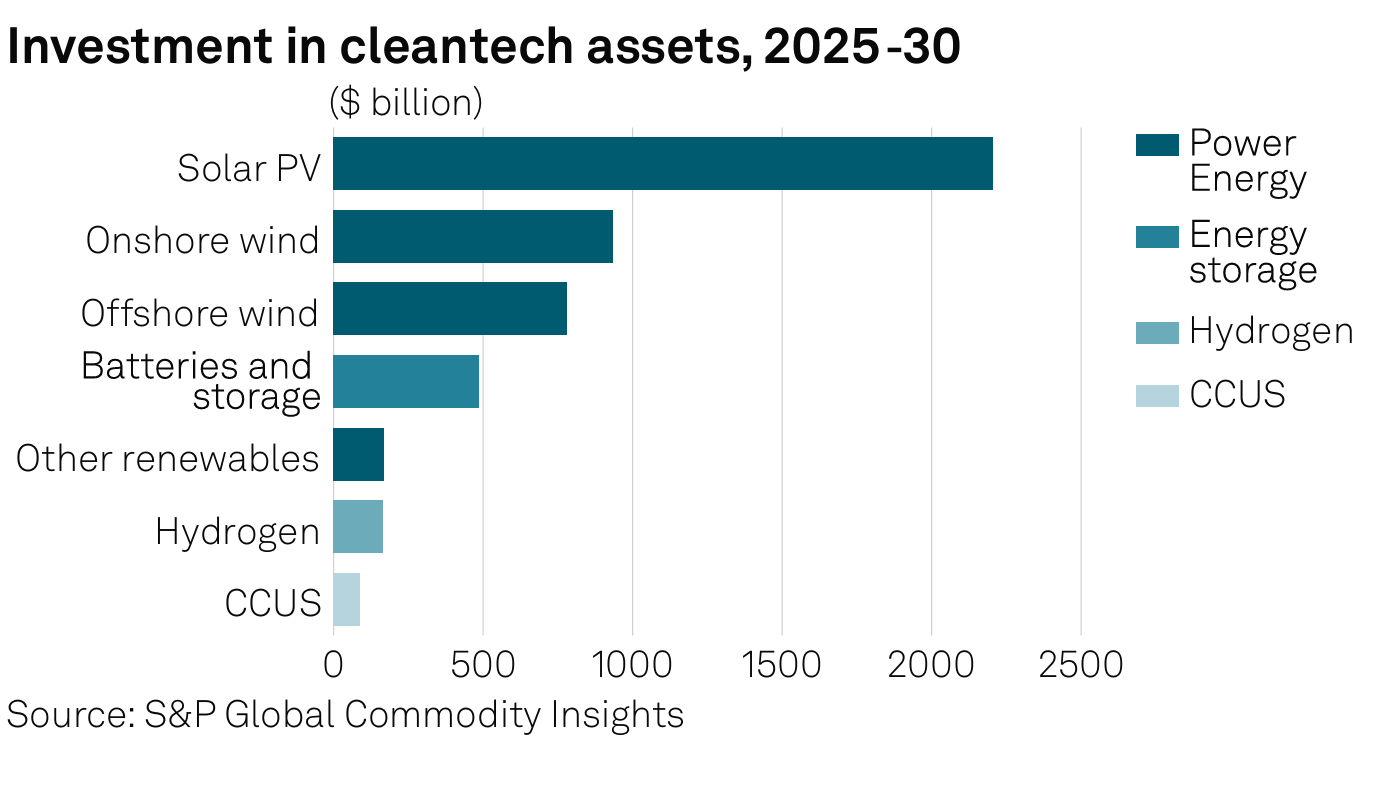
Image for representational purposes only (Source: https://commodityinsights.spglobal.com/energy-transition-disrupted-path.html)
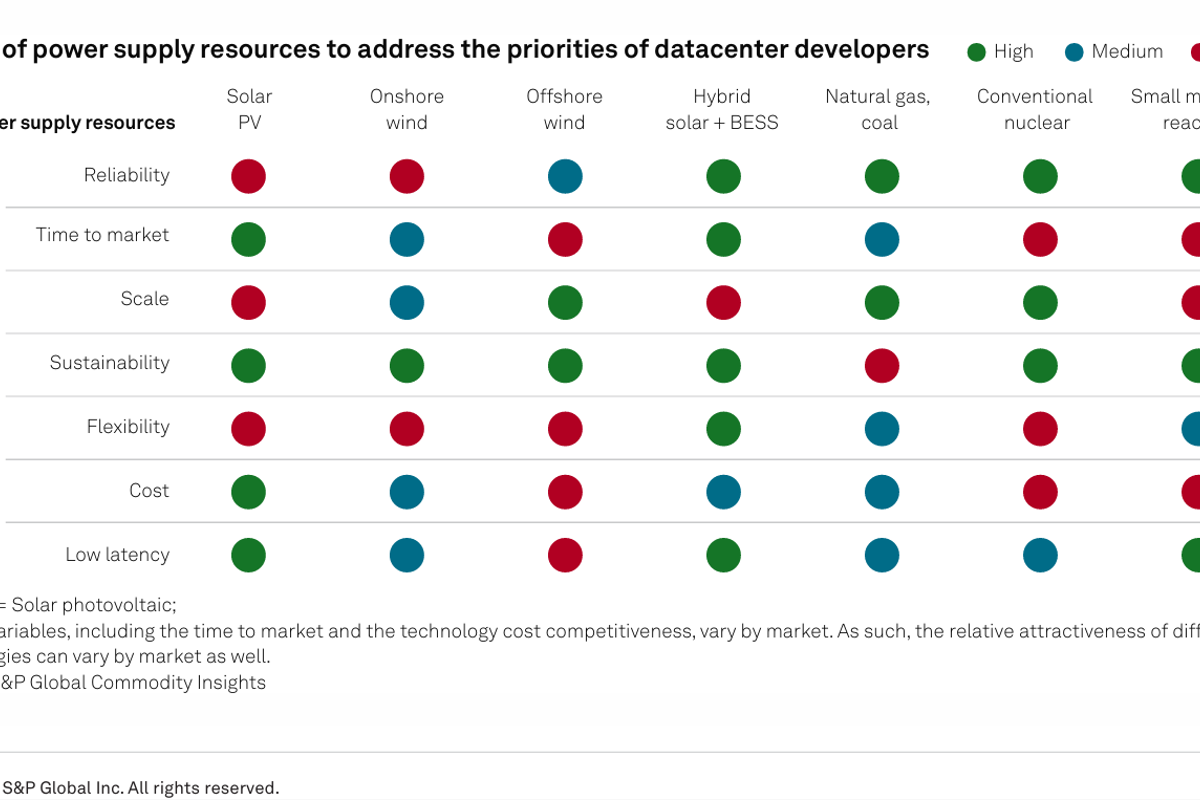
Data centre operators are the vanguard of the energy security narrative. In the near term, utility-scale solar backed by battery energy storage systems wins on speed and cost; gas turbines are next in line but will struggle with equipment backlogs that push many new plants beyond 2030. In the long term, firms are testing small modular reactors and advanced geothermal and carbon-captured gas to achieve round-the-clock, zero-emissions power. With global electricity demand projected to rise by 2.2 per cent in 2024, one of the strongest upticks outside of pandemic rebounds, executives must navigate tight project lead times and capital cycles to secure off-grid supply for AI workloads.
Cleantech’s bankability challenge
Despite ongoing uncertainty, financing for cleantech startups is still available. Although federal funding in the US has decreased, private capital for cleantech financing remains abundant. Policy volatility is creating unpredictability in cleantech investment plans, but investors are finding ways to adapt and continue their investments, regardless of federal support.
Startups are increasingly turning to traditional corporate partners for financial backing, network access, and expertise to help scale their technologies. However, for technologies that lack a clear corporate partner, a significant challenge is finding “patient” capital that can endure an extended period of low or no returns before these technologies become commercially viable. This type of investment may help increase the overall share of private capital in early-stage cleantech investment in the near to medium term.
Furthermore, investors continue to favour software solutions, particularly AI applications, that enhance the efficiency of existing infrastructure and can scale rapidly. In contrast, hardware solutions are often viewed as higher risk and more difficult to deploy at scale.
Implications for decision-makers
- Diversify across the energy Stack: Hedge portfolios across gas, renewables and emerging firm-power technologies to mitigate policy whiplash.
- Stress-test policy scenarios: Model returns under toggling tax incentives, tariffs and carbon-pricing trajectories.
- Build supply-chain resilience: Secure long-lead equipment orders for gas turbines, solar modules and battery cells today to avoid 2030 bottlenecks.
- Engage in carbon accounting standards: Accelerate adoption of product-level emissions reporting to pre-empt regulatory harmonisation at G7/G20 and maintain a premium for low-carbon outputs.
The energy transition is no longer a unidirectional march towards renewables, and it is a multidimensional contest between security, technology and climate ambitions. Success, in this spectrum, will favour those who can deftly navigate fractured policies, capitalise on regional strengths and embed resilience in every project decision.













_md.webp)








