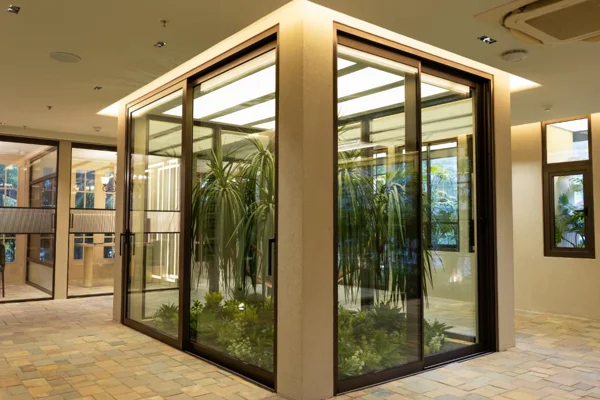
For decades, aluminium windows and doors were largely viewed as functional elements of construction. Today, advances in extrusion technology, precision engineering and architectural design have transformed their possibilities. What once required bulky frames and conventional openings can now be achieved through remarkably slender profiles, expansive glass surfaces and sophisticated systems that bring together structural strength, durability and understated luxury. As Indian architecture becomes increasingly ambitious, aluminium is no longer simply framing spaces; it is helping redefine how they are designed, experienced and connected. Market data According to ALUMEX India 2025: Extruding the Future, India is the world’s second-largest primary aluminium producer and third-largest consumer,...
Two recent Tesla stories sit at opposite ends of the range. Tesla Model 3 is set to benefit from cost-focused Cybercab inverter technology, announced on November 1 2026. The flying car, Tesla Roadster, uses aluminum in its battery cells and underbody protection, reinforcing power delivery, thermal management and lightweight construction. The two models reveal how aluminum can serve very different engineering priorities, from making electric vehicles (EVs) more affordable to helping them deliver extraordinary performance. Tesla Model 3: the everyday car gets Cybercab hardware Nick Verzini, Tesla’s Head of Drive Unit Engineering, mentioned on a Munro Live factory tour that a new printed circuit board assembly and power stage from the Cybercab’s inverter will enter Model 3 production in...
Grow with
AL Circle

The much-awaited winner list of the World Aluminium Aerosol Can Award 2018 is announced. Nivea Body Mousse from Beiersdorf reportedly received a maximum number of votes for its unusual conical shaped can and thus, bagged an award under “cans that are already on the market” category. Another category was “prototype cans” under which Eyeris Fox Can from Ball UK acquired the first position. The winners were announced at this year’s General Assembly meeting of the International Organisation of Aluminium Aerosol Container Manufacturers (AEROBAL), who was also the organiser of the competition. The unusual conical shape of Nivea Body Mousse aerosol cans reportedly impressed the judges in the competition this year in every respect. The can’s very subtle and transition-free colour gradient from...

CanPack, the only aluminium beverage can producer in Romania, has inaugurated a new production line at its Bucharest plant, with an investment of over EUR 50 million. The new line will allow the company to increase its production capacity from 950 million to 1.55 billion cans per annum. The company expects the production of its plant to roll out from February next year. Herman Nicolaas Nusmeier, CEO and chairman of the Board of Directors of Canpack said: “I am very excited to open a new production line at our aluminium factory in Bucharest, which demonstrates our company’s determination to increase its competitiveness on this market and its focus on the long-term sustainable development of our business. We strongly believe in the potential of the Romanian market, which is reflected in the...

Following a three-year Blue Skies initiative released by the provincial government on September 30, Jiangsu province in China is reportedly targeting to put 150,000 new-energy vehicles (NEVs) into use during 2018-2020. The government has vowed to cover 80 per cent of the areas including environmental sanitation, postal delivery, ground transportation, and logistics by the end of 2020 in Jiangsu for the utilisation of NEVs. By the end of 2019, electric buses and other types of clean energy buses will also be introduced across Xuzhou and all Jiangsu cities along the Yangtze River, according to the initiative. In order to execute this initiative as successful as possible, Jiangsu, as per the report, has decided to continue maintaining support for NEVs tax reduction policies for at least next...

Global automotive aluminium alloy wheel market grew year on year with an average sales growth rate of 4.2 per cent. The industry is expected to increase at a high growth rate in the next few years. {newsStudioGallery} According to the China Association of Automobile Manufacturers (CAAM), the country exported 727,800 tonnes of automotive aluminium alloy wheels during January-September 2018, an increase of 5.8 per cent YoY, compared to 687901tonnes during January-September 2017. China’s CITIC DICASTAL manufactures aluminium alloy wheel and chassis components for the automobile industry. The company provides casting, forging, and spinning services for wheels. Last year, Qinhuangdao SINOLION Investment Holdings and CITIC Dicastal had started operations of their co-invested aluminium alloy...

Last Friday, the Aluminum Association’s Transportation Group (ATG) submitted comments urging the National Highway Transportation Safety Administration (NHTSA) and the Environmental Protection Agency (EPA) to pursue data-driven decision making in its final vehicle fuel economy rulemaking. The comments emphasized the proven track record of vehicle mass reduction safety, supported continued year-over-year fuel economy improvements and called on the agencies to maintain One National Program to avoid protracted litigation. The docketed comments are in response to the proposed Safer Affordable Fuel-Efficient (SAFE) Vehicles Rule for Passenger Cars and Light Trucks, Model Years 2021-2026. “The agencies rightly recognized greater use of high strength, low weight materials – especially in larger...

Given the fact that aluminium cables and conductors are largely replacing copper as principal medium for carrying electricity over the last five decades, world aluminium wire rod usage is estimated to have increased 5.87 million tonnes in 2014 to about 6.26 million tonnes in 2017 and further to 6.45 million tonnes in 2018. Aluminium wire rods are used as a raw material for making aluminium cables and overhead conductors that yield excellent mechanical and electrical cable properties. The increasing demand for aluminium cables and overhead conductors is primarily driven by the rapid urbanisation, faster growth of the building and construction sector, electrical transmission, and distribution networks. During this phase of time when the demand and use of aluminium wire rod, wires, and...

Auto suppliers are pitching the U.S. administration on a grace period from tariffs on imported steel and aluminium until enough U.S. capacity is built up. According to them, it will take time to develop more affordable domestic sources of both the metal and they can’t invest in new facilities while getting beaten up by tariffs. "It's difficult, if not impossible, to fund the cost of those tariffs as well as technology development to localize that production," said Ramzi Hermiz, CEO of metal parts maker Shiloh Industries Inc., of Ohio, last week during a discussion here organized by the Motor & Equipment Manufacturers Association. "We need a window of time to ... redefine our supply chain." Hermiz also requested administration to exempt Canada and Mexico from the metal tariffs since they...

Aircraft wheels demand greater durability, robust corrosion resistance, low maintenance and lighter weight. But the wheels get affected from multiple corrosive elements like carbon dust and are susceptible to damage from high impact and fatigue loads. Dutch Kipp, engineering director for Landing Systems at UTC Aerospace Systems (UTAS) in Troy, Ohio discusses about the company’s R&D into new generation aircraft wheel construction. Kipp reports that the primary structure of an aircraft wheel is constructed with closed-die aluminium forgings made from aluminium alloy 2014. However, it offers poor corrosion protection and the company is working on developing improved aluminium alloys for aircraft wheels. UTAS is pursuing a new silver-based aluminium alloy in collaboration with the OEM’s...

Volkswagen Group has started construction of its electric vehicles plant in a joint venture with SAIC Motor Corp. in Shanghai. The US$2.5 billion factory will start production of electric vehicles based on VW’s MEB platform in 2020. According to the company update, the plant will build EVs and battery systems for the Volkswagen, Audi and Skoda brands, with a full capacity to produce 300,000 vehicles annually. The factory’s first EV will be a Volkswagen-badged SUV to be launched in China in 2020. The new plant will be VW’s second production site for EVs derived from the MEB platform. In June, the Volkswagen Group completed expansion of its plant at south China city of Foshan which it runs with China FAW Group Corp and doubled the factory’s annual production capacity to 600,000 vehicles....

The marine industry on both sides of the border in North America is warning that the U.S. tariffs on steel and aluminium and the metal trade war are taking a mounting toll on its business. According to the marine business owners, tariffs and counter tariffs are making the products expensive for them. Andy Blenkarn, owner of Desmasdon’s Boat Works in Ontario said the retaliatory tariffs of 10 per cent Canada imposed on U.S.-made boats have made the products expensive and the cost is also being passed on to consumers. Bill Yeargin, CEO of Correct Craft, a Florida-based maker of recreational boats also talked about their manufacturing costs going up due to metal tariffs and this has driven prices for the company’s Canadian dealers. The Canadian government retaliated to US steel and aluminium...

The United Kingdom-based ferry company SeaLink said that it would build the first new vessel at Richardson Devine Marine (RDM) in Goodwood, Hobart, adding that the service of the new vessel would expectedly start in December 2019. The service of the second new vessel is expected to launch in 2021. SeaLink general manager Paul Victory said both single-deck vessels could have an extra storey added to cope with future demand. "Both vessels will have growth potential, so both vessels will have ramp infrastructure … that we can add onto as the market grows on Bruny Island," he said. Until the new ferries are launched, the company has decided to continue operating its 44-year-old ferry, the MV Moongalba. Today, on October 23, SeaLink also announced it would immediately be adding a third ferry...

Customers looking for the classic combo of smoked meat and black cherry soda at Schwartz’s will have to have something else to drink. The iconic Montreal deli ran out of cans of Cott Black Cherry soda around two weeks ago and hasn’t been able to get more from its supplier, which is facing a shortage of aluminum cans, Schwartz’s manager Frank Silva said. “That’s the situation now and it’s going to be another two weeks at least,” he said. Customers aren’t happy about being forced to make a substitution, Silva said. “They don’t think it’s funny, they say, ‘what do you mean, you have no Black Cherry, it doesn’t make any sense,’” he said. Because the problem is being caused by a shortage of aluminum cans, that’s led to speculation it was caused by tariffs on aluminum imports. In May, the...

According to brewing industry executives, Canada has taken a move to drop a 10 per cent duty on US-made aluminium cans and is proved to be good news for Canadian beer markets that are battling a shortage of tall cans. The aluminium products exempt from tariffs last week include cans that brewers have been struggling to keep in stock, said Luke Harford, president of trade association Beer Canada. Reuters reported in July that some Canadian breweries were scrambling to find aluminium cans. "It's very positive for us," said Harford. "The 473 ml tall cans are all purchased from U.S. suppliers and that particular can is one of the fastest-growing cans... particularly amongst small brewers." Last week, Canada announced tariff exemptions on a range of products post the complaints lodged by...

Despite the massive government push towards electric mobility, e-car sales plunged 40 per cent to a low of 1,200 units in FY18 over FY17, while e-two-wheeler sales zoomed 138 per cent to 54,800 unit during the same period, says an industry report. As of March 2018, there were 56,000 electric vehicles on the roads in the country, of which e-cars were a paltry 1,200 units, while the rest 54,800 units are two-wheelers, according to the data from the Society of Manufacturers of Electric Vehicles, the apex industry lobby for the e-vehicles industry. In FY16, 20,000 electric two-wheelers were sold in the country, which increased to Rs 23,000 units in FY17, according to the data. In the same year, 2,000 e-cars were sold and remained stagnant in FY17. In FY16 there were only 22,000 electric...

Ulsan National Institute of Science and Technology (UNIST), South Korea has developed an electric vehicle (EV) battery technology that is more energy-efficient than gasoline-powered engines. The new technology allows replacement of battery packs instead of re-charging and can troubleshoot slow charging problem with the existing EV battery technology. It also provides lightweight, high-energy density power sources with the use of aluminium. Professor Jaephil Cho and his research team led the research in the School of Energy and Chemical Engineering at UNIST. Their findings have been published in an academic journal, Nature Communications on September 13, 2018. The new type of aluminium-air flow battery for (EVs) developed through the research outperforms existing lithium-ion batteries in...

Audi AG has become the first downstream user of aluminium to be certified against Aluminium Stewardship Initiative’s (ASI) Performance Standard. Audi has received certification for material stewardship of aluminium and sustainable manufacturing of the battery for the Audi e-tron at company’s Neckarsulm, Györ and Brussels manufacturing plants. Fiona Solomon, Chief Executive Officer at ASI said “ASI sincerely congratulates Audi AG on their achievement of the first ASI Certification by an Industrial User. ASI’s standards have application throughout the aluminium value chain, including in downstream use sectors such as automotive which aim to support future mobility.” “The rapidly growing electrical vehicle market is expected to create significant drivers for the uptake of responsible supply...

AlCircle launched another Sector Focus Report – “ A Worldwide Market Analysis of Aluminium Wire rod, Cables & Conductors - Industry forecasts to 2025 ” into its 2018 Report portfolio. AlCircle now offers exclusive sector specific reports that are designed to help industry participants with accurate information and in better decision making. World aluminium wire rod usage is estimated to have increased from 5.87 million tonnes in 2014 to about 6.26 million tonnes in 2017 and further to 6.45 million tonnes in 2018. Owing to its properties, aluminium cables and conductors have successfully replaced copper as the principal medium for carrying electricity over the last five decades. Aluminum wire rod is produced by several different processes namely extrusion, rolling and coiling, or drawn...

A joint study that Hydro has carried out with Forschungsgesellschaft Kraftfahrwesen mbH in Aachen (fka) and School of Design Pforzheim, related to aluminium use in urban vehicle concepts, clearly demonstrates aluminium’s strong position in vehicles of the future. The study was presented just last month at Aachen Body Engineering Days 2018. Hydro participated with engineering expertise from three of its business areas: Extruded Solutions, Primary Metal and Rolled Products. “This is a great example on how our customers and society can profit from Hydro being a completely integrated company with expertise along the whole value chain,” says Pascal Wagner, head of global products for Hydro’s Rolled Products business area. “This project has given us the ability to promote our broad product...